Epsilon Technology Corp. High Temperature Axial Extensometer Model 3448

Description
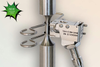
Designed for use with furnaces and induction heating systems, these extensometers use Epsilon’s exclusive, self-supporting design. A wide range of options cover most testing applications. Epsilon developed this unique high temperature extensometer for testing metals, ceramics, and composites at the high temperatures produced by furnaces and induction heating systems. A combination of features make these extensometers easier to use and better in performance than other similar high temperature extensometers. The units are held on the specimen by light, flexible ceramic fiber cords. These make the extensometer self-supporting on the specimen. No furnace mounting brackets are required. The side load on the test sample is greatly reduced because of the self-supporting design and light weight of the sensor. Most materials testing furnaces with a side cut-out for an extensometer will readily accept a Model 3448. For induction heating systems, a different ceramic cord placement allows the extensometer to easily pass between the coils. The combination of radiant heat shields and convection cooling fins allow this model to be used at specimen temperatures up to 1200 °C (2200 °F) without any cooling. An optional tiny air fan does enhance stability at the highest temperatures and is recommended for the highest accuracy and for tests with small elongations. The fan comes with a magnetic base for support so it can be mounted at any convenient location near the extensometer. Fan cooling is not generally needed for induction heated systems. High purity alumina (min 99.7%) ceramic rods are used. These are available in lengths as required to fit your furnace. A spare set is included with every extensometer. Specify chisel, vee chisel or conical contact points as desired. Most units operate equally well in tension and compression. Thus tensile, compression and cyclic tests like low cycle fatigue can all be performed with a single unit. For vacuum furnaces, special models are available. Epsilon can also provide a radiant heat transfer cooled version. This requires that the extensometer module be surrounded by a water cooled enclosure with a front slot for the ceramic rods.
Request a Quote Datasheet
Description
Designed for use with furnaces and induction heating systems, these extensometers use Epsilon’s exclusive, self-supporting design. A wide range of options cover most testing applications. Epsilon developed this unique high temperature extensometer for testing metals, ceramics, and composites at the high temperatures produced by furnaces and induction heating systems. A combination of features make these extensometers easier to use and better in performance than other similar high temperature extensometers. The units are held on the specimen by light, flexible ceramic fiber cords. These make the extensometer self-supporting on the specimen. No furnace mounting brackets are required. The side load on the test sample is greatly reduced because of the self-supporting design and light weight of the sensor. Most materials testing furnaces with a side cut-out for an extensometer will readily accept a Model 3448. For induction heating systems, a different ceramic cord placement allows the extensometer to easily pass between the coils. The combination of radiant heat shields and convection cooling fins allow this model to be used at specimen temperatures up to 1200 °C (2200 °F) without any cooling. An optional tiny air fan does enhance stability at the highest temperatures and is recommended for the highest accuracy and for tests with small elongations. The fan comes with a magnetic base for support so it can be mounted at any convenient location near the extensometer. Fan cooling is not generally needed for induction heated systems. High purity alumina (min 99.7%) ceramic rods are used. These are available in lengths as required to fit your furnace. A spare set is included with every extensometer. Specify chisel, vee chisel or conical contact points as desired. Most units operate equally well in tension and compression. Thus tensile, compression and cyclic tests like low cycle fatigue can all be performed with a single unit. For vacuum furnaces, special models are available. Epsilon can also provide a radiant heat transfer cooled version. This requires that the extensometer module be surrounded by a water cooled enclosure with a front slot for the ceramic rods.
Request a Quote Datasheet

Suppliers

Company
Product
Description
Supplier Links
High Temperature Axial Extensometer - Model 3448 - Epsilon Technology Corp.
Jackson, WY, USA
High Temperature Axial Extensometer
Model 3448
High Temperature Axial Extensometer Model 3448
Designed for use with furnaces and induction heating systems, these extensometers use Epsilon’s exclusive, self-supporting design. A wide range of options cover most testing applications. Epsilon developed this unique high temperature extensometer for testing metals, ceramics, and composites at the high temperatures produced by furnaces and induction heating systems. A combination of features make these extensometers easier to use and better in performance than other similar high temperature extensometers. The units are held on the specimen by light, flexible ceramic fiber cords. These make the extensometer self-supporting on the specimen. No furnace mounting brackets are required. The side load on the test sample is greatly reduced because of the self-supporting design and light weight of the sensor. Most materials testing furnaces with a side cut-out for an extensometer will readily accept a Model 3448. For induction heating systems, a different ceramic cord placement allows the extensometer to easily pass between the coils. The combination of radiant heat shields and convection cooling fins allow this model to be used at specimen temperatures up to 1200 °C (2200 °F) without any cooling. An optional tiny air fan does enhance stability at the highest temperatures and is recommended for the highest accuracy and for tests with small elongations. The fan comes with a magnetic base for support so it can be mounted at any convenient location near the extensometer. Fan cooling is not generally needed for induction heated systems. High purity alumina (min 99.7%) ceramic rods are used. These are available in lengths as required to fit your furnace. A spare set is included with every extensometer. Specify chisel, vee chisel or conical contact points as desired. Most units operate equally well in tension and compression. Thus tensile, compression and cyclic tests like low cycle fatigue can all be performed with a single unit. For vacuum furnaces, special models are available. Epsilon can also provide a radiant heat transfer cooled version. This requires that the extensometer module be surrounded by a water cooled enclosure with a front slot for the ceramic rods.

Designed for use with furnaces and induction heating systems, these extensometers use Epsilon’s exclusive, self-supporting design. A wide range of options cover most testing applications.

Epsilon developed this unique high temperature extensometer for testing metals, ceramics, and composites at the high temperatures produced by furnaces and induction heating systems. A combination of features make these extensometers easier to use and better in performance than other similar high temperature extensometers.

The units are held on the specimen by light, flexible ceramic fiber cords. These make the extensometer self-supporting on the specimen. No furnace mounting brackets are required. The side load on the test sample is greatly reduced because of the self-supporting design and light weight of the sensor. Most materials testing furnaces with a side cut-out for an extensometer will readily accept a Model 3448. For induction heating systems, a different ceramic cord placement allows the extensometer to easily pass between the coils.

The combination of radiant heat shields and convection cooling fins allow this model to be used at specimen temperatures up to 1200 °C (2200 °F) without any cooling. An optional tiny air fan does enhance stability at the highest temperatures and is recommended for the highest accuracy and for tests with small elongations. The fan comes with a magnetic base for support so it can be mounted at any convenient location near the extensometer. Fan cooling is not generally needed for induction heated systems. High purity alumina (min 99.7%) ceramic rods are used. These are available in lengths as required to fit your furnace. A spare set is included with every extensometer. Specify chisel, vee chisel or conical contact points as desired.

Most units operate equally well in tension and compression. Thus tensile, compression and cyclic tests like low cycle fatigue can all be performed with a single unit.

For vacuum furnaces, special models are available. Epsilon can also provide a radiant heat transfer cooled version. This requires that the extensometer module be surrounded by a water cooled enclosure with a front slot for the ceramic rods.

Supplier's Site Datasheet

Technical Specifications

  Epsilon Technology Corp.
Product Category Deflectometers and Extensometers
Product Number Model 3448
Product Name High Temperature Axial Extensometer
Test Fixture Type Extensometer
Unlock Full Specs
to access all available technical data

Similar Products

Precision Optical Extensometers– Epsilon ONE - ONE-78PT-SYSTEM - Epsilon Technology Corp.
Specs
Test Fixture Type Extensometer
Application Fatigue; Strain controlled testing, deflectometer applications, and measuring crack opening displacements
Test Standard ASTM; ISO
View Details
Bolt Extensometer - Model 3565 - Epsilon Technology Corp.
Epsilon Technology Corp.
Specs
Test Fixture Type Extensometer
Application Tensile; Proof Load Testing
Test Temperature -40 to 212 F (-40 to 100 C)
View Details
Extensometer for Asphalt Creep/Strength Testing - Model 3910 - Epsilon Technology Corp.
Specs
Test Fixture Type Extensometer
Application Creep; Tensile; Dynamic Resilient Modulus Testing
Test Temperature -40 to 212 F (-40 to 100 C)
View Details
Rebar Coupler and Rebar Splice Extensometers - Model 3567 - Epsilon Technology Corp.
Specs
Test Fixture Type Extensometer
Application Fatigue; Tensile
Test Standard ASTM; ISO
View Details