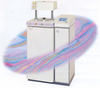
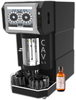
The compact, economical TESC-5133 Low Temperature Viscometer integrates and automates the ASTM D5133 process of conditioning and testing low temperature viscosities of engine lubricants. The TESC 5133 Windows® 10 software application records sample temperature and viscosity throughout the test, then computes the temperature (Gel Index Temperature) at which there is a rapid change in viscosity (Gelation Index).
Common applications include gear oils, automatic transmission fluids, torque and tractor fluids, industrial and automotive hydraulic oils, industrial lubricants, and other fluids where low-temperature viscosity is critical.
Features and Benefits
Fully integrated and automated conditioning and testing (−42 °C to +90 °C)
Provides an automated alternative to ASTM D5133 testing
Reduces result variability due to temperature fluctuation and operator intervention
Provides superior precision
Allows for unattended operation
Sample thermal conditioning completed without operator intervention
Reduces instrument set-up time
TESC 5133 Windows® 10 software application records sample temperature and viscosity throughout the test, then computes the temperature (Gel Index Temperature) at which there is a rapid change in viscosity (Gelation Index)
Cost-effective, ultra-compact design
Allows installation of multiple TESC Systems in a relatively small benchtop area for redundancy and greater test versatility
Conserves precious bench space
Easy-lift system
Configured for use with the Brookfield® DV2T viscometer 1/2 RV
Simplifies positioning of the viscometer head
Solid-state thermoelectric cooling
Peltier cooling is environmentally friendly and does not require the use of hazardous bath fluids
Enclosed sample chamber provides a uniform, controlled temperature environment during the entire test
The compact, economical TESC-5133 Low Temperature Viscometer integrates and automates the ASTM D5133 process of conditioning and testing low temperature viscosities of engine lubricants. The TESC 5133 Windows® 10 software application records sample temperature and viscosity throughout the test, then computes the temperature (Gel Index Temperature) at which there is a rapid change in viscosity (Gelation Index).
Common applications include gear oils, automatic transmission fluids, torque and tractor fluids, industrial and automotive hydraulic oils, industrial lubricants, and other fluids where low-temperature viscosity is critical.
Features and Benefits
Fully integrated and automated conditioning and testing (−42 °C to +90 °C)
- Provides an automated alternative to ASTM D5133 testing
- Reduces result variability due to temperature fluctuation and operator intervention
- Provides superior precision
- Allows for unattended operation
Sample thermal conditioning completed without operator intervention
- Reduces instrument set-up time
- TESC 5133 Windows® 10 software application records sample temperature and viscosity throughout the test, then computes the temperature (Gel Index Temperature) at which there is a rapid change in viscosity (Gelation Index)
Cost-effective, ultra-compact design
- Allows installation of multiple TESC Systems in a relatively small benchtop area for redundancy and greater test versatility
- Conserves precious bench space
Easy-lift system
- Configured for use with the Brookfield® DV2T viscometer 1/2 RV
- Simplifies positioning of the viscometer head
Solid-state thermoelectric cooling
- Peltier cooling is environmentally friendly and does not require the use of hazardous bath fluids
- Enclosed sample chamber provides a uniform, controlled temperature environment during the entire test