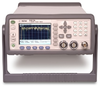
The N1912A is a used RF Power Meter from Agilent. Radio frequency (RF) power meters are the electronic test equipment of choice to collect information, analyze RF power, and display information in an easy-to-read digital format. Engineers use RF power meters to measure and document pulsed RF signals, noise-like signals, and pseudorandom signals..
Additional Features:
Frequency range: 9 kHz to 110 GHz, sensor dependent
LXI-C Compliance
Average triggering for average power measurement
Versatile connectivity with USB, LAN and GPIB standard
High Speed Complementary Cumulative Distribution Function (CCDF) statistical analysis
Compatible with the industry standard 8480 and E-series sensors which provide a wide dynamic range from -70 to +44 dBm, and a frequency coverage from 9 kHz to 110 GHz.
Compatibility with E932x power sensors
Difference and ratio math functions : (A-B, B-A, A/B and B/A)
2-year calibration cycle
30 MHz video bandwidth
Single shot real time capture at 100 Msample/s per second
Key Measurements: - peak, average, peak-to-average ratio, rise time, fall time and pulse width
22 Predefine formats: WiMAX, DME, HSDPA, etc.
One screen view for pulse measurement analysis: Auto Scale, Auto Gate, Rise/Fall Time, Duty Cycle, etc.
Internal Zeroing and Calibration while connecting to the DUT
The Agilent N1912A dual channel P-Series wideband power sensors provide accurate and repeatable power measurements for R&D and manufacturing engineers, in markets including aerospace and defense (radar), wireless communications and wireless 802.11a/b/g networking. Measurements provided by this meter/sensor combination include peak power, average power, peak-to-average ratio, rise time, fall time, maximum power, minimum power and the statistical data of wideband signals (up to 30 MHz video bandwidth) with 100 M samples per second continuous sampling. Backwards compatibility with all Agilent 8480 power sensors and E-Series power sensors gives users additional choices for conventional average power measurements, over a wide dynamic range and frequency coverage from 9 kHz to 110 GHz.
The N1912A is a used RF Power Meter from Agilent. Radio frequency (RF) power meters are the electronic test equipment of choice to collect information, analyze RF power, and display information in an easy-to-read digital format. Engineers use RF power meters to measure and document pulsed RF signals, noise-like signals, and pseudorandom signals..
Additional Features:
- Frequency range: 9 kHz to 110 GHz, sensor dependent
- LXI-C Compliance
- Average triggering for average power measurement
- Versatile connectivity with USB, LAN and GPIB standard
- High Speed Complementary Cumulative Distribution Function (CCDF) statistical analysis
- Compatible with the industry standard 8480 and E-series sensors which provide a wide dynamic range from -70 to +44 dBm, and a frequency coverage from 9 kHz to 110 GHz.
- Compatibility with E932x power sensors
- Difference and ratio math functions : (A-B, B-A, A/B and B/A)
- 2-year calibration cycle
- 30 MHz video bandwidth
- Single shot real time capture at 100 Msample/s per second
- Key Measurements: - peak, average, peak-to-average ratio, rise time, fall time and pulse width
- 22 Predefine formats: WiMAX, DME, HSDPA, etc.
- One screen view for pulse measurement analysis: Auto Scale, Auto Gate, Rise/Fall Time, Duty Cycle, etc.
- Internal Zeroing and Calibration while connecting to the DUT
The Agilent N1912A dual channel P-Series wideband power sensors provide accurate and repeatable power measurements for R&D and manufacturing engineers, in markets including aerospace and defense (radar), wireless communications and wireless 802.11a/b/g networking. Measurements provided by this meter/sensor combination include peak power, average power, peak-to-average ratio, rise time, fall time, maximum power, minimum power and the statistical data of wideband signals (up to 30 MHz video bandwidth) with 100 M samples per second continuous sampling. Backwards compatibility with all Agilent 8480 power sensors and E-Series power sensors gives users additional choices for conventional average power measurements, over a wide dynamic range and frequency coverage from 9 kHz to 110 GHz.