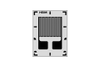
Precision Resistor Co., Inc. Current Sensing Shunt Precision Wire Wound Resistor (4-tab) PVS Series

Description
SMD (4-Tab) Current Sensing Shunts - LVS / PVS Series Key Features: Lower self-heating or temperature rise per watt Low TCR and Low EMF for greater thermal stability Excellent overload and surge current handling capabilities More Features of PRC's Current-Sensing Shunts: Dependable and repeatable measurements under load - Without this feature the voltage drop across a low value element will no longer be a linear function of current. Thru-Hole or SMD Designs - (1) are ideal in amplifier circuits and accurate voltage drop applications. (2) Offer excellent thermal transfer to base and better overload and surge current handling capabilities Hot-Tinned Copper Terminals - for better solder wetting, longer shelf life and higher current-carrying capacities. Lower Ohmic Values - to one milliohm (0.001) ... and closer resistance tolerances to ±0.005%. Very Low TCR Characteristics - 0±15ppm (Standard) - and Special TCRs to 0±10ppm for operation over a wider temperature span and provide greater stability under load Low Thermal EMF Construction - 1microvolt/°C. with respect to the copper terminals. This low EMF construction together with PRC's "single-joint" 4-terminal design will eliminate "lead-out" resistance variations, contact resistance and annoying thermal electric effects generally associated with very low resistance values. Perform like - a "precision instrument" PRC Facts: Why is Stability Vs. Time so important? Stability is the quality to resist permanent change ... and must be designed into the parts from the start. It is very difficult to stabilize or condition a general-purpose resistor and be confident that it will meet a critical application. All stability specs at PRC are designed for precise requirements - even if you specify 1% resistance tolerances. Low EMF construction with respect to the copper terminals is Standard at PRC. . PRC Tips: Many low value tin oxide designs have thermocouple errors as large as 100 microvolts per degree C. which could degrade circuit performance. Try to avoid thermal gradients that could cause a large temperature difference across the low value resistor ... and specify with low EMF construction. Be sure to "Heat Test" all delicate SMDs that will be exposed to temperatures above +125°C.
Datasheet
Description
SMD (4-Tab) Current Sensing Shunts - LVS / PVS Series Key Features: Lower self-heating or temperature rise per watt Low TCR and Low EMF for greater thermal stability Excellent overload and surge current handling capabilities More Features of PRC's Current-Sensing Shunts: Dependable and repeatable measurements under load - Without this feature the voltage drop across a low value element will no longer be a linear function of current. Thru-Hole or SMD Designs - (1) are ideal in amplifier circuits and accurate voltage drop applications. (2) Offer excellent thermal transfer to base and better overload and surge current handling capabilities Hot-Tinned Copper Terminals - for better solder wetting, longer shelf life and higher current-carrying capacities. Lower Ohmic Values - to one milliohm (0.001) ... and closer resistance tolerances to ±0.005%. Very Low TCR Characteristics - 0±15ppm (Standard) - and Special TCRs to 0±10ppm for operation over a wider temperature span and provide greater stability under load Low Thermal EMF Construction - 1microvolt/°C. with respect to the copper terminals. This low EMF construction together with PRC's "single-joint" 4-terminal design will eliminate "lead-out" resistance variations, contact resistance and annoying thermal electric effects generally associated with very low resistance values. Perform like - a "precision instrument" PRC Facts: Why is Stability Vs. Time so important? Stability is the quality to resist permanent change ... and must be designed into the parts from the start. It is very difficult to stabilize or condition a general-purpose resistor and be confident that it will meet a critical application. All stability specs at PRC are designed for precise requirements - even if you specify 1% resistance tolerances. Low EMF construction with respect to the copper terminals is Standard at PRC. . PRC Tips: Many low value tin oxide designs have thermocouple errors as large as 100 microvolts per degree C. which could degrade circuit performance. Try to avoid thermal gradients that could cause a large temperature difference across the low value resistor ... and specify with low EMF construction. Be sure to "Heat Test" all delicate SMDs that will be exposed to temperatures above +125°C.
Datasheet

Suppliers

Company
Product
Description
Supplier Links
Current Sensing Shunt Precision Wire Wound Resistor (4-tab) - PVS Series - Precision Resistor Co., Inc.
Largo, FL, USA
Current Sensing Shunt Precision Wire Wound Resistor (4-tab)
PVS Series
Current Sensing Shunt Precision Wire Wound Resistor (4-tab) PVS Series
SMD (4-Tab) Current Sensing Shunts - LVS / PVS Series Key Features: Lower self-heating or temperature rise per watt Low TCR and Low EMF for greater thermal stability Excellent overload and surge current handling capabilities More Features of PRC's Current-Sensing Shunts: Dependable and repeatable measurements under load - Without this feature the voltage drop across a low value element will no longer be a linear function of current. Thru-Hole or SMD Designs - (1) are ideal in amplifier circuits and accurate voltage drop applications. (2) Offer excellent thermal transfer to base and better overload and surge current handling capabilities Hot-Tinned Copper Terminals - for better solder wetting, longer shelf life and higher current-carrying capacities. Lower Ohmic Values - to one milliohm (0.001) ... and closer resistance tolerances to ±0.005%. Very Low TCR Characteristics - 0±15ppm (Standard) - and Special TCRs to 0±10ppm for operation over a wider temperature span and provide greater stability under load Low Thermal EMF Construction - 1microvolt/°C. with respect to the copper terminals. This low EMF construction together with PRC's "single-joint" 4-terminal design will eliminate "lead-out" resistance variations, contact resistance and annoying thermal electric effects generally associated with very low resistance values. Perform like - a "precision instrument" PRC Facts: Why is Stability Vs. Time so important? Stability is the quality to resist permanent change ... and must be designed into the parts from the start. It is very difficult to stabilize or condition a general-purpose resistor and be confident that it will meet a critical application. All stability specs at PRC are designed for precise requirements - even if you specify 1% resistance tolerances. Low EMF construction with respect to the copper terminals is Standard at PRC. . PRC Tips: Many low value tin oxide designs have thermocouple errors as large as 100 microvolts per degree C. which could degrade circuit performance. Try to avoid thermal gradients that could cause a large temperature difference across the low value resistor ... and specify with low EMF construction. Be sure to "Heat Test" all delicate SMDs that will be exposed to temperatures above +125°C.

SMD (4-Tab) Current Sensing Shunts - LVS / PVS Series

Key Features:

Lower self-heating or temperature rise per watt

Low TCR and Low EMF for greater thermal stability

Excellent overload and surge current handling capabilities

More Features of PRC's Current-Sensing Shunts:

Dependable and repeatable measurements under load - Without this feature the voltage drop across a low value element will no longer be a linear function of current.

Thru-Hole or SMD Designs - (1) are ideal in amplifier circuits and accurate voltage drop applications. (2) Offer excellent thermal transfer to base and better overload and surge current handling capabilities

Hot-Tinned Copper Terminals - for better solder wetting, longer shelf life and higher current-carrying capacities.

Lower Ohmic Values - to one milliohm (0.001) ... and closer resistance tolerances to ±0.005%.

Very Low TCR Characteristics - 0±15ppm (Standard) - and Special TCRs to 0±10ppm for operation over a wider temperature span and provide greater stability under load

Low Thermal EMF Construction - 1microvolt/°C. with respect to the copper terminals. This low EMF construction together with PRC's "single-joint" 4-terminal design will eliminate "lead-out" resistance variations, contact resistance and annoying thermal electric effects generally associated with very low resistance values.

Perform like - a "precision instrument"

PRC Facts:

Why is Stability Vs. Time so important?

Stability is the quality to resist permanent change ... and must be designed into the parts from the start. It is very difficult to stabilize or condition a general-purpose resistor and be confident that it will meet a critical application.

All stability specs at PRC are designed for precise requirements - even if you specify 1% resistance tolerances.

Low EMF construction with respect to the copper terminals is Standard at PRC. .

PRC Tips:

Many low value tin oxide designs have thermocouple errors as large as 100 microvolts per degree C. which could degrade circuit performance. Try to avoid thermal gradients that could cause a large temperature difference across the low value resistor ... and specify with low EMF construction.

Be sure to "Heat Test" all delicate SMDs that will be exposed to temperatures above +125°C.

Supplier's Site Datasheet

Technical Specifications

  Precision Resistor Co., Inc.
Product Category Resistors
Product Number PVS Series
Product Name Current Sensing Shunt Precision Wire Wound Resistor (4-tab)
Category / Application Current Sensing
Unlock Full Specs
to access all available technical data

Similar Products

Braking resistor - CACR-LE2-100-W500 - Festo Corporation
Specs
Power Rating 200 watts
Operating Temperature 0 to 50 C (32 to 122 F)
View Details
2 suppliers
Chassis Mount Resistors - 1311309 - RS Components, Ltd.
Specs
Technology / Construction Wire wound
Mounting / Packaging Axial Leads; Aluminium housed
Temperature Coefficient 100 ±ppm/°C
View Details
Shunt Resistor - Two Terminal Surface Mount - BVT - Isabellenhutte USA
Specs
Configuration Single Resistor
Category / Application Automotive; Current Sensing; High Current Resistor; Precision Resistor; Power Applications
Technology / Construction Metal Foil
View Details