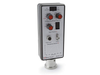
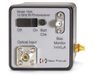
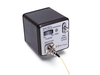
Newport MKS Auto-balanced Optical Receiver, Nirvana, 800-1700 nm, 125 kHz, 8-32 / M4 2017

Description
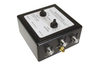
The 2017 Nirvana Auto-Balanced Optical Receiver can cut the effects of laser noise by 50 dB, making even very small signals easy to see. The 2017 has a 800-1700 nm wavelength range. In spectroscopy, ellipsometry, or heterodyne-detection experiments, these receivers can yield shot-noise-limited performance without the need for lock-in amplifiers or high-frequency modulation. 8-32 mounting thread. M4 metric adaptor and tool now included. An external power supply, which must be purchased separately, is required – we recommend our power supply. Power supply cables and are included with each receiver.
Request a Quote
Description
The 2017 Nirvana Auto-Balanced Optical Receiver can cut the effects of laser noise by 50 dB, making even very small signals easy to see. The 2017 has a 800-1700 nm wavelength range. In spectroscopy, ellipsometry, or heterodyne-detection experiments, these receivers can yield shot-noise-limited performance without the need for lock-in amplifiers or high-frequency modulation. 8-32 mounting thread. M4 metric adaptor and tool now included. An external power supply, which must be purchased separately, is required – we recommend our power supply. Power supply cables and are included with each receiver.
Request a Quote

Suppliers

Company
Product
Description
Supplier Links
Auto-balanced Optical Receiver, Nirvana, 800-1700 nm, 125 kHz, 8-32 / M4 - 2017 - Newport MKS
Irvine, CA, United States
Auto-balanced Optical Receiver, Nirvana, 800-1700 nm, 125 kHz, 8-32 / M4
2017
Auto-balanced Optical Receiver, Nirvana, 800-1700 nm, 125 kHz, 8-32 / M4 2017
The 2017 Nirvana Auto-Balanced Optical Receiver can cut the effects of laser noise by 50 dB, making even very small signals easy to see. The 2017 has a 800-1700 nm wavelength range. In spectroscopy, ellipsometry, or heterodyne-detection experiments, these receivers can yield shot-noise-limited performance without the need for lock-in amplifiers or high-frequency modulation. 8-32 mounting thread. M4 metric adaptor and tool now included. An external power supply, which must be purchased separately, is required – we recommend our power supply. Power supply cables and are included with each receiver.

The 2017 Nirvana Auto-Balanced Optical Receiver can cut the effects of laser noise by 50 dB, making even very small signals easy to see. The 2017 has a 800-1700 nm wavelength range. In spectroscopy, ellipsometry, or heterodyne-detection experiments, these receivers can yield shot-noise-limited performance without the need for lock-in amplifiers or high-frequency modulation. 8-32 mounting thread. M4 metric adaptor and tool now included.

An external power supply, which must be purchased separately, is required – we recommend our power supply. Power supply cables and are included with each receiver.

Supplier's Site

Technical Specifications

  Newport MKS
Product Category Fiber Optic Receivers
Product Number 2017
Product Name Auto-balanced Optical Receiver, Nirvana, 800-1700 nm, 125 kHz, 8-32 / M4
Receiver Type PIN Photodiode
Unlock Full Specs
to access all available technical data

Similar Products

Free Space Optical Receiver, 900-1700 nm InGaAs, 125 MHz, DC-Coupled - 1811-FS - Newport MKS
Specs
Receiver Type PIN Photodiode
Rise Time 3 ns
Bandwidth 0.0 to 125 MHz
View Details
Fiber-Optic Photodector, PIN PD, InGaAs, 23 GHz, AC Coupled - F-PD-23-A-FCA - Newport MKS
Specs
Receiver Type PIN Photodiode
Bandwidth 21000 MHz
Operating Temperature -49 to 167 F (-45 to 75 C)
View Details
Nanosecond Photodetector, 350-1000 nm, 0.8 mm Silicon Detector, 1 ns - 1621 - Newport MKS
Specs
Receiver Type PIN Photodiode
Rise Time 1 ns
Bandwidth 0.0 to 500 MHz
View Details
Fiber-Optic Detector, Time Domain, 500-1630 nm, 18.5 ps, FC Singlemode - 1444 - Newport MKS
Specs
Receiver Type PIN Photodiode
Bandwidth 0.0 to 20000 MHz
Operating Temperature 50 to 95 F (10 to 35 C)
View Details