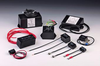
Electrocube, Inc. Custom Resistor Capacitor Networks

Description
Resistor Capacitor Networks, RC circuit, RC filter What are resistor capacitor (RC) circuits used for? Electrocube carries an extensive line of more than 400 precision UL-recognized and ULc-approved RC Networks. Also known as resistors, resistor-capacitors, or RC filters, Electrocube’s RC Networks are designed to prevent or substantially minimize the occurrence of arcing and noise generations in relay and switch contacts. What types of resistor capacitor circuits does Electrocube manufacture and distribute? Featuring a wide selection of case configurations with a number of leads, Electrocube RC networks are manufactured both off-the-shelf and made-to-custom design specifications for single-phase or three-phase applications from one network to 40 networks in a container. Thousands of unique suppression designs eliminate surges produced by relays and solenoids. How do single-phase resistors, single-phase heavy duty RC filters, three-phase resistor capacitors, and three-phase heavy duty RC Networks work? Arc suppressing Resistor Capacitor (RC) Networks consist of specially designed precision capacitors and resistors connected in a series. Spark discharges and induced noise are absorbed over a wide range by the accumulation characteristic and impedance of the capacitor, while the RC time constant delays and averages surge voltage and oscillations. What are resistor capacitors made of? To store surge voltages and current energy and afford protection against inductively induced potentials, RC Networks are: Made from dielectric material providing a high degree of voltage withstand strength Non-inductive types to ensure a high degree of protection against pulse potentials Packaged in cases, which meet or exceed the flammability requirements of UL94VO What are some features of Electrocube RC filters? Single-to-multiple combination Metals cans and epoxy cases Solid and stranded wire leads with varying length and terminations DIN Rail available CE is available Environmental and governmental compliance What commercial and industrial applications are Electrocube RC circuits used for? Machine tools Switchgear Motor controllers Computers Telecommunications Automated equipment Industrial appliances Elevators and escalators
Description
Resistor Capacitor Networks, RC circuit, RC filter What are resistor capacitor (RC) circuits used for? Electrocube carries an extensive line of more than 400 precision UL-recognized and ULc-approved RC Networks. Also known as resistors, resistor-capacitors, or RC filters, Electrocube’s RC Networks are designed to prevent or substantially minimize the occurrence of arcing and noise generations in relay and switch contacts. What types of resistor capacitor circuits does Electrocube manufacture and distribute? Featuring a wide selection of case configurations with a number of leads, Electrocube RC networks are manufactured both off-the-shelf and made-to-custom design specifications for single-phase or three-phase applications from one network to 40 networks in a container. Thousands of unique suppression designs eliminate surges produced by relays and solenoids. How do single-phase resistors, single-phase heavy duty RC filters, three-phase resistor capacitors, and three-phase heavy duty RC Networks work? Arc suppressing Resistor Capacitor (RC) Networks consist of specially designed precision capacitors and resistors connected in a series. Spark discharges and induced noise are absorbed over a wide range by the accumulation characteristic and impedance of the capacitor, while the RC time constant delays and averages surge voltage and oscillations. What are resistor capacitors made of? To store surge voltages and current energy and afford protection against inductively induced potentials, RC Networks are: Made from dielectric material providing a high degree of voltage withstand strength Non-inductive types to ensure a high degree of protection against pulse potentials Packaged in cases, which meet or exceed the flammability requirements of UL94VO What are some features of Electrocube RC filters? Single-to-multiple combination Metals cans and epoxy cases Solid and stranded wire leads with varying length and terminations DIN Rail available CE is available Environmental and governmental compliance What commercial and industrial applications are Electrocube RC circuits used for? Machine tools Switchgear Motor controllers Computers Telecommunications Automated equipment Industrial appliances Elevators and escalators

Suppliers

Company
Product
Description
Supplier Links
Custom Resistor Capacitor Networks -  - Electrocube, Inc.
Pomona, CA, United States
Custom Resistor Capacitor Networks
Resistor Capacitor Networks, RC circuit, RC filter What are resistor capacitor (RC) circuits used for? Electrocube carries an extensive line of more than 400 precision UL-recognized and ULc-approved RC Networks. Also known as resistors, resistor-capacitors, or RC filters, Electrocube’s RC Networks are designed to prevent or substantially minimize the occurrence of arcing and noise generations in relay and switch contacts. What types of resistor capacitor circuits does Electrocube manufacture and distribute? Featuring a wide selection of case configurations with a number of leads, Electrocube RC networks are manufactured both off-the-shelf and made-to-custom design specifications for single-phase or three-phase applications from one network to 40 networks in a container. Thousands of unique suppression designs eliminate surges produced by relays and solenoids. How do single-phase resistors, single-phase heavy duty RC filters, three-phase resistor capacitors, and three-phase heavy duty RC Networks work? Arc suppressing Resistor Capacitor (RC) Networks consist of specially designed precision capacitors and resistors connected in a series. Spark discharges and induced noise are absorbed over a wide range by the accumulation characteristic and impedance of the capacitor, while the RC time constant delays and averages surge voltage and oscillations. What are resistor capacitors made of? To store surge voltages and current energy and afford protection against inductively induced potentials, RC Networks are: Made from dielectric material providing a high degree of voltage withstand strength Non-inductive types to ensure a high degree of protection against pulse potentials Packaged in cases, which meet or exceed the flammability requirements of UL94VO What are some features of Electrocube RC filters? Single-to-multiple combination Metals cans and epoxy cases Solid and stranded wire leads with varying length and terminations DIN Rail available CE is available Environmental and governmental compliance What commercial and industrial applications are Electrocube RC circuits used for? Machine tools Switchgear Motor controllers Computers Telecommunications Automated equipment Industrial appliances Elevators and escalators

Resistor Capacitor Networks, RC circuit, RC filter

What are resistor capacitor (RC) circuits used for?

Electrocube carries an extensive line of more than 400 precision UL-recognized and ULc-approved RC Networks. Also known as resistors, resistor-capacitors, or RC filters, Electrocube’s RC Networks are designed to prevent or substantially minimize the occurrence of arcing and noise generations in relay and switch contacts.

What types of resistor capacitor circuits does Electrocube manufacture and distribute?

Featuring a wide selection of case configurations with a number of leads, Electrocube RC networks are manufactured both off-the-shelf and made-to-custom design specifications for single-phase or three-phase applications from one network to 40 networks in a container. Thousands of unique suppression designs eliminate surges produced by relays and solenoids.

How do single-phase resistors, single-phase heavy duty RC filters, three-phase resistor capacitors, and three-phase heavy duty RC Networks work?

Arc suppressing Resistor Capacitor (RC) Networks consist of specially designed precision capacitors and resistors connected in a series. Spark discharges and induced noise are absorbed over a wide range by the accumulation characteristic and impedance of the capacitor, while the RC time constant delays and averages surge voltage and oscillations.

What are resistor capacitors made of?

To store surge voltages and current energy and afford protection against inductively induced potentials, RC Networks are:

  • Made from dielectric material providing a high degree of voltage withstand strength
  • Non-inductive types to ensure a high degree of protection against pulse potentials
  • Packaged in cases, which meet or exceed the flammability requirements of UL94VO

What are some features of Electrocube RC filters?

  • Single-to-multiple combination
  • Metals cans and epoxy cases
  • Solid and stranded wire leads with varying length and terminations
  • DIN Rail available
  • CE is available
  • Environmental and governmental compliance

What commercial and industrial applications are Electrocube RC circuits used for?

  • Machine tools
  • Switchgear
  • Motor controllers
  • Computers
  • Telecommunications
  • Automated equipment
  • Industrial appliances
  • Elevators and escalators
Supplier's Site

Technical Specifications

  Electrocube, Inc.
Product Category Resistor, Capacitor Networks
Product Name Custom Resistor Capacitor Networks
Configuration Resistor, Capacitor Network
Unlock Full Specs
to access all available technical data

Similar Products

Resistor - 50-CN1J8TTE330J - ERSAELECTRONICS PTE. LTD.
KOA Speer Electronics, Inc.
Specs
Resistance Range 33 ohms
Tolerance 5 +/- %
Temperature Coefficient 200 ±ppm/°C
View Details
2 suppliers
Precision Resistor - UPN 2-0808 - Riedon, Inc.
Specs
Configuration Chip Array
Technology / Construction Metal Foil
Resistance Range 100 to 20000 ohms
View Details
 - RCA Series - Trigon Components, Inc.
Trigon Components, Inc.
Specs
Configuration Chip Array
Packing Method Tape Reel
Resistance Range 10 to 1.00E6 ohms
View Details
Specs
Configuration Resistor, Capacitor Network
Technology / Construction Thin Film (Chip)
Packing Method Tape Reel
View Details