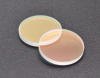
EKSMA OPTICS Optical Flats

Description
Optical flats are used for testing and evaluating other optical elements. An interference pattern is formed in the air between the flat and the object being evaluated, and this pattern is usually more seen through the flat than through the object. The pattern consists of alternating bright and dark bands or fringes which are a contour map of the thickness of the air film. If the surface of the optical is significantly flatter than the surface being evaluated, it is correct to interpret the interference pattern directly as a contour map of the surface being evaluated. If the flat is used on the top of the object, and interference pattern viewed through the flat, it is advantageous to have an anti-reflection coating on the top surface of the flat (the surface which does not touch the object being evaluated). Flatness of reference surface λ/20
Datasheet
Description
Optical flats are used for testing and evaluating other optical elements. An interference pattern is formed in the air between the flat and the object being evaluated, and this pattern is usually more seen through the flat than through the object. The pattern consists of alternating bright and dark bands or fringes which are a contour map of the thickness of the air film. If the surface of the optical is significantly flatter than the surface being evaluated, it is correct to interpret the interference pattern directly as a contour map of the surface being evaluated. If the flat is used on the top of the object, and interference pattern viewed through the flat, it is advantageous to have an anti-reflection coating on the top surface of the flat (the surface which does not touch the object being evaluated). Flatness of reference surface λ/20
Datasheet

Suppliers

Company
Product
Description
Supplier Links
Optical Flats -  - EKSMA OPTICS
Vilnius, Lithuania
Optical Flats
Optical Flats
Optical flats are used for testing and evaluating other optical elements. An interference pattern is formed in the air between the flat and the object being evaluated, and this pattern is usually more seen through the flat than through the object. The pattern consists of alternating bright and dark bands or fringes which are a contour map of the thickness of the air film. If the surface of the optical is significantly flatter than the surface being evaluated, it is correct to interpret the interference pattern directly as a contour map of the surface being evaluated. If the flat is used on the top of the object, and interference pattern viewed through the flat, it is advantageous to have an anti-reflection coating on the top surface of the flat (the surface which does not touch the object being evaluated). Flatness of reference surface λ/20

Optical flats are used for testing and evaluating other optical elements. An interference pattern is formed in the air between the flat and the object being evaluated, and this pattern is usually more seen through the flat than through the object. The pattern consists of alternating bright and dark bands or fringes which are a contour map of the thickness of the air film. If the surface of the optical is significantly flatter than the surface being evaluated, it is correct to interpret the interference pattern directly as a contour map of the surface being evaluated. If the flat is used on the top of the object, and interference pattern viewed through the flat, it is advantageous to have an anti-reflection coating on the top surface of the flat (the surface which does not touch the object being evaluated).

  • Flatness of reference surface λ/20
Supplier's Site Datasheet

Technical Specifications

  EKSMA OPTICS
Product Category Optical Windows
Product Name Optical Flats
Window Shape Circular
Unlock Full Specs
to access all available technical data

Similar Products

Interferometer Flat, UVFS, 50.8 mm, 12.7mm Thick, λ/10, 10-5 - 20QB20 - Newport MKS
Specs
Window Material UV Grade Fused Silica; UV Grade Fused Silica
Windows Features No Coating
Coating Material Uncoated
View Details
405nm Blue Laser Windows -  - Gurley Precision Instruments
Gurley Precision Instruments
Specs
Wavelength Range 405 nm (4050 Å)
Window Material Sapphire (optional feature); UV Grade Fused Silica (optional feature)
Windows Features No Coating
View Details
Windows -  - CRYSTECH, Inc.
CRYSTECH, Inc.
Specs
Window Material BK7 Glass; Calcium Fluoride; UV Grade Fused Silica; MgF 2, CaF 2
Windows Features No Coating
Window Shape Circular; Square; Rectangular
View Details
Square Windows - WINS-254-063-UVFS - CASTECH, Inc.
Specs
Window Type Plane
Window Material UV Grade Fused Silica
Window Shape Square
View Details