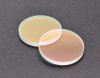
Changchun Sunday Optics Co., Ltd. Metal Mirror

Description
Optical Mirrors are used for beam turning, interferometry, imaging, or illumination.Using polished glass or metal as the substrate, the light beam hits the surface to form mirror reflection.In order to obtain as much reflected light as possible, the substrate is often coated with a reflective coating, including metal and dielectric film.Metal coating commonly used materials are: aluminum, silver, gold, aluminum from the ULTRAVIOLET region to the infrared region has a high reflectivity, at the same time can form a layer of aluminum oxide on the surface of the aluminum, so the film layer is firm and stable.The silver film has high reflectivity in the visible and infrared regions, and the polarization effect is minimal when the incident Angle changes.Gold film has a high reflectivity in the infrared region, and its strength and stability are better than silver film, so it is often used for infrared reflection.Metal film is soft, easy to scratch damage, so often in the metal film coated with a layer of protective film.Metal film mirrors are insensitive to incident angles and can be used in a relatively wide wavelength range. Metal fmirrors have been able to meet the needs of optical instruments.If higher reflectivity is required, a multilayer dielectric reflective film can be used. Dielectric reflective film can achieve maximum reflectivity and minimum absorption loss.The incident Angle and wavelength will affect the reflection efficiency of the dielectric film. Generally, the incident Angle will be labeled as 0° or 45° and the specific operating wavelength range. Standard metal mirror are front-surface mirror with metal coating and SiO2 or Mgf2 overcoated. The metal coating including Aluminium, sliver, HR and golden. The reflective of Al is above 85%, sliver is 95%,Golden and HR is 99%. Customer can chose the suitable coating according to the use.

Suppliers

Company
Product
Description
Supplier Links
Metal Mirror -  - Changchun Sunday Optics Co., Ltd.
Changchun, China
Metal Mirror
Metal Mirror
Optical Mirrors are used for beam turning, interferometry, imaging, or illumination.Using polished glass or metal as the substrate, the light beam hits the surface to form mirror reflection.In order to obtain as much reflected light as possible, the substrate is often coated with a reflective coating, including metal and dielectric film.Metal coating commonly used materials are: aluminum, silver, gold, aluminum from the ULTRAVIOLET region to the infrared region has a high reflectivity, at the same time can form a layer of aluminum oxide on the surface of the aluminum, so the film layer is firm and stable.The silver film has high reflectivity in the visible and infrared regions, and the polarization effect is minimal when the incident Angle changes.Gold film has a high reflectivity in the infrared region, and its strength and stability are better than silver film, so it is often used for infrared reflection.Metal film is soft, easy to scratch damage, so often in the metal film coated with a layer of protective film.Metal film mirrors are insensitive to incident angles and can be used in a relatively wide wavelength range. Metal fmirrors have been able to meet the needs of optical instruments.If higher reflectivity is required, a multilayer dielectric reflective film can be used. Dielectric reflective film can achieve maximum reflectivity and minimum absorption loss.The incident Angle and wavelength will affect the reflection efficiency of the dielectric film. Generally, the incident Angle will be labeled as 0° or 45° and the specific operating wavelength range. Standard metal mirror are front-surface mirror with metal coating and SiO2 or Mgf2 overcoated. The metal coating including Aluminium, sliver, HR and golden. The reflective of Al is above 85%, sliver is 95%,Golden and HR is 99%. Customer can chose the suitable coating according to the use.

Optical Mirrors are used for beam turning, interferometry, imaging, or illumination.Using polished glass or metal as the substrate, the light beam hits the surface to form mirror reflection.In order to obtain as much reflected light as possible, the substrate is often coated with a reflective coating, including metal and dielectric film.Metal coating commonly used materials are: aluminum, silver, gold, aluminum from the ULTRAVIOLET region to the infrared region has a high reflectivity, at the same time can form a layer of aluminum oxide on the surface of the aluminum, so the film layer is firm and stable.The silver film has high reflectivity in the visible and infrared regions, and the polarization effect is minimal when the incident Angle changes.Gold film has a high reflectivity in the infrared region, and its strength and stability are better than silver film, so it is often used for infrared reflection.Metal film is soft, easy to scratch damage, so often in the metal film coated with a layer of protective film.Metal film mirrors are insensitive to incident angles and can be used in a relatively wide wavelength range. Metal fmirrors have been able to meet the needs of optical instruments.If higher reflectivity is required, a multilayer dielectric reflective film can be used. Dielectric reflective film can achieve maximum reflectivity and minimum absorption loss.The incident Angle and wavelength will affect the reflection efficiency of the dielectric film. Generally, the incident Angle will be labeled as 0° or 45° and the specific operating wavelength range.
Standard metal mirror are front-surface mirror with metal coating and SiO2 or Mgf2 overcoated. The metal coating including Aluminium, sliver, HR and golden.
The reflective of Al is above 85%, sliver is 95%,Golden and HR is 99%. Customer can chose the suitable coating according to the use.

Supplier's Site

Technical Specifications

  Changchun Sunday Optics Co., Ltd.
Product Category Optical Windows
Product Name Metal Mirror
Window Material BK7 Glass; Sapphire; UV Grade Fused Silica; Bk7 sapphire fused silica,ZnS2,CaF2,Si,Ge.
Windows Features Anti-Reflection Coating
Window Shape Circular
Unlock Full Specs
to access all available technical data

Similar Products

Windows -  - CRYSTECH, Inc.
CRYSTECH, Inc.
Specs
Window Material BK7 Glass; Calcium Fluoride; UV Grade Fused Silica; MgF 2, CaF 2
Windows Features No Coating
Window Shape Circular; Square; Rectangular
View Details
Rectangular Windows - WINR-127-063-060-BK7 - CASTECH, Inc.
Specs
Window Type Plane
Window Material BK7 Glass
Window Shape Rectangular
View Details
AR Laser Windows -  - Gurley Precision Instruments
Gurley Precision Instruments
Specs
Wavelength Range 266 to 1064 nm (2660 to 10640 Å)
Window Material UV Grade Fused Silica
Windows Features Anti-Reflection Coating
View Details
Optical Window, High Power Laser Line, 50 mm Diameter, 355 nm - 20QW20-3 - Newport MKS
Specs
Window Material UV Grade Fused Silica; Excimer Grade UV Fused Silica
Windows Features Anti-Reflection Coating
Coating Material 355 nm
View Details