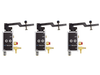
Bailey International LLC Needle Valve

Description
Hydraulic valves are manufactured in a variety of styles to function in different applications. Valves are used to manipulate the flow of hydraulic fluid within a hydraulic circuit and are activated either mechanically or electronically. Directional Control Valves are the most commonly used valve in a hydraulic system. Control valves direct the flow of hydraulic fluid from the pump to the actuators or other sections of the hydraulic circuit. Control valves are returned to their neutral state with a spring or held in each position with a detent mechanism. These valves are generally used to control the direction of a hydraulic motor or cylinder; they can also perform other functions in a circuit. Hydraulic directional control valves should be selected based upon both the size of the circuits and the components, both upstream and downstream to the valve. Flow ratings should be based upon the highest possible flow the valve will need to achieve. In most cases this flow would be from a cast body or a sectional style that can be assembled to meet the requirements of most applications. Most industrial solenoid-operated directional control valves can be interchanged between many manufacturers due to industry standard mounting connections.
Description
Hydraulic valves are manufactured in a variety of styles to function in different applications. Valves are used to manipulate the flow of hydraulic fluid within a hydraulic circuit and are activated either mechanically or electronically. Directional Control Valves are the most commonly used valve in a hydraulic system. Control valves direct the flow of hydraulic fluid from the pump to the actuators or other sections of the hydraulic circuit. Control valves are returned to their neutral state with a spring or held in each position with a detent mechanism. These valves are generally used to control the direction of a hydraulic motor or cylinder; they can also perform other functions in a circuit. Hydraulic directional control valves should be selected based upon both the size of the circuits and the components, both upstream and downstream to the valve. Flow ratings should be based upon the highest possible flow the valve will need to achieve. In most cases this flow would be from a cast body or a sectional style that can be assembled to meet the requirements of most applications. Most industrial solenoid-operated directional control valves can be interchanged between many manufacturers due to industry standard mounting connections.

Suppliers

Company
Product
Description
Supplier Links
Needle Valve -  - Bailey International LLC
Knoxville, TN, United States
Needle Valve
Needle Valve
Hydraulic valves are manufactured in a variety of styles to function in different applications. Valves are used to manipulate the flow of hydraulic fluid within a hydraulic circuit and are activated either mechanically or electronically. Directional Control Valves are the most commonly used valve in a hydraulic system. Control valves direct the flow of hydraulic fluid from the pump to the actuators or other sections of the hydraulic circuit. Control valves are returned to their neutral state with a spring or held in each position with a detent mechanism. These valves are generally used to control the direction of a hydraulic motor or cylinder; they can also perform other functions in a circuit. Hydraulic directional control valves should be selected based upon both the size of the circuits and the components, both upstream and downstream to the valve. Flow ratings should be based upon the highest possible flow the valve will need to achieve. In most cases this flow would be from a cast body or a sectional style that can be assembled to meet the requirements of most applications. Most industrial solenoid-operated directional control valves can be interchanged between many manufacturers due to industry standard mounting connections.

Hydraulic valves are manufactured in a variety of styles to function in different applications. Valves are used to manipulate the flow of hydraulic fluid within a hydraulic circuit and are activated either mechanically or electronically.

Directional Control Valves are the most commonly used valve in a hydraulic system. Control valves direct the flow of hydraulic fluid from the pump to the actuators or other sections of the hydraulic circuit. Control valves are returned to their neutral state with a spring or held in each position with a detent mechanism. These valves are generally used to control the direction of a hydraulic motor or cylinder; they can also perform other functions in a circuit.

Hydraulic directional control valves should be selected based upon both the size of the circuits and the components, both upstream and downstream to the valve. Flow ratings should be based upon the highest possible flow the valve will need to achieve. In most cases this flow would be from a cast body or a sectional style that can be assembled to meet the requirements of most applications. Most industrial solenoid-operated directional control valves can be interchanged between many manufacturers due to industry standard mounting connections.

Supplier's Site

Technical Specifications

  Bailey International LLC
Product Category Industrial Valves
Product Name Needle Valve
Valve Type Needle
Unlock Full Specs
to access all available technical data

Similar Products

Full Port Chrome Plated Brass Ball Valve - 171MCRL-1 - Bonomi North America, Inc.
Specs
Valve Type Ball
Primary Material Brass / Bronze
Media Water; Gas
View Details
Pressure Relief Valves -  - Technetics Group
Specs
Valve Type Relief
Primary Material Aluminum; Stainless Steel; Exotic Metal; PTFE
Media Jet & Rocket Fuels, Oxidizers, other Harsh Fluids
View Details
6 mm Zero Leak 316L Press-In Check Valve -  - Lee Co. (The)
Specs
Valve Type Check
Valve Size 0.23 inch (5.94 mm)
Connection Description Press-In - Into Plastic
View Details
1 1/2 in. Size Foot Valve|Master File - FV150 - Kuriyama of America, Inc.
Specs
Valve Type Foot Valve
Primary Material Cast Iron
Valve Size 1.50 inch (38.10 mm)
View Details