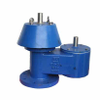
Shanghai Thinktank Process Management Co., Ltd Pneumatic Angle Type Control Valve

Description
Description Model HAP series angle type control valve body adopts an angular structure, unbalanced multi-stage pressure drop control valve is suitable for applications with high differential pressure and applications that produce flash evaporation and cavitation. According to the requirements in different service conditions, it is designed with various multihole cages that form a multi-stage pressure drop trim, so that the internal energy of high-speed media is consumed and flow velocity is reduced from the time when the fluids contact the first cage. As it is composed of various cages, the pressure is gradually reduced so that the medium pressure is always above the saturated vapor pressure, and the occurrence of flash evaporation and cavitation is eliminated. The standard configuration is the unbalanced single-seat plug and the plug and seat are subjected to hardening treatment to prolong the service life of the trim. The valves of large sizes can be designed with a balanced single-seat plug structure. STANDARD SPECIFICATION Trim feature Sleeve guided unbalanced trim structure, a combination of multi-hole cages Body type Straight-through type, angle type Bonnet type Standard type, heat dissipation type, cryogenic type, bellows Flow characteristic: Equal percentage, linear, quick open Shut-off class ASME B16.104 V (standard metal seat) ASME B16.104 VI (shut-off soft seat) Connection type The flange type, butt welding type Applicable temperature range -196°C – 570°C Actuator type Pneumatic diaphragm actuator Pneumatic piston actuator Electric actuator What Is The Difference Between Pressure Control Valve and Flow Control Valve
Request a Quote
Description
Description Model HAP series angle type control valve body adopts an angular structure, unbalanced multi-stage pressure drop control valve is suitable for applications with high differential pressure and applications that produce flash evaporation and cavitation. According to the requirements in different service conditions, it is designed with various multihole cages that form a multi-stage pressure drop trim, so that the internal energy of high-speed media is consumed and flow velocity is reduced from the time when the fluids contact the first cage. As it is composed of various cages, the pressure is gradually reduced so that the medium pressure is always above the saturated vapor pressure, and the occurrence of flash evaporation and cavitation is eliminated. The standard configuration is the unbalanced single-seat plug and the plug and seat are subjected to hardening treatment to prolong the service life of the trim. The valves of large sizes can be designed with a balanced single-seat plug structure. STANDARD SPECIFICATION Trim feature Sleeve guided unbalanced trim structure, a combination of multi-hole cages Body type Straight-through type, angle type Bonnet type Standard type, heat dissipation type, cryogenic type, bellows Flow characteristic: Equal percentage, linear, quick open Shut-off class ASME B16.104 V (standard metal seat) ASME B16.104 VI (shut-off soft seat) Connection type The flange type, butt welding type Applicable temperature range -196°C – 570°C Actuator type Pneumatic diaphragm actuator Pneumatic piston actuator Electric actuator What Is The Difference Between Pressure Control Valve and Flow Control Valve
Request a Quote

Suppliers

Company
Product
Description
Supplier Links
Pneumatic Angle Type Control Valve -  - Shanghai Thinktank Process Management Co., Ltd
Shanghai, China
Pneumatic Angle Type Control Valve
Description Model HAP series angle type control valve body adopts an angular structure, unbalanced multi-stage pressure drop control valve is suitable for applications with high differential pressure and applications that produce flash evaporation and cavitation. According to the requirements in different service conditions, it is designed with various multihole cages that form a multi-stage pressure drop trim, so that the internal energy of high-speed media is consumed and flow velocity is reduced from the time when the fluids contact the first cage. As it is composed of various cages, the pressure is gradually reduced so that the medium pressure is always above the saturated vapor pressure, and the occurrence of flash evaporation and cavitation is eliminated. The standard configuration is the unbalanced single-seat plug and the plug and seat are subjected to hardening treatment to prolong the service life of the trim. The valves of large sizes can be designed with a balanced single-seat plug structure. STANDARD SPECIFICATION Trim feature Sleeve guided unbalanced trim structure, a combination of multi-hole cages Body type Straight-through type, angle type Bonnet type Standard type, heat dissipation type, cryogenic type, bellows Flow characteristic: Equal percentage, linear, quick open Shut-off class ASME B16.104 V (standard metal seat) ASME B16.104 VI (shut-off soft seat) Connection type The flange type, butt welding type Applicable temperature range -196°C – 570°C Actuator type Pneumatic diaphragm actuator Pneumatic piston actuator Electric actuator What Is The Difference Between Pressure Control Valve and Flow Control Valve

Description

Model HAP series angle type control valve body adopts an angular structure, unbalanced multi-stage pressure drop control valve is suitable for applications with high differential pressure and applications that produce flash evaporation and cavitation. According to the requirements in different service conditions, it is designed with various multihole cages that form a multi-stage pressure drop trim, so that the internal energy of high-speed media is consumed and flow velocity is reduced from the time when the fluids contact the first cage. As it is composed of various cages, the pressure is gradually reduced so that the medium pressure is always above the saturated vapor pressure, and the occurrence of flash evaporation and cavitation is eliminated. The standard configuration is the unbalanced single-seat plug and the plug and seat are subjected to hardening treatment to prolong the service life of the trim. The valves of large sizes can be designed with a balanced single-seat plug structure.

STANDARD SPECIFICATION

Trim feature
Sleeve guided unbalanced trim structure, a combination of multi-hole cages

Body type
Straight-through type, angle type

Bonnet type
Standard type, heat dissipation type, cryogenic type, bellows

Flow characteristic:
Equal percentage, linear, quick open

Shut-off class
ASME B16.104 V (standard metal seat) ASME B16.104 VI (shut-off soft seat)

Connection type
The flange type, butt welding type

Applicable temperature range
-196°C – 570°C

Actuator type
Pneumatic diaphragm actuator
Pneumatic piston actuator
Electric actuator

What Is The Difference Between Pressure Control Valve and Flow Control Valve

Supplier's Site

Technical Specifications

  Shanghai Thinktank Process Management Co., Ltd
Product Category Industrial Valves
Product Name Pneumatic Angle Type Control Valve
Valve Type Control Valve; Directional; Angle
Unlock Full Specs
to access all available technical data

Similar Products

ESOV Series Swing Check Emergency Shut-Off Valves -  - Shanghai Thinktank Process Management Co., Ltd
Shanghai Thinktank Process Management Co., Ltd
Specs
Valve Type Control Valve; Directional; Plug
Valve Size 2.00 to 16.00 inch (50.80 to 406.40 mm)
Actuation Pneumatic
View Details
3-Way Diverting/Mixing Globe Valve -  - Shanghai Thinktank Process Management Co., Ltd
Shanghai Thinktank Process Management Co., Ltd
Specs
Valve Type Control Valve; Cryogenic; Directional; Diverter; Mixing; Globe
Media Steam; Air
View Details
Pump Flow Control Valves - ACV700 - Shanghai Thinktank Process Management Co., Ltd
Shanghai Thinktank Process Management Co., Ltd
Specs
Valve Type Control Valve; Directional; Float; Relief
Media Air
View Details
Quick Pressure Relief Valves - ACV900 - Shanghai Thinktank Process Management Co., Ltd
Shanghai Thinktank Process Management Co., Ltd
Specs
Valve Type Control Valve; Directional; Float; Relief
Media Air
View Details