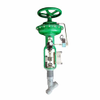
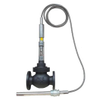
Shanghai Thinktank Process Management Co., Ltd Electric Temperature Control Valve

Description
Description Siemens electric temperature control valves are widely used in city heating, gas distribution, air conditioning, refrigeration, and other building automation control systems. It is also suitable for automatic process control systems in chemical, petroleum, mining, power plants, foods, and other industries. The controller features PI, PID adjustment, precise control, multi-loop control, and other capabilities that can monitor and control fluid flow, pressure, differential pressure, temperature, humidity, enthalpy, and air quality. The actuators are electro-mechanical and electro-hydraulic, with manual and automated adjustment, sensitive adjustment, a high shut-off force, and variable flow characteristics (linear or equal percentage). Electro-hydraulic actuator with automatic power failure reset protection, 0-10V or 4-20mA input signal, and valve position feedback function. The flow control valve is suitably used for controlling pipeline cooling water, low-pressure hot water, high-pressure hot water, salt water, thermal oil, and steam, with good linearity, adjustable ratio, tight sealing, high-temperature resistance, and anti-cavitation. Temperature Control Valve Features Stable and precise control with the proportional-integra l (PI) or proportional-integra l, differential (PID) adjustment function. For different site process conditions, the control parameters can be flexibly adjusted to achieve systematic control. The current temperature value can be read by the controller and observe the working status of the valve. Extendable functions, such as remote setting, temperature compensation, and over-temperature forecast. The packing seal adopts a V-ring high-temperature sealing assembly, which prevents the possibility of stem reporting dead or leakage. The stem and seat are paired and ground to ensure that the leakage is far below the national allowable standard. Electric Temperature Control Valve The temperature control valve is the most important regulating equipment for heating system flow adjustment. Relative flow rate refers to the temperature control valve in a certain degree of open flow rate and the ratio of full open flow rate G / Gmax; The temperature control valve in a certain degree of open stroke and the ratio of full stroke l is called the relative stroke. The relationship between relative travel and relative flow is called the flow characteristics of the temperature control valve, that is G/Gmax = f(l). The relationship between them is expressed as linear characteristics, fast-opening characteristics, equal percentage characteristics, parabolic characteristics, and several characteristic curves. For the radiator, from the hydraulic stability and thermal scheduling point of view, the heat dissipation and flow relationship are expressed as a set of the upper parabolic curves, the flow G increases, and the heat dissipation Q gradually tends to saturate. In order to make the system has good regulation characteristics, easy to use equal percentage flow characteristics of the regulating valve to compensate for the non-linear impact of the radiator itself (1). Valve power degree on the impact of regulation characteristics. Adjustable ratio R for the temperature control valve can control the large flow rate and small flow rate ratio: R = Gmax / Gmin Gmax for the temperature control valve fully open when the flow rate, can also be seen as a radiator design flow; Gmin is with the temperature control valve right degree size and change. Radiator system, temperature control valve, and radiator for the series connection, so the adjustable ratio R and valve power relationship: R = RmaxKV0.5 (2) VF61 Stainless Steel Series Mixing Electric Temperature Control Valve VF61 Stainless Steel Series temperature control valves are suitable for continuous control in district heating systems and HVAC systems. They can be assembled with Siemens SAX, SKD, SKB, SKC SBV SBX series actuators. VF61 series stainless steel electric temperature control valve, 2-way valve PN16/PN25, flange connection, stroke ≤VF61.100=20mm; ≥VF61.125=40mm. Product Model VF61-40, VF-50, VF-65, VF-80, VF-100 electric temperature control valve VF61 Series Technical Parameters High Shut-off Force Flange Type Two-way Control Valve 304/316L stainless steel series flange connection control valve. Nominal pressure: PN40 Stroke: VF61.32 ~ VF61.l00: 20mm VF61.l00 ~ VF61.200: 40mm Leakage:0…0.1%Kvs Medium temperature: -25…+350℃ Flow characteristics: isometric Material: valve body: 304 stainless steel Stem: stainless steel Valve plug: stainless steel Stem seal: combined special sealing electric temperature control valve
Request a Quote
Description
Description Siemens electric temperature control valves are widely used in city heating, gas distribution, air conditioning, refrigeration, and other building automation control systems. It is also suitable for automatic process control systems in chemical, petroleum, mining, power plants, foods, and other industries. The controller features PI, PID adjustment, precise control, multi-loop control, and other capabilities that can monitor and control fluid flow, pressure, differential pressure, temperature, humidity, enthalpy, and air quality. The actuators are electro-mechanical and electro-hydraulic, with manual and automated adjustment, sensitive adjustment, a high shut-off force, and variable flow characteristics (linear or equal percentage). Electro-hydraulic actuator with automatic power failure reset protection, 0-10V or 4-20mA input signal, and valve position feedback function. The flow control valve is suitably used for controlling pipeline cooling water, low-pressure hot water, high-pressure hot water, salt water, thermal oil, and steam, with good linearity, adjustable ratio, tight sealing, high-temperature resistance, and anti-cavitation. Temperature Control Valve Features Stable and precise control with the proportional-integra l (PI) or proportional-integra l, differential (PID) adjustment function. For different site process conditions, the control parameters can be flexibly adjusted to achieve systematic control. The current temperature value can be read by the controller and observe the working status of the valve. Extendable functions, such as remote setting, temperature compensation, and over-temperature forecast. The packing seal adopts a V-ring high-temperature sealing assembly, which prevents the possibility of stem reporting dead or leakage. The stem and seat are paired and ground to ensure that the leakage is far below the national allowable standard. Electric Temperature Control Valve The temperature control valve is the most important regulating equipment for heating system flow adjustment. Relative flow rate refers to the temperature control valve in a certain degree of open flow rate and the ratio of full open flow rate G / Gmax; The temperature control valve in a certain degree of open stroke and the ratio of full stroke l is called the relative stroke. The relationship between relative travel and relative flow is called the flow characteristics of the temperature control valve, that is G/Gmax = f(l). The relationship between them is expressed as linear characteristics, fast-opening characteristics, equal percentage characteristics, parabolic characteristics, and several characteristic curves. For the radiator, from the hydraulic stability and thermal scheduling point of view, the heat dissipation and flow relationship are expressed as a set of the upper parabolic curves, the flow G increases, and the heat dissipation Q gradually tends to saturate. In order to make the system has good regulation characteristics, easy to use equal percentage flow characteristics of the regulating valve to compensate for the non-linear impact of the radiator itself (1). Valve power degree on the impact of regulation characteristics. Adjustable ratio R for the temperature control valve can control the large flow rate and small flow rate ratio: R = Gmax / Gmin Gmax for the temperature control valve fully open when the flow rate, can also be seen as a radiator design flow; Gmin is with the temperature control valve right degree size and change. Radiator system, temperature control valve, and radiator for the series connection, so the adjustable ratio R and valve power relationship: R = RmaxKV0.5 (2) VF61 Stainless Steel Series Mixing Electric Temperature Control Valve VF61 Stainless Steel Series temperature control valves are suitable for continuous control in district heating systems and HVAC systems. They can be assembled with Siemens SAX, SKD, SKB, SKC SBV SBX series actuators. VF61 series stainless steel electric temperature control valve, 2-way valve PN16/PN25, flange connection, stroke ≤VF61.100=20mm; ≥VF61.125=40mm. Product Model VF61-40, VF-50, VF-65, VF-80, VF-100 electric temperature control valve VF61 Series Technical Parameters High Shut-off Force Flange Type Two-way Control Valve 304/316L stainless steel series flange connection control valve. Nominal pressure: PN40 Stroke: VF61.32 ~ VF61.l00: 20mm VF61.l00 ~ VF61.200: 40mm Leakage:0…0.1%Kvs Medium temperature: -25…+350℃ Flow characteristics: isometric Material: valve body: 304 stainless steel Stem: stainless steel Valve plug: stainless steel Stem seal: combined special sealing electric temperature control valve
Request a Quote

Suppliers

Company
Product
Description
Supplier Links
Electric Temperature Control Valve -  - Shanghai Thinktank Process Management Co., Ltd
Shanghai, China
Electric Temperature Control Valve
Description Siemens electric temperature control valves are widely used in city heating, gas distribution, air conditioning, refrigeration, and other building automation control systems. It is also suitable for automatic process control systems in chemical, petroleum, mining, power plants, foods, and other industries. The controller features PI, PID adjustment, precise control, multi-loop control, and other capabilities that can monitor and control fluid flow, pressure, differential pressure, temperature, humidity, enthalpy, and air quality. The actuators are electro-mechanical and electro-hydraulic, with manual and automated adjustment, sensitive adjustment, a high shut-off force, and variable flow characteristics (linear or equal percentage). Electro-hydraulic actuator with automatic power failure reset protection, 0-10V or 4-20mA input signal, and valve position feedback function. The flow control valve is suitably used for controlling pipeline cooling water, low-pressure hot water, high-pressure hot water, salt water, thermal oil, and steam, with good linearity, adjustable ratio, tight sealing, high-temperature resistance, and anti-cavitation. Temperature Control Valve Features Stable and precise control with the proportional-integra l (PI) or proportional-integra l, differential (PID) adjustment function. For different site process conditions, the control parameters can be flexibly adjusted to achieve systematic control. The current temperature value can be read by the controller and observe the working status of the valve. Extendable functions, such as remote setting, temperature compensation, and over-temperature forecast. The packing seal adopts a V-ring high-temperature sealing assembly, which prevents the possibility of stem reporting dead or leakage. The stem and seat are paired and ground to ensure that the leakage is far below the national allowable standard. Electric Temperature Control Valve The temperature control valve is the most important regulating equipment for heating system flow adjustment. Relative flow rate refers to the temperature control valve in a certain degree of open flow rate and the ratio of full open flow rate G / Gmax; The temperature control valve in a certain degree of open stroke and the ratio of full stroke l is called the relative stroke. The relationship between relative travel and relative flow is called the flow characteristics of the temperature control valve, that is G/Gmax = f(l). The relationship between them is expressed as linear characteristics, fast-opening characteristics, equal percentage characteristics, parabolic characteristics, and several characteristic curves. For the radiator, from the hydraulic stability and thermal scheduling point of view, the heat dissipation and flow relationship are expressed as a set of the upper parabolic curves, the flow G increases, and the heat dissipation Q gradually tends to saturate. In order to make the system has good regulation characteristics, easy to use equal percentage flow characteristics of the regulating valve to compensate for the non-linear impact of the radiator itself (1). Valve power degree on the impact of regulation characteristics. Adjustable ratio R for the temperature control valve can control the large flow rate and small flow rate ratio: R = Gmax / Gmin Gmax for the temperature control valve fully open when the flow rate, can also be seen as a radiator design flow; Gmin is with the temperature control valve right degree size and change. Radiator system, temperature control valve, and radiator for the series connection, so the adjustable ratio R and valve power relationship: R = RmaxKV0.5 (2) VF61 Stainless Steel Series Mixing Electric Temperature Control Valve VF61 Stainless Steel Series temperature control valves are suitable for continuous control in district heating systems and HVAC systems. They can be assembled with Siemens SAX, SKD, SKB, SKC SBV SBX series actuators. VF61 series stainless steel electric temperature control valve, 2-way valve PN16/PN25, flange connection, stroke ≤VF61.100=20mm; ≥VF61.125=40mm. Product Model VF61-40, VF-50, VF-65, VF-80, VF-100 electric temperature control valve VF61 Series Technical Parameters High Shut-off Force Flange Type Two-way Control Valve 304/316L stainless steel series flange connection control valve. Nominal pressure: PN40 Stroke: VF61.32 ~ VF61.l00: 20mm VF61.l00 ~ VF61.200: 40mm Leakage:0…0.1%Kvs Medium temperature: -25…+350℃ Flow characteristics: isometric Material: valve body: 304 stainless steel Stem: stainless steel Valve plug: stainless steel Stem seal: combined special sealing electric temperature control valve

Description

Siemens electric temperature control valves are widely used in city heating, gas distribution, air conditioning, refrigeration, and other building automation control systems. It is also suitable for automatic process control systems in chemical, petroleum, mining, power plants, foods, and other industries.

The controller features PI, PID adjustment, precise control, multi-loop control, and other capabilities that can monitor and control fluid flow, pressure, differential pressure, temperature, humidity, enthalpy, and air quality.

The actuators are electro-mechanical and electro-hydraulic, with manual and automated adjustment, sensitive adjustment, a high shut-off force, and variable flow characteristics (linear or equal percentage). Electro-hydraulic actuator with automatic power failure reset protection, 0-10V or 4-20mA input signal, and valve position feedback function.

The flow control valve is suitably used for controlling pipeline cooling water, low-pressure hot water, high-pressure hot water, salt water, thermal oil, and steam, with good linearity, adjustable ratio, tight sealing, high-temperature resistance, and anti-cavitation.

Temperature Control Valve Features

Stable and precise control with the proportional-integral (PI) or proportional-integral, differential (PID) adjustment function.


  • For different site process conditions, the control parameters can be flexibly adjusted to achieve systematic control.
  • The current temperature value can be read by the controller and observe the working status of the valve.
  • Extendable functions, such as remote setting, temperature compensation, and over-temperature forecast.
  • The packing seal adopts a V-ring high-temperature sealing assembly, which prevents the possibility of stem reporting dead or leakage.
  • The stem and seat are paired and ground to ensure that the leakage is far below the national allowable standard.

Electric Temperature Control Valve

The temperature control valve is the most important regulating equipment for heating system flow adjustment.

Relative flow rate refers to the temperature control valve in a certain degree of open flow rate and the ratio of full open flow rate G / Gmax; The temperature control valve in a certain degree of open stroke and the ratio of full stroke l is called the relative stroke. The relationship between relative travel and relative flow is called the flow characteristics of the temperature control valve, that is G/Gmax = f(l). The relationship between them is expressed as linear characteristics, fast-opening characteristics, equal percentage characteristics, parabolic characteristics, and several characteristic curves.

For the radiator, from the hydraulic stability and thermal scheduling point of view, the heat dissipation and flow relationship are expressed as a set of the upper parabolic curves, the flow G increases, and the heat dissipation Q gradually tends to saturate. In order to make the system has good regulation characteristics, easy to use equal percentage flow characteristics of the regulating valve to compensate for the non-linear impact of the radiator itself (1).

Valve power degree on the impact of regulation characteristics. Adjustable ratio R for the temperature control valve can control the large flow rate and small flow rate ratio:

R = Gmax / Gmin

Gmax for the temperature control valve fully open when the flow rate, can also be seen as a radiator design flow; Gmin is with the temperature control valve right degree size and change. Radiator system, temperature control valve, and radiator for the series connection, so the adjustable ratio R and valve power relationship: R = RmaxKV0.5 (2)

VF61 Stainless Steel Series Mixing Electric Temperature Control Valve

VF61 Stainless Steel Series temperature control valves are suitable for continuous control in district heating systems and HVAC systems. They can be assembled with Siemens SAX, SKD, SKB, SKC SBV SBX series actuators. VF61 series stainless steel electric temperature control valve, 2-way valve PN16/PN25, flange connection, stroke ≤VF61.100=20mm; ≥VF61.125=40mm.

Product Model

VF61-40, VF-50, VF-65, VF-80, VF-100

electric temperature control valve

VF61 Series Technical Parameters

High Shut-off Force Flange Type Two-way Control Valve

304/316L stainless steel series flange connection control valve.


  • Nominal pressure: PN40
  • Stroke: VF61.32 ~ VF61.l00: 20mm
    VF61.l00 ~ VF61.200: 40mm
  • Leakage:0…0.1%Kvs
  • Medium temperature: -25…+350℃
  • Flow characteristics: isometric
  • Material: valve body: 304 stainless steel
  • Stem: stainless steel
  • Valve plug: stainless steel
  • Stem seal: combined special sealing

electric temperature control valve

Supplier's Site

Technical Specifications

  Shanghai Thinktank Process Management Co., Ltd
Product Category Industrial Valves
Product Name Electric Temperature Control Valve
Valve Type Control Valve; Directional
Unlock Full Specs
to access all available technical data

Similar Products

Level Control Valves -  - Shanghai Thinktank Process Management Co., Ltd
Shanghai Thinktank Process Management Co., Ltd
Specs
Valve Type Control Valve; Directional; Globe
Valve Size 2.00 to 20.00 inch (50.80 to 508.00 mm)
View Details
ASME Lined Bellows Safety Valve - 5216 Series - Shanghai Thinktank Process Management Co., Ltd
Shanghai Thinktank Process Management Co., Ltd
Specs
Valve Type Directional; Relief; Safety
Media Steam
Valve Size 1.00 to 10.00 inch (25.40 to 254.00 mm)
View Details
Fire safety shut-off valve -  - Shanghai Thinktank Process Management Co., Ltd
Shanghai Thinktank Process Management Co., Ltd
Specs
Valve Type Directional; Safety; Shut Off
Primary Material Stainless Steel; Steel
Media Ammonia, Gas, Liquefied Gas, Methanol, Oil, Combustible Gas/Liquid
View Details
DIN Gate Valve with Bellows -  - Shanghai Thinktank Process Management Co., Ltd
Shanghai Thinktank Process Management Co., Ltd
Specs
Valve Type Directional; Bellows; Gate
View Details