For Dilute Solution Viscosity of Polymers in Organic Solvents and Aqueous Solutions
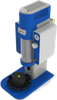
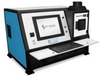
miniPV®-X is a fully-automated, single-bath, benchtop viscometer with a 10 position sample handler for unattended processing and testing of dilute solution viscosity of polymers in organic solvents and aqueous solutions. The Ubbelohde-style tube covers a 100-fold viscosity range between 0.3 cSt and 5,000 cSt from 20 °C to 100 °C.
Elastomers
Plastics
Thermoplastic elastomers
Copolymers
Biopolymers
Polymer blends
Oligomers
Pre-polymers
Resins
Viscosity modifiers
Designed to meet specific polymer industry needs
Compatible with organic solvents and aqueous solutions
On-board software with specialized polymer calculations determines relative, inherent, reduced, specific and intrinsic viscosity
Superb temperature control (±0.01°C) from 20 °C to 100 °C (with available options)
Kinematic viscosity range: 0.3 mm²/s (cSt) to 5,000 mm²/s (cSt) in 100-fold increments. Special ranges available upon request.
Compact, robust design
Fits in roughly the same bench-top area as an analytical balance
Conserves valuable lab space
Proven CANNON® viscometer platform offers reliability and outstanding support
Optional Peltier cooling is environmentally friendly and requires no external refrigeration
Fully automated bench-top testing
Software controls the instrument and facilitates tasks such as calibration, data entry, method specification, calculation selection, report formatting, and data exporting
10 position sample handler for unattended operation
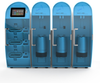
Single PC manages up to 4 instruments using VISCPRO® software
Reduces operator to operator variability
Reduced consumable costs
ASTM D 446/ISO 3105 Ubbelohde-style tube reduces solvent usage and disposal costs by 50%
Automated vial washing & drying reduces vial consumption and replaces manual washing
Simplified maintenance & test versatility
Modular bath for easy maintenance access
Viscometer tube replacement completed in minutes
Single-point temperature calibration avoids need for tube recalibration and maximizes test flexibility
For Dilute Solution Viscosity of Polymers in Organic Solvents and Aqueous Solutions
miniPV®-X is a fully-automated, single-bath, benchtop viscometer with a 10 position sample handler for unattended processing and testing of dilute solution viscosity of polymers in organic solvents and aqueous solutions. The Ubbelohde-style tube covers a 100-fold viscosity range between 0.3 cSt and 5,000 cSt from 20 °C to 100 °C.
- Elastomers
- Plastics
- Thermoplastic elastomers
- Copolymers
- Biopolymers
- Polymer blends
- Oligomers
- Pre-polymers
- Resins
- Viscosity modifiers
Designed to meet specific polymer industry needs
- Compatible with organic solvents and aqueous solutions
- On-board software with specialized polymer calculations determines relative, inherent, reduced, specific and intrinsic viscosity
- Superb temperature control (±0.01°C) from 20 °C to 100 °C (with available options)
- Kinematic viscosity range: 0.3 mm²/s (cSt) to 5,000 mm²/s (cSt) in 100-fold increments. Special ranges available upon request.
Compact, robust design
- Fits in roughly the same bench-top area as an analytical balance
- Conserves valuable lab space
- Proven CANNON® viscometer platform offers reliability and outstanding support
- Optional Peltier cooling is environmentally friendly and requires no external refrigeration
Fully automated bench-top testing
- Software controls the instrument and facilitates tasks such as calibration, data entry, method specification, calculation selection, report formatting, and data exporting
- 10 position sample handler for unattended operation
- Single PC manages up to 4 instruments using VISCPRO® software
- Reduces operator to operator variability
Reduced consumable costs
- ASTM D 446/ISO 3105 Ubbelohde-style tube reduces solvent usage and disposal costs by 50%
- Automated vial washing & drying reduces vial consumption and replaces manual washing
Simplified maintenance & test versatility
- Modular bath for easy maintenance access
- Viscometer tube replacement completed in minutes
- Single-point temperature calibration avoids need for tube recalibration and maximizes test flexibility