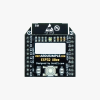
ArduSimple Japan CLAS Corrections L6 Receiver NEO-D9C AS-XBEE-LBAND-NEOD9C-SMA-00

Description
QZSSQZSS is the japanese satellite navigation system, and is only deployed over Japan is a constellation of satellites available over and around Japan. Via L6 band (L-band), these satellites provide 2 services: Centimeter Level Augmentation Service (CLAS) providing centimeter level correction data in Japan. Multi-GNSSGlobal Navigation Satellite System, it’s the technical word to refer to all satellite navigation systems together: GPS, Galileo, GLONASS, BeiDou, etc Advanced Demonstration tool for Orbit and Clock Analysis (MADOCA) providing decimeter level correction in Japan and neighboring countries like South Korea. If you are in this region, just: Plug ArduSimple CLAS Corrections L6 receiver onto your XBee socket Check that your ZED-F9P has firmware 1.32 or newer Configure ZED-F9P UART2 to accept UBX protocol in at 9’600bps Wait a few minutes and start enjoying high precision GNSS. Good to know: – Default configuration is for CLAS. Contact us for MADOCA settings. – This board includes u-blox NEO-D9C – The product includes an RF-splitter so you only need 1 antenna for both your RTK receiver and the L-band receiver. If you want you can also connect to separate antennas, one for the RTK receiver and another one for the L-band receiver. – You will need a good L-band (L6) antenna to receive the correction stream like Calibrated Survey GNSS Tripleband + L-band antenna (IP67) or Lightweight helical GNSS Tripleband + L-band antenna (IP67) – This XBee accessory is only compatible with u-blox ZED-F9P and ZED-F9R boards (simpleRTK2B series). Includes: – Pre-configured NEO-D9C module with soldered headers (XBee socket compatible) – Pigtail uFL to SMA-Male (20cm) so you can share one antenna with 2 receivers AS-XBEE-LBAND-NEOD9C -SMA-00
Request a Quote Datasheet
Description
QZSSQZSS is the japanese satellite navigation system, and is only deployed over Japan is a constellation of satellites available over and around Japan. Via L6 band (L-band), these satellites provide 2 services: Centimeter Level Augmentation Service (CLAS) providing centimeter level correction data in Japan. Multi-GNSSGlobal Navigation Satellite System, it’s the technical word to refer to all satellite navigation systems together: GPS, Galileo, GLONASS, BeiDou, etc Advanced Demonstration tool for Orbit and Clock Analysis (MADOCA) providing decimeter level correction in Japan and neighboring countries like South Korea. If you are in this region, just: Plug ArduSimple CLAS Corrections L6 receiver onto your XBee socket Check that your ZED-F9P has firmware 1.32 or newer Configure ZED-F9P UART2 to accept UBX protocol in at 9’600bps Wait a few minutes and start enjoying high precision GNSS. Good to know: – Default configuration is for CLAS. Contact us for MADOCA settings. – This board includes u-blox NEO-D9C – The product includes an RF-splitter so you only need 1 antenna for both your RTK receiver and the L-band receiver. If you want you can also connect to separate antennas, one for the RTK receiver and another one for the L-band receiver. – You will need a good L-band (L6) antenna to receive the correction stream like Calibrated Survey GNSS Tripleband + L-band antenna (IP67) or Lightweight helical GNSS Tripleband + L-band antenna (IP67) – This XBee accessory is only compatible with u-blox ZED-F9P and ZED-F9R boards (simpleRTK2B series). Includes: – Pre-configured NEO-D9C module with soldered headers (XBee socket compatible) – Pigtail uFL to SMA-Male (20cm) so you can share one antenna with 2 receivers AS-XBEE-LBAND-NEOD9C -SMA-00
Request a Quote Datasheet

Suppliers

Company
Product
Description
Supplier Links
Japan CLAS Corrections L6 Receiver NEO-D9C - AS-XBEE-LBAND-NEOD9C-SMA-00 - ArduSimple
Andorra la Vella, Andorra
Japan CLAS Corrections L6 Receiver NEO-D9C
AS-XBEE-LBAND-NEOD9C-SMA-00
Japan CLAS Corrections L6 Receiver NEO-D9C AS-XBEE-LBAND-NEOD9C-SMA-00
QZSSQZSS is the japanese satellite navigation system, and is only deployed over Japan is a constellation of satellites available over and around Japan. Via L6 band (L-band), these satellites provide 2 services: Centimeter Level Augmentation Service (CLAS) providing centimeter level correction data in Japan. Multi-GNSSGlobal Navigation Satellite System, it’s the technical word to refer to all satellite navigation systems together: GPS, Galileo, GLONASS, BeiDou, etc Advanced Demonstration tool for Orbit and Clock Analysis (MADOCA) providing decimeter level correction in Japan and neighboring countries like South Korea. If you are in this region, just: Plug ArduSimple CLAS Corrections L6 receiver onto your XBee socket Check that your ZED-F9P has firmware 1.32 or newer Configure ZED-F9P UART2 to accept UBX protocol in at 9’600bps Wait a few minutes and start enjoying high precision GNSS. Good to know: – Default configuration is for CLAS. Contact us for MADOCA settings. – This board includes u-blox NEO-D9C – The product includes an RF-splitter so you only need 1 antenna for both your RTK receiver and the L-band receiver. If you want you can also connect to separate antennas, one for the RTK receiver and another one for the L-band receiver. – You will need a good L-band (L6) antenna to receive the correction stream like Calibrated Survey GNSS Tripleband + L-band antenna (IP67) or Lightweight helical GNSS Tripleband + L-band antenna (IP67) – This XBee accessory is only compatible with u-blox ZED-F9P and ZED-F9R boards (simpleRTK2B series). Includes: – Pre-configured NEO-D9C module with soldered headers (XBee socket compatible) – Pigtail uFL to SMA-Male (20cm) so you can share one antenna with 2 receivers AS-XBEE-LBAND-NEOD9C -SMA-00

QZSSQZSS is the japanese satellite navigation system, and is only deployed over Japan is a constellation of satellites available over and around Japan. Via L6 band (L-band), these satellites provide 2 services:

  • Centimeter Level Augmentation Service (CLAS) providing centimeter level correction data in Japan.
  • Multi-GNSSGlobal Navigation Satellite System, it’s the technical word to refer to all satellite navigation systems together: GPS, Galileo, GLONASS, BeiDou, etc Advanced Demonstration tool for Orbit and Clock Analysis (MADOCA) providing decimeter level correction in Japan and neighboring countries like South Korea.

If you are in this region, just:

  1. Plug ArduSimple CLAS Corrections L6 receiver onto your XBee socket
  2. Check that your ZED-F9P has firmware 1.32 or newer
  3. Configure ZED-F9P UART2 to accept UBX protocol in at 9’600bps
  4. Wait a few minutes and start enjoying high precision GNSS.

Good to know:
– Default configuration is for CLAS. Contact us for MADOCA settings.
– This board includes u-blox NEO-D9C
– The product includes an RF-splitter so you only need 1 antenna for both your RTK receiver and the L-band receiver. If you want you can also connect to separate antennas, one for the RTK receiver and another one for the L-band receiver.
– You will need a good L-band (L6) antenna to receive the correction stream like Calibrated Survey GNSS Tripleband + L-band antenna (IP67) or Lightweight helical GNSS Tripleband + L-band antenna (IP67)
– This XBee accessory is only compatible with u-blox ZED-F9P and ZED-F9R boards (simpleRTK2B series).

Includes:
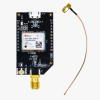
– Pre-configured NEO-D9C module with soldered headers (XBee socket compatible)
– Pigtail uFL to SMA-Male (20cm) so you can share one antenna with 2 receivers

AS-XBEE-LBAND-NEOD9C-SMA-00
Supplier's Site Datasheet

Technical Specifications

  ArduSimple
Product Category Network and Communication Chips
Product Number AS-XBEE-LBAND-NEOD9C-SMA-00
Product Name Japan CLAS Corrections L6 Receiver NEO-D9C
Device Type Receiver
Unlock Full Specs
to access all available technical data

Similar Products

WiFi NTRIP Master - AS-XBEE-WIFI-2.4-INT-04 - ArduSimple
Specs
Device Type Receiver
Technology Wi-Fi / WiMAX / Wi-Mesh
Operating Temperature -40 to 85 C (-40 to 185 F)
View Details
Radio module 450MHz - AS-XBEE-450MHZ-WW-UFLSMA-00 - ArduSimple
Specs
Device Type Receiver
Operating Temperature -40 to 85 C (-40 to 185 F)
View Details
BT+BLE Bridge - AS-XBEE-BLE-INT-00 - ArduSimple
Specs
Device Type Receiver
Technology Wi-Fi / WiMAX / Wi-Mesh
View Details
Ethernet NTRIP Master - AS-XBEE-ETH-100-RJ45-00 - ArduSimple
Specs
Device Type Receiver
Operating Temperature -40 to 85 C (-40 to 185 F)
View Details