Boonton Electronics Corporation RF Sensor 56318

Description
The 56318 is a used 18 GHz 0.1 Watts RF Sensor from Boonton. Electronic test equipment sensors measure the power of waveforms, such as multi-tone and modulated radiofrequency (RF) waveforms. Sensors gather highly accurate modulation measurements using diode detectors. Additional Features: Peak Power Sensor Fast measurement speed Wide dynamic range (-70 dBm to +20 dBm) Calibration factors, linearity and temperature compensations data stored in EEPROM Excellent SWR for reducing mismatch uncertainty Accurate calibration and unique traceability to NIST Compatible with the most of Boonton power meter series Frequency range: 0.5-18 GHz Dynamic range Peak Power Range: -24 to +20 dBm CW Power Range: -34 to +20 dBm Int. Trigger Range: -10 to +20 dBm Overload Rating-Pulse/Continu ous 1 W for 1µs; 200 mW Sensor Response Fast Risetime (Bandwidth): <15 ns (35 MHz) Slow Risetime (Bandwidth): <200ns (1.75 MHz) Maximum SWR Frequency: 0.5-2 GHz; SWR: 1.15 Frequency: 2-16 GHz; SWR: 1.28 Frequency: 16-18 GHz; SWR: 1.34 The overall performance of a power meter dependents on the power sensor employed. Boonton has a variety of quality power sensors to meet virtually all applications. Boonton has a complete line of Peak and Average power sensors up to 40 GHz for all of your fast rise time, wide bandwidth and wide dynamic range applications. Boonton has a large variety of power sensors that are compatible with the 4540, 4500B, 4300, 4240 and 4530 series of Boonton power meters. The power meter specifications describe the instrument’s warranted performance. These specifications are valid over the instrument’s operational and environmental ranges after performing a zeroing/calibration procedure unless otherwise stated. Measurement uncertainty information can be found in the Boonton power sensor manual that is available upon request. Functions of Power Sensors The sensor converts the incident RF or microwave power to an equivalent voltage that can be processed by the power meter. Next, the sensor presents to the incident power impedance that is closely matched to the transmission system. Both must be done with minimal drift and noise for the most accurate measurements. Calibration and Traceability Boonton employs both a linearity calibration as well as a frequency response calibration. This maximizes the performance of Diode Sensors and corrects non-linearity on all ranges. Linearity calibration can be used to extend the operating range of a Diode Sensor. It can also be used to correct non-linearity throughout a Thermocouple or Diode sensor’s dynamic range. Frequency calibration factors (NIST traceable) and other data are stored within all peak power sensors. Linearity calibration is performed using the peak power meter’s built-in calibrator. Sensor Selection Boonton Diode Sensors are constructed using balanced diode detectors. This dual diode configuration offers increased sensitivity and harmonic suppression when compared to a single diode sensor. When choosing a power sensor, several factors must be considered including frequency range, dynamic range and modulation. The sensor should have a faster rise time than that of the modulated signal. Boonton offers various peak power sensors for a huge variety of frequency ranges allowing measurements with widest dynamic range and fastest rise times.
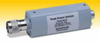
Description
The 56318 is a used 18 GHz 0.1 Watts RF Sensor from Boonton. Electronic test equipment sensors measure the power of waveforms, such as multi-tone and modulated radiofrequency (RF) waveforms. Sensors gather highly accurate modulation measurements using diode detectors. Additional Features: Peak Power Sensor Fast measurement speed Wide dynamic range (-70 dBm to +20 dBm) Calibration factors, linearity and temperature compensations data stored in EEPROM Excellent SWR for reducing mismatch uncertainty Accurate calibration and unique traceability to NIST Compatible with the most of Boonton power meter series Frequency range: 0.5-18 GHz Dynamic range Peak Power Range: -24 to +20 dBm CW Power Range: -34 to +20 dBm Int. Trigger Range: -10 to +20 dBm Overload Rating-Pulse/Continu ous 1 W for 1µs; 200 mW Sensor Response Fast Risetime (Bandwidth): <15 ns (35 MHz) Slow Risetime (Bandwidth): <200ns (1.75 MHz) Maximum SWR Frequency: 0.5-2 GHz; SWR: 1.15 Frequency: 2-16 GHz; SWR: 1.28 Frequency: 16-18 GHz; SWR: 1.34 The overall performance of a power meter dependents on the power sensor employed. Boonton has a variety of quality power sensors to meet virtually all applications. Boonton has a complete line of Peak and Average power sensors up to 40 GHz for all of your fast rise time, wide bandwidth and wide dynamic range applications. Boonton has a large variety of power sensors that are compatible with the 4540, 4500B, 4300, 4240 and 4530 series of Boonton power meters. The power meter specifications describe the instrument’s warranted performance. These specifications are valid over the instrument’s operational and environmental ranges after performing a zeroing/calibration procedure unless otherwise stated. Measurement uncertainty information can be found in the Boonton power sensor manual that is available upon request. Functions of Power Sensors The sensor converts the incident RF or microwave power to an equivalent voltage that can be processed by the power meter. Next, the sensor presents to the incident power impedance that is closely matched to the transmission system. Both must be done with minimal drift and noise for the most accurate measurements. Calibration and Traceability Boonton employs both a linearity calibration as well as a frequency response calibration. This maximizes the performance of Diode Sensors and corrects non-linearity on all ranges. Linearity calibration can be used to extend the operating range of a Diode Sensor. It can also be used to correct non-linearity throughout a Thermocouple or Diode sensor’s dynamic range. Frequency calibration factors (NIST traceable) and other data are stored within all peak power sensors. Linearity calibration is performed using the peak power meter’s built-in calibrator. Sensor Selection Boonton Diode Sensors are constructed using balanced diode detectors. This dual diode configuration offers increased sensitivity and harmonic suppression when compared to a single diode sensor. When choosing a power sensor, several factors must be considered including frequency range, dynamic range and modulation. The sensor should have a faster rise time than that of the modulated signal. Boonton offers various peak power sensors for a huge variety of frequency ranges allowing measurements with widest dynamic range and fastest rise times.

Suppliers

Company
Product
Description
Supplier Links
RF Sensor 56318
The 56318 is a used 18 GHz 0.1 Watts RF Sensor from Boonton. Electronic test equipment sensors measure the power of waveforms, such as multi-tone and modulated radiofrequency (RF) waveforms. Sensors gather highly accurate modulation measurements using diode detectors. Additional Features: Peak Power Sensor Fast measurement speed Wide dynamic range (-70 dBm to +20 dBm) Calibration factors, linearity and temperature compensations data stored in EEPROM Excellent SWR for reducing mismatch uncertainty Accurate calibration and unique traceability to NIST Compatible with the most of Boonton power meter series Frequency range: 0.5-18 GHz Dynamic range Peak Power Range: -24 to +20 dBm CW Power Range: -34 to +20 dBm Int. Trigger Range: -10 to +20 dBm Overload Rating-Pulse/Continu ous 1 W for 1µs; 200 mW Sensor Response Fast Risetime (Bandwidth): <15 ns (35 MHz) Slow Risetime (Bandwidth): <200ns (1.75 MHz) Maximum SWR Frequency: 0.5-2 GHz; SWR: 1.15 Frequency: 2-16 GHz; SWR: 1.28 Frequency: 16-18 GHz; SWR: 1.34 The overall performance of a power meter dependents on the power sensor employed. Boonton has a variety of quality power sensors to meet virtually all applications. Boonton has a complete line of Peak and Average power sensors up to 40 GHz for all of your fast rise time, wide bandwidth and wide dynamic range applications. Boonton has a large variety of power sensors that are compatible with the 4540, 4500B, 4300, 4240 and 4530 series of Boonton power meters. The power meter specifications describe the instrument’s warranted performance. These specifications are valid over the instrument’s operational and environmental ranges after performing a zeroing/calibration procedure unless otherwise stated. Measurement uncertainty information can be found in the Boonton power sensor manual that is available upon request. Functions of Power Sensors The sensor converts the incident RF or microwave power to an equivalent voltage that can be processed by the power meter. Next, the sensor presents to the incident power impedance that is closely matched to the transmission system. Both must be done with minimal drift and noise for the most accurate measurements. Calibration and Traceability Boonton employs both a linearity calibration as well as a frequency response calibration. This maximizes the performance of Diode Sensors and corrects non-linearity on all ranges. Linearity calibration can be used to extend the operating range of a Diode Sensor. It can also be used to correct non-linearity throughout a Thermocouple or Diode sensor’s dynamic range. Frequency calibration factors (NIST traceable) and other data are stored within all peak power sensors. Linearity calibration is performed using the peak power meter’s built-in calibrator. Sensor Selection Boonton Diode Sensors are constructed using balanced diode detectors. This dual diode configuration offers increased sensitivity and harmonic suppression when compared to a single diode sensor. When choosing a power sensor, several factors must be considered including frequency range, dynamic range and modulation. The sensor should have a faster rise time than that of the modulated signal. Boonton offers various peak power sensors for a huge variety of frequency ranges allowing measurements with widest dynamic range and fastest rise times.
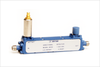
The 56318 is a used 18 GHz 0.1 Watts RF Sensor from Boonton. Electronic test equipment sensors measure the power of waveforms, such as multi-tone and modulated radiofrequency (RF) waveforms. Sensors gather highly accurate modulation measurements using diode detectors.

Additional Features:

  • Peak Power Sensor
  • Fast measurement speed
  • Wide dynamic range (-70 dBm to +20 dBm)
  • Calibration factors, linearity and temperature compensations data stored in EEPROM
  • Excellent SWR for reducing mismatch uncertainty
  • Accurate calibration and unique traceability to NIST
  • Compatible with the most of Boonton power meter series
  • Frequency range: 0.5-18 GHz

Dynamic range

  • Peak Power Range: -24 to +20 dBm
  • CW Power Range: -34 to +20 dBm
  • Int. Trigger Range: -10 to +20 dBm

Overload Rating-Pulse/Continuous

  • 1 W for 1µs; 200 mW

Sensor Response

  • Fast Risetime (Bandwidth): <15 ns (35 MHz)
  • Slow Risetime (Bandwidth): <200ns (1.75 MHz)

Maximum SWR

  • Frequency: 0.5-2 GHz; SWR: 1.15
  • Frequency: 2-16 GHz; SWR: 1.28
  • Frequency: 16-18 GHz; SWR: 1.34

The overall performance of a power meter dependents on the power sensor employed. Boonton has a variety of quality power sensors to meet virtually all applications. Boonton has a complete line of Peak and Average power sensors up to 40 GHz for all of your fast rise time, wide bandwidth and wide dynamic range applications.

Boonton has a large variety of power sensors that are compatible with the 4540, 4500B, 4300, 4240 and 4530 series of Boonton power meters. The power meter specifications describe the instrument’s warranted performance. These specifications are valid over the instrument’s operational and environmental ranges after performing a zeroing/calibration procedure unless otherwise stated. Measurement uncertainty information can be found in the Boonton power sensor manual that is available upon request.

Functions of Power Sensors
The sensor converts the incident RF or microwave power to an equivalent voltage that can be processed by the power meter. Next, the sensor presents to the incident power impedance that is closely matched to the transmission system. Both must be done with minimal drift and noise for the most accurate measurements.

Calibration and Traceability
Boonton employs both a linearity calibration as well as a frequency response calibration. This maximizes the performance of Diode Sensors and corrects non-linearity on all ranges. Linearity calibration can be used to extend the operating range of a Diode Sensor. It can also be used to correct non-linearity throughout a Thermocouple or Diode sensor’s dynamic range. Frequency calibration factors (NIST traceable) and other data are stored within all peak power sensors. Linearity calibration is performed using the peak power meter’s built-in calibrator.

Sensor Selection
Boonton Diode Sensors are constructed using balanced diode detectors. This dual diode configuration offers increased sensitivity and harmonic suppression when compared to a single diode sensor. When choosing a power sensor, several factors must be considered including frequency range, dynamic range and modulation. The sensor should have a faster rise time than that of the modulated signal. Boonton offers various peak power sensors for a huge variety of frequency ranges allowing measurements with widest dynamic range and fastest rise times.

Supplier's Site

Technical Specifications

  ValueTronics International, Inc.
Product Category RF Power Detectors
Product Number 56318
Product Name RF Sensor
Frequency Range 18000 MHz
Unlock Full Specs
to access all available technical data

Similar Products

Directional Detectors 210040020K - 210040020K - KRYTAR, Inc.
Specs
Frequency Range 10000 to 40000 MHz
dBm Measurement Range 40 dBm
Connector Type BNC (optional feature); SMA (optional feature); SMC (optional feature); 2.92 mm
View Details
Detectors - NWD-28 - kTB Solutions
kTB Solutions
Specs
Frequency Range 26500 to 40000 MHz
Connector Type WR-28
View Details
Detector/Controller - 2086-6000-00 - Richardson RFPD
Specs
Frequency Range 1000 to 15000 MHz
dBm Measurement Range 20 dBm
View Details