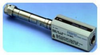
The E9300H is a used 18 1 Watt RF Sensor from Agilent. Electronic test equipment sensors measure the power of waveforms, such as multi-tone and modulated radiofrequency (RF) waveforms. Sensors gather highly accurate modulation measurements using diode detectors.
Additional Features:
Measure the Average Power of all modulation formats
Wide Dynamic Range Power Measurements from -50 dBm to +30 dBm
Low SWR for reducing mismatch uncertainty
Calibration factors, linearity and temperature compensation data stored in EEPROM
Precision type-N connector as standard
The wide dynamic range of the Agilent E9300H allows signals from -50 dBm to +30 dBm to be on all types of signals, from complex digital modulation formats, such as W-CDMA, CDMA (IS-95A), TDMA and OFDM, to multi-tone and CW signals. Also, for comprehensive error correction, the sensor's calibration factors, linearity and temperature compensation data are stored in EEPROM. The sensor's power measurements are traceable to the U.S. National Institute of Standards and Technology (NIST).
The E9300H is a used 18 1 Watt RF Sensor from Agilent. Electronic test equipment sensors measure the power of waveforms, such as multi-tone and modulated radiofrequency (RF) waveforms. Sensors gather highly accurate modulation measurements using diode detectors.
Additional Features:
- Measure the Average Power of all modulation formats
- Wide Dynamic Range Power Measurements from -50 dBm to +30 dBm
- Low SWR for reducing mismatch uncertainty
- Calibration factors, linearity and temperature compensation data stored in EEPROM
- Precision type-N connector as standard
The wide dynamic range of the Agilent E9300H allows signals from -50 dBm to +30 dBm to be on all types of signals, from complex digital modulation formats, such as W-CDMA, CDMA (IS-95A), TDMA and OFDM, to multi-tone and CW signals. Also, for comprehensive error correction, the sensor's calibration factors, linearity and temperature compensation data are stored in EEPROM. The sensor's power measurements are traceable to the U.S. National Institute of Standards and Technology (NIST).