ValueTronics International, Inc. Generator 86290C

Description
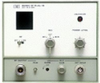
The 86290C is a generator from Agilent. A signal generator is a device that creates electronic signals, repeating or non-repeating, in the digital or analog domains, depending on need. Signal generators design, test, troubleshoot, and repair electronic devices across many different industries and applications. Additional Features: Continuous sweep from 2 to 18.6 GHz is provided Higher frequency resolution is achieved by covering this range in three individual bands Offers outstanding electrical performance producing >20 mW swept output over the entire frequency range plus excellent linearity and low spurious and harmonic content External AM input connector which can be used to phase lock to an external source such as the Agilent 8410B Front-panel unleveled indicator Built-in performance and versatility, excellent for broadband testing The Agilent 86290C sweep oscillator is a broadband plug-in for the 8620 Family. It is also compatible with the 8350 sweep oscillator using the 11869A adapter. A continuous sweep from 2 to 18.6 GHz is provided for broadband swept testing. In addition, higher frequency resolution is achieved by covering the 2 to 18.6 GHz range in three individual bands of 2 to 6.2 GHz, 6 to 12.4 GHz, and 12 to 18.6 GHz. The frequency accuracy of the 86290C is better than ±30 MHz.
Description
The 86290C is a generator from Agilent. A signal generator is a device that creates electronic signals, repeating or non-repeating, in the digital or analog domains, depending on need. Signal generators design, test, troubleshoot, and repair electronic devices across many different industries and applications. Additional Features: Continuous sweep from 2 to 18.6 GHz is provided Higher frequency resolution is achieved by covering this range in three individual bands Offers outstanding electrical performance producing >20 mW swept output over the entire frequency range plus excellent linearity and low spurious and harmonic content External AM input connector which can be used to phase lock to an external source such as the Agilent 8410B Front-panel unleveled indicator Built-in performance and versatility, excellent for broadband testing The Agilent 86290C sweep oscillator is a broadband plug-in for the 8620 Family. It is also compatible with the 8350 sweep oscillator using the 11869A adapter. A continuous sweep from 2 to 18.6 GHz is provided for broadband swept testing. In addition, higher frequency resolution is achieved by covering the 2 to 18.6 GHz range in three individual bands of 2 to 6.2 GHz, 6 to 12.4 GHz, and 12 to 18.6 GHz. The frequency accuracy of the 86290C is better than ±30 MHz.

Suppliers

Company
Product
Description
Supplier Links
Generator 86290C
The 86290C is a generator from Agilent. A signal generator is a device that creates electronic signals, repeating or non-repeating, in the digital or analog domains, depending on need. Signal generators design, test, troubleshoot, and repair electronic devices across many different industries and applications. Additional Features: Continuous sweep from 2 to 18.6 GHz is provided Higher frequency resolution is achieved by covering this range in three individual bands Offers outstanding electrical performance producing >20 mW swept output over the entire frequency range plus excellent linearity and low spurious and harmonic content External AM input connector which can be used to phase lock to an external source such as the Agilent 8410B Front-panel unleveled indicator Built-in performance and versatility, excellent for broadband testing The Agilent 86290C sweep oscillator is a broadband plug-in for the 8620 Family. It is also compatible with the 8350 sweep oscillator using the 11869A adapter. A continuous sweep from 2 to 18.6 GHz is provided for broadband swept testing. In addition, higher frequency resolution is achieved by covering the 2 to 18.6 GHz range in three individual bands of 2 to 6.2 GHz, 6 to 12.4 GHz, and 12 to 18.6 GHz. The frequency accuracy of the 86290C is better than ±30 MHz.

The 86290C is a generator from Agilent. A signal generator is a device that creates electronic signals, repeating or non-repeating, in the digital or analog domains, depending on need. Signal generators design, test, troubleshoot, and repair electronic devices across many different industries and applications.

Additional Features:

  • Continuous sweep from 2 to 18.6 GHz is provided
  • Higher frequency resolution is achieved by covering this range in three individual bands
  • Offers outstanding electrical performance producing >20 mW swept output over the entire frequency range plus excellent linearity and low spurious and harmonic content
  • External AM input connector which can be used to phase lock to an external source such as the Agilent 8410B
  • Front-panel unleveled indicator
  • Built-in performance and versatility, excellent for broadband testing

The Agilent 86290C sweep oscillator is a broadband plug-in for the 8620 Family. It is also compatible with the 8350 sweep oscillator using the 11869A adapter. A continuous sweep from 2 to 18.6 GHz is provided for broadband swept testing. In addition, higher frequency resolution is achieved by covering the 2 to 18.6 GHz range in three individual bands of 2 to 6.2 GHz, 6 to 12.4 GHz, and 12 to 18.6 GHz. The frequency accuracy of the 86290C is better than ±30 MHz.
Supplier's Site

Technical Specifications

  ValueTronics International, Inc.
Product Category Signal Generators
Product Number 86290C
Product Name Generator
Device Type Generator
Unlock Full Specs
to access all available technical data

Similar Products

Pulse generator - VLG-4-1/4 - Festo Corporation
Specs
Device Type Generator
Generator Type Pulse
View Details
40GHz RF Analog Signal Generator - CAMS9K40G - Corech Microwave
Specs
Device Type Generator
Generator Type Signal
Form Factor Portable
View Details
JSG5000M Series RF Analog Signal Generator -  - kTB Solutions
Specs
Generator Type Signal
View Details
Compact Signal Generators - SGX1006 - Maury Microwave
Specs
Device Type Generator
Switching Speed 0.3500 ms
Minimum 10 MHz
View Details