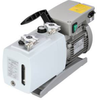
Terra Universal, Inc. Rotary Vane Vacuum Pump 7906-01

Description
Two stage rotary vane pump High water vapor tolerance (60 mbar for P6Z and 35 mbar for P12Z) Max. leak rate of inlet valve 7x10⁻⁵ mbar l/sec Integrated oil control glass High temperature heat dissipation Easy to service and clean The P-Z series rotary vane pumps have a high water vapor tolerance with a compact design. Due to their low weight, small dimensions and the high vacuum performance, these chemically suitable pumps are ideal for use in the laboratory. They are low maintenance, compact and exceptionally quiet. Applications include chemical laboratories, backing pump, freeze drying, and process engineering. Importance of Water Vapor Tolerance ILMVAC Rotary Vane Pumps are designed to withstand large amounts of water vapor in the vacuum pump’s inlet vapor stream. This “water vapor tolerance” is the maximum inlet pressure at which you can pump pure water vapor without condensing water inside the pump. If the inlet pressure rises above this level then liquid water will accumulate inside the pump. ILMVAC specifies this parameter in mbar of water pressure. The higher the number, the more water vapor the pump can tolerate before condensing water which would mix with the oil and harm the pump. The user can open the gas ballast valve to dilute the inlet water vapor with room air as a means of avoiding condensation in the pump. However, this practice will reduce the ultimate vacuum capability of the pump. A larger water vapor tolerance means the user can enjoy the ultimate vacuum performance of the pump without resorting to the use of the gas ballast.
Description
Two stage rotary vane pump High water vapor tolerance (60 mbar for P6Z and 35 mbar for P12Z) Max. leak rate of inlet valve 7x10⁻⁵ mbar l/sec Integrated oil control glass High temperature heat dissipation Easy to service and clean The P-Z series rotary vane pumps have a high water vapor tolerance with a compact design. Due to their low weight, small dimensions and the high vacuum performance, these chemically suitable pumps are ideal for use in the laboratory. They are low maintenance, compact and exceptionally quiet. Applications include chemical laboratories, backing pump, freeze drying, and process engineering. Importance of Water Vapor Tolerance ILMVAC Rotary Vane Pumps are designed to withstand large amounts of water vapor in the vacuum pump’s inlet vapor stream. This “water vapor tolerance” is the maximum inlet pressure at which you can pump pure water vapor without condensing water inside the pump. If the inlet pressure rises above this level then liquid water will accumulate inside the pump. ILMVAC specifies this parameter in mbar of water pressure. The higher the number, the more water vapor the pump can tolerate before condensing water which would mix with the oil and harm the pump. The user can open the gas ballast valve to dilute the inlet water vapor with room air as a means of avoiding condensation in the pump. However, this practice will reduce the ultimate vacuum capability of the pump. A larger water vapor tolerance means the user can enjoy the ultimate vacuum performance of the pump without resorting to the use of the gas ballast.

Suppliers

Company
Product
Description
Supplier Links
Rotary Vane Vacuum Pump - 7906-01 - Terra Universal, Inc.
Fullerton, CA, USA
Rotary Vane Vacuum Pump
7906-01
Rotary Vane Vacuum Pump 7906-01
Two stage rotary vane pump High water vapor tolerance (60 mbar for P6Z and 35 mbar for P12Z) Max. leak rate of inlet valve 7x10⁻⁵ mbar l/sec Integrated oil control glass High temperature heat dissipation Easy to service and clean The P-Z series rotary vane pumps have a high water vapor tolerance with a compact design. Due to their low weight, small dimensions and the high vacuum performance, these chemically suitable pumps are ideal for use in the laboratory. They are low maintenance, compact and exceptionally quiet. Applications include chemical laboratories, backing pump, freeze drying, and process engineering. Importance of Water Vapor Tolerance ILMVAC Rotary Vane Pumps are designed to withstand large amounts of water vapor in the vacuum pump’s inlet vapor stream. This “water vapor tolerance” is the maximum inlet pressure at which you can pump pure water vapor without condensing water inside the pump. If the inlet pressure rises above this level then liquid water will accumulate inside the pump. ILMVAC specifies this parameter in mbar of water pressure. The higher the number, the more water vapor the pump can tolerate before condensing water which would mix with the oil and harm the pump. The user can open the gas ballast valve to dilute the inlet water vapor with room air as a means of avoiding condensation in the pump. However, this practice will reduce the ultimate vacuum capability of the pump. A larger water vapor tolerance means the user can enjoy the ultimate vacuum performance of the pump without resorting to the use of the gas ballast.
  • Two stage rotary vane pump
  • High water vapor tolerance (60 mbar for P6Z and 35 mbar for P12Z)
  • Max. leak rate of inlet valve 7x10⁻⁵ mbar l/sec
  • Integrated oil control glass
  • High temperature heat dissipation
  • Easy to service and clean

The P-Z series rotary vane pumps have a high water vapor tolerance with a compact design. Due to their low weight, small dimensions and the high vacuum performance, these chemically suitable pumps are ideal for use in the laboratory. They are low maintenance, compact and exceptionally quiet. Applications include chemical laboratories, backing pump, freeze drying, and process engineering.

Importance of Water Vapor Tolerance

ILMVAC Rotary Vane Pumps are designed to withstand large amounts of water vapor in the vacuum pump’s inlet vapor stream. This “water vapor tolerance” is the maximum inlet pressure at which you can pump pure water vapor without condensing water inside the pump. If the inlet pressure rises above this level then liquid water will accumulate inside the pump. ILMVAC specifies this parameter in mbar of water pressure. The higher the number, the more water vapor the pump can tolerate before condensing water which would mix with the oil and harm the pump.

The user can open the gas ballast valve to dilute the inlet water vapor with room air as a means of avoiding condensation in the pump. However, this practice will reduce the ultimate vacuum capability of the pump. A larger water vapor tolerance means the user can enjoy the ultimate vacuum performance of the pump without resorting to the use of the gas ballast.

Supplier's Site

Technical Specifications

  Terra Universal, Inc.
Product Category Vacuum Pumps and Vacuum Generators
Product Number 7906-01
Product Name Rotary Vane Vacuum Pump
Vacuum Pump Type Mechanical
Configuration Individual Vacuum Pump
Application Industrial; Scientific
Features Gas Ballast
Pumping Speed 6.46 to 7.77 CFM (10.99 to 13.21 m³/hr)
Unlock Full Specs
to access all available technical data

Similar Products

TwisTorr 305-IC Turbo Pump with Integrated Controller -  - Agilent Technologies - Vacuum Products
Agilent Technologies - Vacuum Products
Specs
Vacuum Pump Type HighVac
Configuration Individual Vacuum Pump
Pumping Speed 466 to 540 CFM (793 to 919 m³/hr)
View Details
Oil-Lubricated Rotary Vane Vacuum Pump - R 5 RA 0155 A - Busch Vacuum Solutions
Specs
Vacuum Pump Type Mechanical
Configuration Individual Vacuum Pump
Application Industrial; Food; Manufacturing; Packaging; Wood Working
View Details
Vacuum Generators - 2022432 - RS Components, Ltd.
RS Components, Ltd.
Specs
Operating Temperature 140 F (60 C)
View Details
Dry vacuum pumps (Screw type) SHINKO SEIKI - SSX300 - Daitron Co., Ltd.
Specs
Vacuum Pump Type Mechanical
Configuration Individual Vacuum Pump
Application Industrial; Chemical; Industrial furnace; Resin forming; Chemical production, food-process & medical devices manufacturing; Silicon monocrystalline pulling; Vacuum cleaning
View Details
