Solar Electronics Co. LISN 6338-5-PJ-50-BNC

Description
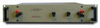
The 6338-5-PJ-50-BNC is a used LISN from Solar. A line impedance stabilization network (LISN) device is something engineers use to test radiofrequency (RF) emission and susceptibility. During an electronic equipment test, engineers place the LISN device between an alternating current or direct current power source and the equipment under test. Additional Features: Current Amps: 50 Inductance μH: 5 Line/Ground Voltage 50-60 Hz: 270 Line/Ground Voltage 400 Hz: 130 Circuit: Single Frequency Range: 150 kHz- 65 MHz Terminals: Plug and Jack The Solar Electronics LISNs use a series inductor between the test sample and the power source to provide the impedance-versus-fre quency characteristic. A coaxial connector with d.c. isolation is provided for connection to the associated frequency selective EMI meter. The power source end of the inductor is bypassed to ground. When measuring conducted radio interference voltages from active power lines to ground, it is essential to know the line impedance so that repeatable tests can be made by more than one laboratory. Artificial line impedances are specified in MIL-STD-462, V.D.E., C.I.S.P.R., C22.4, NACSEM 5100, ANSI C63.2 and other EMI specifications. The characteristic impedance of the five microhenry and 50 microhenry LISNs brackets the mean value of power line impedance which has been measured by independent researchers. These two inductance values in parallel with the 50 ohms of the EMI meter fall between the minimum and maximum line impedance values which have been measured. The mean value would be represented by a twenty microhenry inductor in parallel with 100 ohms.
Description
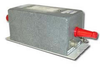
The 6338-5-PJ-50-BNC is a used LISN from Solar. A line impedance stabilization network (LISN) device is something engineers use to test radiofrequency (RF) emission and susceptibility. During an electronic equipment test, engineers place the LISN device between an alternating current or direct current power source and the equipment under test. Additional Features: Current Amps: 50 Inductance μH: 5 Line/Ground Voltage 50-60 Hz: 270 Line/Ground Voltage 400 Hz: 130 Circuit: Single Frequency Range: 150 kHz- 65 MHz Terminals: Plug and Jack The Solar Electronics LISNs use a series inductor between the test sample and the power source to provide the impedance-versus-fre quency characteristic. A coaxial connector with d.c. isolation is provided for connection to the associated frequency selective EMI meter. The power source end of the inductor is bypassed to ground. When measuring conducted radio interference voltages from active power lines to ground, it is essential to know the line impedance so that repeatable tests can be made by more than one laboratory. Artificial line impedances are specified in MIL-STD-462, V.D.E., C.I.S.P.R., C22.4, NACSEM 5100, ANSI C63.2 and other EMI specifications. The characteristic impedance of the five microhenry and 50 microhenry LISNs brackets the mean value of power line impedance which has been measured by independent researchers. These two inductance values in parallel with the 50 ohms of the EMI meter fall between the minimum and maximum line impedance values which have been measured. The mean value would be represented by a twenty microhenry inductor in parallel with 100 ohms.

Suppliers

Company
Product
Description
Supplier Links
The 6338-5-PJ-50-BNC is a used LISN from Solar. A line impedance stabilization network (LISN) device is something engineers use to test radiofrequency (RF) emission and susceptibility. During an electronic equipment test, engineers place the LISN device between an alternating current or direct current power source and the equipment under test. Additional Features: Current Amps: 50 Inductance μH: 5 Line/Ground Voltage 50-60 Hz: 270 Line/Ground Voltage 400 Hz: 130 Circuit: Single Frequency Range: 150 kHz- 65 MHz Terminals: Plug and Jack The Solar Electronics LISNs use a series inductor between the test sample and the power source to provide the impedance-versus-fre quency characteristic. A coaxial connector with d.c. isolation is provided for connection to the associated frequency selective EMI meter. The power source end of the inductor is bypassed to ground. When measuring conducted radio interference voltages from active power lines to ground, it is essential to know the line impedance so that repeatable tests can be made by more than one laboratory. Artificial line impedances are specified in MIL-STD-462, V.D.E., C.I.S.P.R., C22.4, NACSEM 5100, ANSI C63.2 and other EMI specifications. The characteristic impedance of the five microhenry and 50 microhenry LISNs brackets the mean value of power line impedance which has been measured by independent researchers. These two inductance values in parallel with the 50 ohms of the EMI meter fall between the minimum and maximum line impedance values which have been measured. The mean value would be represented by a twenty microhenry inductor in parallel with 100 ohms.
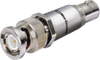
The 6338-5-PJ-50-BNC is a used LISN from Solar. A line impedance stabilization network (LISN) device is something engineers use to test radiofrequency (RF) emission and susceptibility. During an electronic equipment test, engineers place the LISN device between an alternating current or direct current power source and the equipment under test.

Additional Features:

  • Current Amps: 50
  • Inductance μH: 5
  • Line/Ground Voltage 50-60 Hz: 270
  • Line/Ground Voltage 400 Hz: 130
  • Circuit: Single
  • Frequency Range: 150 kHz- 65 MHz
  • Terminals: Plug and Jack

The Solar Electronics LISNs use a series inductor between the test sample and the power source to provide the impedance-versus-frequency characteristic. A coaxial connector with d.c. isolation is provided for connection to the associated frequency selective EMI meter. The power source end of the inductor is bypassed to ground.

When measuring conducted radio interference voltages from active power lines to ground, it is essential to know the line impedance so that repeatable tests can be made by more than one laboratory. Artificial line impedances are specified in MIL-STD-462, V.D.E., C.I.S.P.R., C22.4, NACSEM 5100, ANSI C63.2 and other EMI specifications.

The characteristic impedance of the five microhenry and 50 microhenry LISNs brackets the mean value of power line impedance which has been measured by independent researchers. These two inductance values in parallel with the 50 ohms of the EMI meter fall between the minimum and maximum line impedance values which have been measured. The mean value would be represented by a twenty microhenry inductor in parallel with 100 ohms.

Supplier's Site

Technical Specifications

  ValueTronics International, Inc.
Product Category Impedance Matching Networks
Product Number 6338-5-PJ-50-BNC
Product Name LISN
Frequency 65 MHz
Unlock Full Specs
to access all available technical data

Similar Products

Impedance Matching Transformer - Model MT56R - Krohn-Hite Corporation
Specs
Modes of Operation Manual
Frequency 3.00E-5 to 5 MHz
Power 75 watts
View Details
Reference Impedance Network - ES4152/ES4153 - Wayne Kerr Electronics
Specs
Phase Single Phase; Three Phase (optional feature)
View Details
Navigator® II Digital Matching Network -  - Advanced Energy Industries, Inc.
Advanced Energy Industries, Inc.
Specs
Modes of Operation Automatic
Cooling Forced Air
Frequency 13.56 to 60 MHz
View Details
N7FS Shaker impedance matching network - N7FS - Wilcoxon Sensing Technologies
Specs
Frequency 0.0400 MHz
View Details