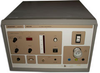
The NSG560 is a used Pulse Generator from Schaffner. A pulse generator is a piece of electronic test equipment that engineers use to generate rectangular pulses. An electromagnetic pulse generator is best for digital, not analog, circuits. Engineers can inject pulses into a piece of equipment under test as a stimulus as they test the device, using pulses to confirm the equipment’s proper operation.
Additional Features:
Performs over-voltage strength classification testing
Conforms to VDE 0160, ANSI C62.41 (1991), EN 50178, DIN VDE 0160 or EN50178: Safety requirements for electronic equipment for use in electrical power installations and their assembly into electrical power installations
Test voltages of up to 800 V
High pulse energy of up to 1 .9 kJ
Internal pulse shaping
Pulse width adjustable from 0.3 to 1 .3 ms
Extremely low internal impedance
High pulse currents up into the kA range
The Schaffner NSG560 Surge Generator has been designed to simulate high current conditions that cause voltage spikes/pulses on a supply that can have an energy content of several thousand Joules.
It simulates the effects of over-voltage originated by short circuits cleared by fuse operation. The pulse is shaped internally in a load-dependent manner in order to deliver the maximum possible energy to the device under test while, at the same time, avoiding any overload. Besides the pulse widths of 0.3 ms and 1.3 ms specified in the standard, the user also has the opportunity to set a number of other half-value widths. The phase angle for injection of the pulse into the mains supply is not only calibrated at 90° but is also infinitely variable between 5° and 100°. This feature is especially important for analytical measurements in development laboratories. An electrically isolated voltage monitor output is provided for recording the measurements taken.
The NSG560 is a used Pulse Generator from Schaffner. A pulse generator is a piece of electronic test equipment that engineers use to generate rectangular pulses. An electromagnetic pulse generator is best for digital, not analog, circuits. Engineers can inject pulses into a piece of equipment under test as a stimulus as they test the device, using pulses to confirm the equipment’s proper operation.
Additional Features:
- Performs over-voltage strength classification testing
- Conforms to VDE 0160, ANSI C62.41 (1991), EN 50178, DIN VDE 0160 or EN50178: Safety requirements for electronic equipment for use in electrical power installations and their assembly into electrical power installations
- Test voltages of up to 800 V
- High pulse energy of up to 1 .9 kJ
- Internal pulse shaping
- Pulse width adjustable from 0.3 to 1 .3 ms
- Extremely low internal impedance
- High pulse currents up into the kA range
The Schaffner NSG560 Surge Generator has been designed to simulate high current conditions that cause voltage spikes/pulses on a supply that can have an energy content of several thousand Joules.
It simulates the effects of over-voltage originated by short circuits cleared by fuse operation. The pulse is shaped internally in a load-dependent manner in order to deliver the maximum possible energy to the device under test while, at the same time, avoiding any overload.
Besides the pulse widths of 0.3 ms and 1.3 ms specified in the standard, the user also has the opportunity to set a number of other half-value widths. The phase angle for injection of the pulse into the mains supply is not only calibrated at 90° but is also infinitely variable between 5° and 100°. This feature is especially important for analytical measurements in development laboratories. An electrically isolated voltage monitor output is provided for recording the measurements taken.