ROHM Semiconductor USA, LLC KXTE9 Series KXTE9-2050

Description
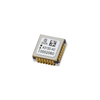
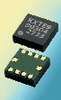
These high-performance silicon micromachined linear accelerometersand inclinometers consist of a sensor element and an ASIC packaged in a3x3x0.9mm Land Grid Array (LGA). The sensor element is fabricated fromsingle-crystal silicon with proprietary Deep Reactive Ion Etching(DRIE) processes, and is protected from the environment by ahermetically-sealed silicon cap at the wafer level. TheKXTE9™s advanced, orientation-detectio n feature reports changes inlandscape, portrait, face-up, and face-down conditions.  Thissophisticated, embedded algorithm eliminates the need for continuousdata collection and complex calculations by a microprocessor.  With afew adjustable parameters, the screen-rotation algorithm can beoptimized for an intuitive user experience.  In addition to orientationdetection , the KXTE9 features an activity-monitoring function.  Thisfunction reports changes in a device™s motion state, either moving(active) or not moving (inactive).  A highly-manufacturabl e productwith consistent product performance across use conditions, the KXTE9operates across a supply voltage of 1.8V to 3.6V DC. The sensor element functions on the principle of differential capacitance.  Acceleration causes displacement of a silicon structure resulting in a change in capacitance.  An ASIC, using a standard CMOS manufacturing process, detects and transforms changes in capacitance into an analog output voltage, which is proportional to acceleration.  The sense element design utilizes common mode cancellation to decrease errors from process variation and environmental stress.  The voltage is digitized by an on-board A/D converter and is accessed via an inter-integrated circuit (I2C).
Description
These high-performance silicon micromachined linear accelerometersand inclinometers consist of a sensor element and an ASIC packaged in a3x3x0.9mm Land Grid Array (LGA). The sensor element is fabricated fromsingle-crystal silicon with proprietary Deep Reactive Ion Etching(DRIE) processes, and is protected from the environment by ahermetically-sealed silicon cap at the wafer level. TheKXTE9™s advanced, orientation-detectio n feature reports changes inlandscape, portrait, face-up, and face-down conditions.  Thissophisticated, embedded algorithm eliminates the need for continuousdata collection and complex calculations by a microprocessor.  With afew adjustable parameters, the screen-rotation algorithm can beoptimized for an intuitive user experience.  In addition to orientationdetection , the KXTE9 features an activity-monitoring function.  Thisfunction reports changes in a device™s motion state, either moving(active) or not moving (inactive).  A highly-manufacturabl e productwith consistent product performance across use conditions, the KXTE9operates across a supply voltage of 1.8V to 3.6V DC. The sensor element functions on the principle of differential capacitance.  Acceleration causes displacement of a silicon structure resulting in a change in capacitance.  An ASIC, using a standard CMOS manufacturing process, detects and transforms changes in capacitance into an analog output voltage, which is proportional to acceleration.  The sense element design utilizes common mode cancellation to decrease errors from process variation and environmental stress.  The voltage is digitized by an on-board A/D converter and is accessed via an inter-integrated circuit (I2C).

Suppliers

Company
Product
Description
Supplier Links
KXTE9 Series - KXTE9-2050 - Kionix, Inc.
Ithaca, NY, USA
KXTE9 Series
KXTE9-2050
KXTE9 Series KXTE9-2050
These high-performance silicon micromachined linear accelerometersand inclinometers consist of a sensor element and an ASIC packaged in a3x3x0.9mm Land Grid Array (LGA). The sensor element is fabricated fromsingle-crystal silicon with proprietary Deep Reactive Ion Etching(DRIE) processes, and is protected from the environment by ahermetically-sealed silicon cap at the wafer level. TheKXTE9™s advanced, orientation-detectio n feature reports changes inlandscape, portrait, face-up, and face-down conditions.  Thissophisticated, embedded algorithm eliminates the need for continuousdata collection and complex calculations by a microprocessor.  With afew adjustable parameters, the screen-rotation algorithm can beoptimized for an intuitive user experience.  In addition to orientationdetection , the KXTE9 features an activity-monitoring function.  Thisfunction reports changes in a device™s motion state, either moving(active) or not moving (inactive).  A highly-manufacturabl e productwith consistent product performance across use conditions, the KXTE9operates across a supply voltage of 1.8V to 3.6V DC. The sensor element functions on the principle of differential capacitance.  Acceleration causes displacement of a silicon structure resulting in a change in capacitance.  An ASIC, using a standard CMOS manufacturing process, detects and transforms changes in capacitance into an analog output voltage, which is proportional to acceleration.  The sense element design utilizes common mode cancellation to decrease errors from process variation and environmental stress.  The voltage is digitized by an on-board A/D converter and is accessed via an inter-integrated circuit (I2C).

These high-performance silicon micromachined linear accelerometersand inclinometers consist of a sensor element and an ASIC packaged in a3x3x0.9mm Land Grid Array (LGA). The sensor element is fabricated fromsingle-crystal silicon with proprietary Deep Reactive Ion Etching(DRIE) processes, and is protected from the environment by ahermetically-sealed silicon cap at the wafer level. TheKXTE9™s advanced, orientation-detection feature reports changes inlandscape, portrait, face-up, and face-down conditions.  Thissophisticated, embedded algorithm eliminates the need for continuousdata collection and complex calculations by a microprocessor.  With afew adjustable parameters, the screen-rotation algorithm can beoptimized for an intuitive user experience.  In addition to orientationdetection, the KXTE9 features an activity-monitoring function.  Thisfunction reports changes in a device™s motion state, either moving(active) or not moving (inactive).  A highly-manufacturable productwith consistent product performance across use conditions, the KXTE9operates across a supply voltage of 1.8V to 3.6V DC. The sensor element functions on the principle of differential capacitance.  Acceleration causes displacement of a silicon structure resulting in a change in capacitance.  An ASIC, using a standard CMOS manufacturing process, detects and transforms changes in capacitance into an analog output voltage, which is proportional to acceleration.  The sense element design utilizes common mode cancellation to decrease errors from process variation and environmental stress.  The voltage is digitized by an on-board A/D converter and is accessed via an inter-integrated circuit (I2C).

Supplier's Site

Technical Specifications

  Kionix, Inc.
Product Category Accelerometers
Product Number KXTE9-2050
Product Name KXTE9 Series
Measurement Axes Single; Biaxial; Triaxial
Sensor Technology MEMS
Device Category Sensor / Transducer; Switch
Sensor Outputs Acceleration
Sensor Mounting Surface Mount IC
Unlock Full Specs
to access all available technical data

Similar Products

Vibration Sensors - 1203-0100-360 - TE Connectivity
Specs
Sensor Technology MEMS
Acceleration 100 g
Frequency Range 0.0 to 800 Hz
View Details
2 suppliers
Accelerometer Input Module - SCM5B48-02 - Dataforth Corporation
Specs
Sensor Technology Piezoelectric
Device Category Transmitter
Sensor Outputs Acceleration
View Details
Airborne Accelerometer - 3062B1 - Hottinger Brüel & Kjær A/S
Hottinger Brüel & Kjær A/S
Specs
Measurement Axes Single
Sensor Technology Piezoelectric; Piezoelectric CCLD (IEPE)
Sensor Mounting Stud/Bolt; Integral mounting stud
View Details