Gelest, Inc. 1,3,5-TRIVINYL-1,3,5-TRIMETHYLCYCLOTRISILOXANE SIT8737.0

Description
Additional Properties Hydrolytic Sensitivity 1: no significant reaction with aqueous systems Application Reagent for vinylations via cross-coupling protocols.1,2 Reference 1. Denmark, S. E.; Wang, Z. J. Organomet. Chem. 2001, 624, 372. 2. Denmark, S. E.; Butler, C. R. J. Am. Chem. Soc. 2008, 130, 3690. Safety Packaging Under Nitrogen Alkenylsilane Cross-Coupling Agent The cross-coupling reaction is a highly useful methodology for the formation of carbon-carbon bonds. It involves two reagents, with one typically being a suitable organometallic reagent - the nucleophile - and the other a suitable organic substrate, normally an unsaturated halide, tosylate or similar - the electrophile. 1,3,5-Trivinyl-1,3,5 -trimethylcyclotrisi loxane; D’3; Trimethyltrivinylcyc lotrisiloxane; Trivinyltrimethylcyc lotrisiloxane; 2,4,6-Trimethyl-2,4, 6-trivinylcyclotrisi loxane Reagent formation of styrenes and dienes. Undergoes “living” anion ring-opening polymerization Reagent for vinylations via cross-coupling protocols Extensive review of silicon based cross-coupling agents: Denmark, S. E. et al. "Organic Reactions, Volume 75" Denmark, S. E. ed., John Wiley and Sons, 233, 2011
Datasheet
Description
Additional Properties Hydrolytic Sensitivity 1: no significant reaction with aqueous systems Application Reagent for vinylations via cross-coupling protocols.1,2 Reference 1. Denmark, S. E.; Wang, Z. J. Organomet. Chem. 2001, 624, 372. 2. Denmark, S. E.; Butler, C. R. J. Am. Chem. Soc. 2008, 130, 3690. Safety Packaging Under Nitrogen Alkenylsilane Cross-Coupling Agent The cross-coupling reaction is a highly useful methodology for the formation of carbon-carbon bonds. It involves two reagents, with one typically being a suitable organometallic reagent - the nucleophile - and the other a suitable organic substrate, normally an unsaturated halide, tosylate or similar - the electrophile. 1,3,5-Trivinyl-1,3,5 -trimethylcyclotrisi loxane; D’3; Trimethyltrivinylcyc lotrisiloxane; Trivinyltrimethylcyc lotrisiloxane; 2,4,6-Trimethyl-2,4, 6-trivinylcyclotrisi loxane Reagent formation of styrenes and dienes. Undergoes “living” anion ring-opening polymerization Reagent for vinylations via cross-coupling protocols Extensive review of silicon based cross-coupling agents: Denmark, S. E. et al. "Organic Reactions, Volume 75" Denmark, S. E. ed., John Wiley and Sons, 233, 2011
Datasheet

Suppliers

Company
Product
Description
Supplier Links
1,3,5-TRIVINYL-1,3,5-TRIMETHYLCYCLOTRISILOXANE - SIT8737.0 - Gelest, Inc.
Morrisville, PA, United States
1,3,5-TRIVINYL-1,3,5-TRIMETHYLCYCLOTRISILOXANE
SIT8737.0
1,3,5-TRIVINYL-1,3,5-TRIMETHYLCYCLOTRISILOXANE SIT8737.0
Additional Properties Hydrolytic Sensitivity 1: no significant reaction with aqueous systems Application Reagent for vinylations via cross-coupling protocols.1,2 Reference 1. Denmark, S. E.; Wang, Z. J. Organomet. Chem. 2001, 624, 372. 2. Denmark, S. E.; Butler, C. R. J. Am. Chem. Soc. 2008, 130, 3690. Safety Packaging Under Nitrogen Alkenylsilane Cross-Coupling Agent The cross-coupling reaction is a highly useful methodology for the formation of carbon-carbon bonds. It involves two reagents, with one typically being a suitable organometallic reagent - the nucleophile - and the other a suitable organic substrate, normally an unsaturated halide, tosylate or similar - the electrophile. 1,3,5-Trivinyl-1,3,5 -trimethylcyclotrisi loxane; D’3; Trimethyltrivinylcyc lotrisiloxane; Trivinyltrimethylcyc lotrisiloxane; 2,4,6-Trimethyl-2,4, 6-trivinylcyclotrisi loxane Reagent formation of styrenes and dienes. Undergoes “living” anion ring-opening polymerization Reagent for vinylations via cross-coupling protocols Extensive review of silicon based cross-coupling agents: Denmark, S. E. et al. "Organic Reactions, Volume 75" Denmark, S. E. ed., John Wiley and Sons, 233, 2011

Additional Properties


  • Hydrolytic Sensitivity 1: no significant reaction with aqueous systems
    Application
    Reagent for vinylations via cross-coupling protocols.1,2
    Reference
    1. Denmark, S. E.; Wang, Z. J. Organomet. Chem. 2001, 624, 372. 2. Denmark, S. E.; Butler, C. R. J. Am. Chem. Soc. 2008, 130, 3690.
    Safety
  • Packaging Under Nitrogen
    Alkenylsilane Cross-Coupling Agent
    The cross-coupling reaction is a highly useful methodology for the formation of carbon-carbon bonds. It involves two reagents, with one typically being a suitable organometallic reagent - the nucleophile - and the other a suitable organic substrate, normally an unsaturated halide, tosylate or similar - the electrophile.
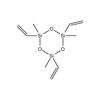
    1,3,5-Trivinyl-1,3,5-trimethylcyclotrisiloxane; D’3; Trimethyltrivinylcyclotrisiloxane; Trivinyltrimethylcyclotrisiloxane; 2,4,6-Trimethyl-2,4,6-trivinylcyclotrisiloxane
  • Reagent formation of styrenes and dienes.
  • Undergoes “living” anion ring-opening polymerization
  • Reagent for vinylations via cross-coupling protocols
  • Extensive review of silicon based cross-coupling agents: Denmark, S. E. et al. "Organic Reactions, Volume 75" Denmark, S. E. ed., John Wiley and Sons, 233, 2011
Supplier's Site Datasheet

Technical Specifications

  Gelest, Inc.
Product Category Industrial Adhesives
Product Number SIT8737.0
Product Name 1,3,5-TRIVINYL-1,3,5-TRIMETHYLCYCLOTRISILOXANE
Chemical System Silicone
Unlock Full Specs
to access all available technical data

Similar Products

Epoxylite® - E 6103 Hi Temp Epoxy Kit - ELANTAS North America LLC
Specs
Cure / Technology Thermoset; Two Component  
Chemical System Epoxy
Composition Filled
View Details
Fiber Adhesive -  - Beijing Grish Hitech Co., Ltd.
Beijing Grish Hitech Co., Ltd.
Specs
Cure / Technology Thermoset; Two Component  
Chemical System Epoxy
Type / Form Liquid
View Details
Fluon® Perfluoro Adhesive - EA-2000 - AGC Chemicals Americas, Inc.
AGC Chemicals Americas, Inc.
Specs
Chemical System PFA
Type / Form Pellets
Features Laminaes
View Details
Formulations - Applications - Threadlocking - Nuts N' Bolts 431 - 343101 - Hernon Manufacturing, Inc.
Specs
Cure / Technology Thermoset
Features Threadlocker or Retainer
Industry Aerospace; Automotive; Electronics; Electric Power; Military; OEM or Industrial
View Details