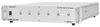
GL Communications, Inc. ATM Protocol Analyzer for OC-3 / STM-1 and OC-12 / STM-4 LTS204

Description
Asynchronous Transfer Mode (ATM) is a flexible network, which carries voice, video, and data in the same way, i.e. fixed length cells. It has generated a number of revenue opportunities because of its different classes of service support for multimedia traffic, efficient bandwidth management for burst traffic, support for LAN/WAN architecture and high performance via hardware switching. ATM network basically has two kinds of interfaces i.e. UNI (Interface between ATM User and Public ATM switch) and NNI (Interface between two Public ATM switches). Similar to the OSI Protocol model, ATM protocol architecture has an ATM Layer as Layer 2, ATM Adaptation Layer (AAL) as Layer 3, and other higher layers depending on C-Plane, U-Plane or Layer Management Plane. User information is transferred across U-Plane and Signaling messages are transferred across C-Plane. ATM-UNI signaling is used to create and release SVCs along with a particular QoS attached to it depending bandwidth on demand. GL's OC-3 / STM-1 OC-12 / STM-4 ATM Analyzer is used to analyze and decode different ATM protocols like ATM, AAL2 Protocols (CPS-SDU, SSSAR-SDU, and SSCS), AAL5 (CPCS), UNI and others across U plane and C plane of UNI and NNI interface. The analyzer can also decode ATM frames constituting Classical IP over ATM, or CIP based networks, and traditional SS7 Stack (ISUP, SCCP, MAP, CAMEL(CAP) etc) over ATM. The ATM Analyzer can capture, decode, filter, and reassemble AAL-2 and AAL-5 frames in real-time, from within the ATM cells according to user defined VPI/VCI. The real-time ATM Analyzer requires GL's LightSpeed1000™ internal PCIe cards or USB external units, along with licenses and Windows® XP (or higher) OS
Datasheet
Description
Asynchronous Transfer Mode (ATM) is a flexible network, which carries voice, video, and data in the same way, i.e. fixed length cells. It has generated a number of revenue opportunities because of its different classes of service support for multimedia traffic, efficient bandwidth management for burst traffic, support for LAN/WAN architecture and high performance via hardware switching. ATM network basically has two kinds of interfaces i.e. UNI (Interface between ATM User and Public ATM switch) and NNI (Interface between two Public ATM switches). Similar to the OSI Protocol model, ATM protocol architecture has an ATM Layer as Layer 2, ATM Adaptation Layer (AAL) as Layer 3, and other higher layers depending on C-Plane, U-Plane or Layer Management Plane. User information is transferred across U-Plane and Signaling messages are transferred across C-Plane. ATM-UNI signaling is used to create and release SVCs along with a particular QoS attached to it depending bandwidth on demand. GL's OC-3 / STM-1 OC-12 / STM-4 ATM Analyzer is used to analyze and decode different ATM protocols like ATM, AAL2 Protocols (CPS-SDU, SSSAR-SDU, and SSCS), AAL5 (CPCS), UNI and others across U plane and C plane of UNI and NNI interface. The analyzer can also decode ATM frames constituting Classical IP over ATM, or CIP based networks, and traditional SS7 Stack (ISUP, SCCP, MAP, CAMEL(CAP) etc) over ATM. The ATM Analyzer can capture, decode, filter, and reassemble AAL-2 and AAL-5 frames in real-time, from within the ATM cells according to user defined VPI/VCI. The real-time ATM Analyzer requires GL's LightSpeed1000™ internal PCIe cards or USB external units, along with licenses and Windows® XP (or higher) OS
Datasheet

Suppliers

Company
Product
Description
Supplier Links
ATM Protocol Analyzer for OC-3 / STM-1 and OC-12 / STM-4 - LTS204 - GL Communications, Inc.
Gaithersburg, MD, United States
ATM Protocol Analyzer for OC-3 / STM-1 and OC-12 / STM-4
LTS204
ATM Protocol Analyzer for OC-3 / STM-1 and OC-12 / STM-4 LTS204
Asynchronous Transfer Mode (ATM) is a flexible network, which carries voice, video, and data in the same way, i.e. fixed length cells. It has generated a number of revenue opportunities because of its different classes of service support for multimedia traffic, efficient bandwidth management for burst traffic, support for LAN/WAN architecture and high performance via hardware switching. ATM network basically has two kinds of interfaces i.e. UNI (Interface between ATM User and Public ATM switch) and NNI (Interface between two Public ATM switches). Similar to the OSI Protocol model, ATM protocol architecture has an ATM Layer as Layer 2, ATM Adaptation Layer (AAL) as Layer 3, and other higher layers depending on C-Plane, U-Plane or Layer Management Plane. User information is transferred across U-Plane and Signaling messages are transferred across C-Plane. ATM-UNI signaling is used to create and release SVCs along with a particular QoS attached to it depending bandwidth on demand. GL's OC-3 / STM-1 OC-12 / STM-4 ATM Analyzer is used to analyze and decode different ATM protocols like ATM, AAL2 Protocols (CPS-SDU, SSSAR-SDU, and SSCS), AAL5 (CPCS), UNI and others across U plane and C plane of UNI and NNI interface. The analyzer can also decode ATM frames constituting Classical IP over ATM, or CIP based networks, and traditional SS7 Stack (ISUP, SCCP, MAP, CAMEL(CAP) etc) over ATM. The ATM Analyzer can capture, decode, filter, and reassemble AAL-2 and AAL-5 frames in real-time, from within the ATM cells according to user defined VPI/VCI. The real-time ATM Analyzer requires GL's LightSpeed1000™ internal PCIe cards or USB external units, along with licenses and Windows® XP (or higher) OS

Asynchronous Transfer Mode (ATM) is a flexible network, which carries voice, video, and data in the same way, i.e. fixed length cells. It has generated a number of revenue opportunities because of its different classes of service support for multimedia traffic, efficient bandwidth management for burst traffic, support for LAN/WAN architecture and high performance via hardware switching.

ATM network basically has two kinds of interfaces i.e. UNI (Interface between ATM User and Public ATM switch) and NNI (Interface between two Public ATM switches). Similar to the OSI Protocol model, ATM protocol architecture has an ATM Layer as Layer 2, ATM Adaptation Layer (AAL) as Layer 3, and other higher layers depending on C-Plane, U-Plane or Layer Management Plane. User information is transferred across U-Plane and Signaling messages are transferred across C-Plane. ATM-UNI signaling is used to create and release SVCs along with a particular QoS attached to it depending bandwidth on demand.

GL's OC-3 / STM-1 OC-12 / STM-4 ATM Analyzer is used to analyze and decode different ATM protocols like ATM, AAL2 Protocols (CPS-SDU, SSSAR-SDU, and SSCS), AAL5 (CPCS), UNI and others across U plane and C plane of UNI and NNI interface. The analyzer can also decode ATM frames constituting Classical IP over ATM, or CIP based networks, and traditional SS7 Stack (ISUP, SCCP, MAP, CAMEL(CAP) etc) over ATM.

The ATM Analyzer can capture, decode, filter, and reassemble AAL-2 and AAL-5 frames in real-time, from within the ATM cells according to user defined VPI/VCI. The real-time ATM Analyzer requires GL's LightSpeed1000™ internal PCIe cards or USB external units, along with licenses and Windows® XP (or higher) OS

Supplier's Site Datasheet

Technical Specifications

  GL Communications, Inc.
Product Category Network Test Equipment
Product Number LTS204
Product Name ATM Protocol Analyzer for OC-3 / STM-1 and OC-12 / STM-4
Equipment Type Protocol Analyzer
Unlock Full Specs
to access all available technical data

Similar Products

PROFIBUS Diagnostics Suite -  - Softing Inc. Industrial Automation
Softing Inc. Industrial Automation
Specs
Equipment Type Protocol Analyzer
View Details
Network Testers - 142777 - RS Components, Ltd.
RS Components, Ltd.
Specs
Equipment Type Coaxial Explorer 2 Tester
Port Type Coaxial
View Details
Telephone/Telco Test Kit - Model 930849 - Electro Standards Laboratories
Electro Standards Laboratories
Specs
Equipment Type Telephone Testers
Form Factor Handheld
Port Type DB-15, RJ-48
View Details
BusTrACEr™ - Data Bus Analyzer and Monitor Software (DASO) - BU-69066 - Data Device Corporation (DDC)
Specs
Equipment Type Network / LAN Analyzer
Features Software Included
View Details