Epsilon Technology Corp. Shunt Calibration Module Model ESCS

Description
Shunt calibration modules are a means of transferring Epsilon’s transducer calibration to a customer's electronics, so the output reads correctly. A very common method of calibrating electronics for use with strain gaged transducers is through a process known as shunt calibration. A resistor connected across one arm of the sensor bridge causes the output to shift. When properly chosen this resistor will simulate an output whose value may be precisely measured and reported. In order to set the electronics properly, it must read zero when the extensometer is at zero. It also must have the proper amplification (or output slope) so that non-zero readings are correct. Two points are required to accomplish this. The Shunt Calibration Module works for any of Epsilon’s strain gaged extensometers and with nearly any electronics. As shown in the photos to the right, the module is a simple plug in device containing the shunt resistor. It plugs into a miniature connector extending out the back of the extensometer connector. When plugged in, it shunts across one arm of the sensor and shifts the output to a precise value recorded on the extensometers calibration certificate.
Request a Quote Datasheet
Description
Shunt calibration modules are a means of transferring Epsilon’s transducer calibration to a customer's electronics, so the output reads correctly. A very common method of calibrating electronics for use with strain gaged transducers is through a process known as shunt calibration. A resistor connected across one arm of the sensor bridge causes the output to shift. When properly chosen this resistor will simulate an output whose value may be precisely measured and reported. In order to set the electronics properly, it must read zero when the extensometer is at zero. It also must have the proper amplification (or output slope) so that non-zero readings are correct. Two points are required to accomplish this. The Shunt Calibration Module works for any of Epsilon’s strain gaged extensometers and with nearly any electronics. As shown in the photos to the right, the module is a simple plug in device containing the shunt resistor. It plugs into a miniature connector extending out the back of the extensometer connector. When plugged in, it shunts across one arm of the sensor and shifts the output to a precise value recorded on the extensometers calibration certificate.
Request a Quote Datasheet

Suppliers

Company
Product
Description
Supplier Links
Shunt Calibration Module - Model ESCS - Epsilon Technology Corp.
Jackson, WY, USA
Shunt Calibration Module
Model ESCS
Shunt Calibration Module Model ESCS
Shunt calibration modules are a means of transferring Epsilon’s transducer calibration to a customer's electronics, so the output reads correctly. A very common method of calibrating electronics for use with strain gaged transducers is through a process known as shunt calibration. A resistor connected across one arm of the sensor bridge causes the output to shift. When properly chosen this resistor will simulate an output whose value may be precisely measured and reported. In order to set the electronics properly, it must read zero when the extensometer is at zero. It also must have the proper amplification (or output slope) so that non-zero readings are correct. Two points are required to accomplish this. The Shunt Calibration Module works for any of Epsilon’s strain gaged extensometers and with nearly any electronics. As shown in the photos to the right, the module is a simple plug in device containing the shunt resistor. It plugs into a miniature connector extending out the back of the extensometer connector. When plugged in, it shunts across one arm of the sensor and shifts the output to a precise value recorded on the extensometers calibration certificate.

Shunt calibration modules are a means of transferring Epsilon’s transducer calibration to a customer's electronics, so the output reads correctly.

A very common method of calibrating electronics for use with strain gaged transducers is through a process known as shunt calibration. A resistor connected across one arm of the sensor bridge causes the output to shift. When properly chosen this resistor will simulate an output whose value may be precisely measured and reported.

In order to set the electronics properly, it must read zero when the extensometer is at zero. It also must have the proper amplification (or output slope) so that non-zero readings are correct. Two points are required to accomplish this.

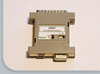
The Shunt Calibration Module works for any of Epsilon’s strain gaged extensometers and with nearly any electronics. As shown in the photos to the right, the module is a simple plug in device containing the shunt resistor. It plugs into a miniature connector extending out the back of the extensometer connector. When plugged in, it shunts across one arm of the sensor and shifts the output to a precise value recorded on the extensometers calibration certificate.

Supplier's Site Datasheet

Technical Specifications

  Epsilon Technology Corp.
Product Category Calibration Instruments
Product Number Model ESCS
Product Name Shunt Calibration Module
Calibrator Style Portable
Unlock Full Specs
to access all available technical data

Similar Products

VREF Salibration Reference Modules -  - Epsilon Technology Corp.
Specs
Calibration Signal DC Voltage
DC Voltage Range 10 volts
View Details
Torsion Calibrator Accessory - Model 3590-TORSION - Epsilon Technology Corp.
Specs
Physical Properties Displacement/ Position
User Interface Digital Front Panel
View Details
Digital Electronic Calibrator - Model 3590 - Epsilon Technology Corp.
Specs
Calibrator Style Fixed
Physical Properties Displacement/ Position
User Interface Digital Front Panel
View Details
High Resolution Digital Electronic Calibrator - Model 3590VHR - Epsilon Technology Corp.
Specs
Calibrator Style Fixed
Physical Properties Displacement/ Position
User Interface Digital Front Panel (optional feature)
View Details