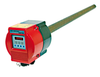
P/N 10014-008, EX-5150-MOS Sensor/Transmitter for PPM Hydrocarbons and Organic Solvents
An MOS sensor consists of a heated mixed metal oxide element that decreases in resistance in the presence of many gases and vapors. These sensors are broad range in their response characteristics. Different types of MOS sensors are available which can be optimized for a particular gas, but they are inherently non-specific.
The MOS sensor can provide monitoring capability similar to that of the classic catalytic bead or hot-wire sensor, but it can be calibrated for either % LEL or ppm detection levels of a wide range of hydrocarbons and organic solvents. The MOS sensor can also be used for detecting certain common toxic gases, including NH3, CO, H2S, etc.
MOS sensors operate at lower temperatures than catalytic bead/hot-wire sensors, which makes them less prone to poisoning. The MOS sensor is therefore the sensor of choice in applications where, for example, lead, phosphates or sulfur- containing compounds are present. Silicones, which are used in a wide range of oils, lubricants, adhesives, and many other products, can poison hot-wire sensors and also influence the performance of MOS sensors under certain conditions.
Features
| ENMET Corporation | |
|---|---|
| Product Category | Gas Transmitters |
| Product Number | P/N 10014-008 |
| Product Name | EX-5150-MOS Sensor/Transmitter |
| Electrical Outputs | Current |