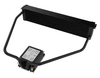
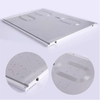
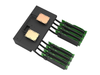
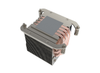
designed for next-generation 800G, 1.6T, and beyond optical transceivers. By utilizing efficient micro-channel design and superior thermal conductive materials, it directly attaches to the optical module, rapidly dissipating heat and preventing performance degradation.
This crucial component ensures signal integrity, extends module lifespan, and enables higher power density in advanced applications like data centers, AI clusters, and telecommunications infrastructure. It is the definitive answer to the thermal challenges of modern high-speed connectivity.
Precision Cooling: Targets the hottest components directly, enabling higher power densities.
Enhanced Reliability: Maintains optimal junction temperature, significantly extending optical module lifespan.
Compact Design: Ideal for high-density applications without compromising space.
Custom Solutions: Tailored designs available to meet your specific thermal and mechanical requirements.
Name: Optical Module Liquid Cooling PlateHeat Source: 4015mm Optical ModuleHeat Dissipation:25W16=40
0WMaterials: Cold plate -copper, liquid distributor -stainless steelProcess: Company’s patented technology -ultrasonic weldingWorking Fluid: PG25Overall Dimensions:1068012.9
mm (for 4 optical modules, the lengthchanges according to the number of optical modules)Pressure Drop Requirement: Less than 25KPa, designed to be 7.9KPaFlow Rate: 1.2L/min Water Supply Temperature: 40°C Flow Resistance:< 25KPaOperating Temperature:5’c-70°C
Surface Treatment: The thickness of the chemical nickel film layer on thecold plate is 3-7um Application Field: Heat dissipation of server optical modules
1. Next-Generation Data Centers & Cloud Computing
Application: Cooling 800G, 1.6T, and future Terabit-scale optical modules within spine-leaf switches and core routers.
Why it’s critical: The power consumption of advanced optical modules is outpacing the capabilities of traditional air cooling. Liquid cooling plates are essential for maintaining signal integrity, reducing bit error rates (BER), and achieving Power Usage Effectiveness (PUE) targets in hyper-scale and colocation data centers.
2. High-Performance Computing (HPC) & Artificial Intelligence (AI) Clusters
Application: Thermal management for optical modules facilitating high-speed interconnects (e.g., NVLink, Infinity Fabric) between GPUs and compute nodes.
Why it’s critical: AI training and complex scientific modeling require massive, uninterrupted data flow. Liquid cooling plates prevent thermal throttling of optical transceivers, ensuring minimal latency and maximum computational throughput in these multi-million-dollar systems.
3. Telecommunications & 5G/6G Infrastructure
Application: Deployed in core network gateways, baseband units (BBUs), and future 6G fronthaul/backhaul equipment.
Why it’s critical: As telecom networks evolve to support higher bandwidth and lower latency, the optical hardware at their core generates more heat. Liquid cooling provides the reliable, dense thermal management needed for 24/7 network operation and resilience.
designed for next-generation 800G, 1.6T, and beyond optical transceivers. By utilizing efficient micro-channel design and superior thermal conductive materials, it directly attaches to the optical module, rapidly dissipating heat and preventing performance degradation.
This crucial component ensures signal integrity, extends module lifespan, and enables higher power density in advanced applications like data centers, AI clusters, and telecommunications infrastructure. It is the definitive answer to the thermal challenges of modern high-speed connectivity.
- Precision Cooling: Targets the hottest components directly, enabling higher power densities.
- Enhanced Reliability: Maintains optimal junction temperature, significantly extending optical module lifespan.
- Compact Design: Ideal for high-density applications without compromising space.
- Custom Solutions: Tailored designs available to meet your specific thermal and mechanical requirements.
Name: Optical Module Liquid Cooling PlateHeat Source: 4015mm Optical ModuleHeat Dissipation:25W16=400WMaterials: Cold plate -copper, liquid distributor -stainless steelProcess: Company’s patented technology -ultrasonic weldingWorking Fluid: PG25Overall Dimensions:1068012.9mm (for 4 optical modules, the lengthchanges according to the number of optical modules)Pressure Drop Requirement: Less than 25KPa, designed to be 7.9KPaFlow Rate: 1.2L/min
Water Supply Temperature: 40°C
Flow Resistance:< 25KPaOperating Temperature:5’c-70°CSurface Treatment: The thickness of the chemical nickel film layer on thecold plate is 3-7um
Application Field: Heat dissipation of server optical modules
1. Next-Generation Data Centers & Cloud Computing
- Application: Cooling 800G, 1.6T, and future Terabit-scale optical modules within spine-leaf switches and core routers.
- Why it’s critical: The power consumption of advanced optical modules is outpacing the capabilities of traditional air cooling. Liquid cooling plates are essential for maintaining signal integrity, reducing bit error rates (BER), and achieving Power Usage Effectiveness (PUE) targets in hyper-scale and colocation data centers.
2. High-Performance Computing (HPC) & Artificial Intelligence (AI) Clusters
- Application: Thermal management for optical modules facilitating high-speed interconnects (e.g., NVLink, Infinity Fabric) between GPUs and compute nodes.
- Why it’s critical: AI training and complex scientific modeling require massive, uninterrupted data flow. Liquid cooling plates prevent thermal throttling of optical transceivers, ensuring minimal latency and maximum computational throughput in these multi-million-dollar systems.
3. Telecommunications & 5G/6G Infrastructure
- Application: Deployed in core network gateways, baseband units (BBUs), and future 6G fronthaul/backhaul equipment.
- Why it’s critical: As telecom networks evolve to support higher bandwidth and lower latency, the optical hardware at their core generates more heat. Liquid cooling provides the reliable, dense thermal management needed for 24/7 network operation and resilience.