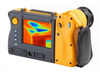
The TIR2-10/20 is a thermal imager from Fluke.
Features:
Industry Leading Thermal Sensitivity (≤0.050 °C NETD) Provides Solid Resolution, And Ultra High-Quality Images
IR-Fusion Technology Automatically Merges Visual And Thermal Images Pinpointing Trouble Areas Quicker By Automatically Relating Thermal Images With The Real World
The 180° Articulating Lens Is Great For Viewing Around Obstructions
The 5" High Resolution, High Contrast Display Is The Biggest Display In The Industry
160 x 120 Focal Plane Array And 20mm High Quality Germanium Lens With Continuous Single Finger Focus Provide Exceptional Image Resolution
SmartView Professional Report Writing Software Generates Fast, Easy, Customizable Reports Including Rich Image Analysis
The Intuitive Operation With On-Camera Windows CE Interface Makes It Easy To Use
Applications:
Roofing Surveys
Energy Audits
Moisture
Remediation
Common Building Diagnostics Applications Are-
Roofing Surveys
Detect wet insulation in flat-roof systems quickly and efficiently
Energy Audits
Perform infrared energy audits for residential and commercial applications
Moisture/Restoration
Accurately detect moisture issues located behind exterior and interior walls, in ceilings or under carpet covered floors
Mold Remediation
Control mold by finding unknown sources of moisture that would otherwise go undetected. Infrared scanning is the fastest most efficient way to provide 100% moisture detection coverage
The Fluke TiR2-10/20 thermal imager is for professionals demanding the best solutions in building diagnostics applications. The Fluke TiR2-10/20 provides the industry's largest LCD to view on-camera images, augmented with the innovative IR-Fusion™ technology to better pinpoint building problems. IR-Fusion is the overlay of IR and visible images, allowing one to clearly identify critical points within the thermal image. The primary diagnostic procedure for determining the thermal performance of a building envelope is infrared thermography. It can be used to identify heating and cooling loss due to poor construction, missing or inadequate insulation and moisture intrusion. Correcting the defects plays a significant role in increasing building efficiency and structural integrity.
The TIR2-10/20 is a thermal imager from Fluke.
Features:
- Industry Leading Thermal Sensitivity (≤0.050 °C NETD) Provides Solid Resolution, And Ultra High-Quality Images
- IR-Fusion Technology Automatically Merges Visual And Thermal Images Pinpointing Trouble Areas Quicker By Automatically Relating Thermal Images With The Real World
- The 180° Articulating Lens Is Great For Viewing Around Obstructions
- The 5" High Resolution, High Contrast Display Is The Biggest Display In The Industry
- 160 x 120 Focal Plane Array And 20mm High Quality Germanium Lens With Continuous Single Finger Focus Provide Exceptional Image Resolution
- SmartView Professional Report Writing Software Generates Fast, Easy, Customizable Reports Including Rich Image Analysis
- The Intuitive Operation With On-Camera Windows CE Interface Makes It Easy To Use
Applications:
- Roofing Surveys
- Energy Audits
- Moisture
- Remediation
Common Building Diagnostics Applications Are-
Roofing Surveys
- Detect wet insulation in flat-roof systems quickly and efficiently
Energy Audits
- Perform infrared energy audits for residential and commercial applications
Moisture/Restoration
- Accurately detect moisture issues located behind exterior and interior walls, in ceilings or under carpet covered floors
Mold Remediation
- Control mold by finding unknown sources of moisture that would otherwise go undetected. Infrared scanning is the fastest most efficient way to provide 100% moisture detection coverage
The Fluke TiR2-10/20 thermal imager is for professionals demanding the best solutions in building diagnostics applications. The Fluke TiR2-10/20 provides the industry's largest LCD to view on-camera images, augmented with the innovative IR-Fusion™ technology to better pinpoint building problems. IR-Fusion is the overlay of IR and visible images, allowing one to clearly identify critical points within the thermal image. The primary diagnostic procedure for determining the thermal performance of a building envelope is infrared thermography. It can be used to identify heating and cooling loss due to poor construction, missing or inadequate insulation and moisture intrusion. Correcting the defects plays a significant role in increasing building efficiency and structural integrity.