Bio-Rad Laboratories, Inc. HRP Color Development Reagent 170-6534

Description
5 g, 4-chloro-1-naphthol (4CN), colorimetric blotting substrate; used with peroxidase antibody conjugate Enzymes such as HRP or AP convert several substrates to a colored precipitate. As the precipitate accumulates on the blot, a colored signal develops. The reaction can be monitored and stopped when the desired signal over background is observed. Colorimetric detection is easier to perform than film-based chemiluminescence detection; however, the method's single endpoint result does not allow the multiple exposures of chemiluminescence methods. Colorimetric detection is typically considered a medium-sensitivity method compared to radioactive or chemiluminescence detection. Bio-Rad's HRP-based colorimetric detection systems offer a choice of HRP-conjugated secondary antibodies and HRP-conjugated protein A or protein G using the detection reagent 4-chloro-1-naphthol( 4CN). Bio-Rad offers three types of kits based on this chemistry for colorimetric HRP detection; individual reagents are also available, including 3,3'-diaminobenzidin e (DAB), an alternative reagent.
Description
5 g, 4-chloro-1-naphthol (4CN), colorimetric blotting substrate; used with peroxidase antibody conjugate Enzymes such as HRP or AP convert several substrates to a colored precipitate. As the precipitate accumulates on the blot, a colored signal develops. The reaction can be monitored and stopped when the desired signal over background is observed. Colorimetric detection is easier to perform than film-based chemiluminescence detection; however, the method's single endpoint result does not allow the multiple exposures of chemiluminescence methods. Colorimetric detection is typically considered a medium-sensitivity method compared to radioactive or chemiluminescence detection. Bio-Rad's HRP-based colorimetric detection systems offer a choice of HRP-conjugated secondary antibodies and HRP-conjugated protein A or protein G using the detection reagent 4-chloro-1-naphthol( 4CN). Bio-Rad offers three types of kits based on this chemistry for colorimetric HRP detection; individual reagents are also available, including 3,3'-diaminobenzidin e (DAB), an alternative reagent.

Suppliers

Company
Product
Description
Supplier Links
HRP Color Development Reagent - 170-6534 - Bio-Rad Laboratories, Inc.
Hercules, CA, USA
HRP Color Development Reagent
170-6534
HRP Color Development Reagent 170-6534
5 g, 4-chloro-1-naphthol (4CN), colorimetric blotting substrate; used with peroxidase antibody conjugate Enzymes such as HRP or AP convert several substrates to a colored precipitate. As the precipitate accumulates on the blot, a colored signal develops. The reaction can be monitored and stopped when the desired signal over background is observed. Colorimetric detection is easier to perform than film-based chemiluminescence detection; however, the method's single endpoint result does not allow the multiple exposures of chemiluminescence methods. Colorimetric detection is typically considered a medium-sensitivity method compared to radioactive or chemiluminescence detection. Bio-Rad's HRP-based colorimetric detection systems offer a choice of HRP-conjugated secondary antibodies and HRP-conjugated protein A or protein G using the detection reagent 4-chloro-1-naphthol( 4CN). Bio-Rad offers three types of kits based on this chemistry for colorimetric HRP detection; individual reagents are also available, including 3,3'-diaminobenzidin e (DAB), an alternative reagent.

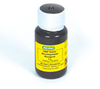
5 g, 4-chloro-1-naphthol (4CN), colorimetric blotting substrate; used with peroxidase antibody conjugate

Enzymes such as HRP or AP convert several substrates to a colored precipitate. As the precipitate accumulates on the blot, a colored signal develops. The reaction can be monitored and stopped when the desired signal over background is observed. Colorimetric detection is easier to perform than film-based chemiluminescence detection; however, the method's single endpoint result does not allow the multiple exposures of chemiluminescence methods. Colorimetric detection is typically considered a medium-sensitivity method compared to radioactive or chemiluminescence detection.

Bio-Rad's HRP-based colorimetric detection systems offer a choice of HRP-conjugated secondary antibodies and HRP-conjugated protein A or protein G using the detection reagent 4-chloro-1-naphthol(4CN). Bio-Rad offers three types of kits based on this chemistry for colorimetric HRP detection; individual reagents are also available, including 3,3'-diaminobenzidine (DAB), an alternative reagent.
Supplier's Site

Technical Specifications

  Bio-Rad Laboratories, Inc.
Product Category Organic Chemicals
Product Number 170-6534
Product Name HRP Color Development Reagent
Trigger Base
Unlock Full Specs
to access all available technical data

Similar Products

DMI 1,3 Dimethyl-2-Imidazolidinone -  - Mitsui Chemicals America, Inc.
Mitsui Chemicals America, Inc.
Specs
Trigger Solvent
Chemical Name DMI 1,3 Dimethyl-2-Imidazolidinone
State of Matter Liquid / Solution
View Details
Intermediates and Ingredients for Pharmaceuticals and Agrochemical Compounds -  - AGC Chemicals Americas, Inc.
Specs
Chemical Family All Halogenated
Chemical Name Trifluoroacetic Acid, Trifluoroacetic Anhydride, Ethyl Trifluoroacetate, Sodium Trifluoroacetate, 2,3,4-Trifluoro aniline, Trifluoroacetamide, & More
CAS Number 76-05-1, 407-25-0, 383-63-1, 2923-18-4, 3862-73-5, 354-38-1, 148043-73-6, 30071-93-3, 677-69-0, 122665-97-8, 118612-00-3, 136040-19-2, and More
View Details
5-Amino-N,N�-bis(2,3-dihydroxypropyl)-2,4,6-triiodo.. - A601920 - Toronto Research Chemicals, Inc.
Specs
Chemical Name 5-Amino-N,N�-bis(2,3-dihydroxypropyl)-2,4,6-triiodo-1,3-benzenedicarboxamide
Chemical Formula C14H18I3N3O6
CAS Number 76801-93-9
View Details
