Andover Corporation Beamsplitters

Description
WHAT ARE BEAMSPLITTERS? Beamsplitters are optical components used to split incident light at a designated ratio into two separate beams. Additionally, beamsplitters can be used in reverse to combine two different beams into a single one. Beamsplitters are often classified according to their construction: cube beamsplitters or plate beamsplitters. Types of Beamsplitters Standard Beamsplitters are commonly used with unpolarized light sources, such as natural or polychromatic, in applications where the polarization state is not important. They are designed to split unpolarized light at a specific Reflection/Transmiss ion (R/T) ratio with unspecified polarization tendencies. Polarizing Beamsplitters are designed to split light into reflected S-polarized and transmitted P-polarized beams. They can be used to split unpolarized light at a 50/50 ratio, or for polarization separation applications such as optical isolation Non-polarizing Beamsplitters split light into a specific R/T ratio while maintaining the incident light’s original polarization state. For example, in the case of a 50/50 non-polarizing beamsplitter, the transmitted P and S polarization states and the reflected P and S polarization states are split at the design ratio. These beamsplitters are ideal for maintaining polarization in applications utilizing polarized light. Dichroic Beamsplitters split light by wavelength. Options range from laser beam combiners designed for specific laser wavelengths to broadband hot and cold mirrors for splitting visible and infrared light. This type of beamsplitter is commonly used in fluorescence applications. Cube Beamsplitters are constructed using two typically right-angle prisms. The hypotenuse surface of one prism is coated, and the two prisms are cemented together so that they form a cubic shape. To avoid damaging the cement, it is recommended that the light be transmitted into the coated prism, which often features a reference mark on the ground surface. Plate Beamsplitters consist of a thin, flat glass plate that has been coated on the first surface of the substrate. Most plate beamsplitters feature an anti-reflection coating on the second surface to remove unwanted Fresnel reflections. Plate beamsplitters are often designed for a 45° AOI.
Description
WHAT ARE BEAMSPLITTERS? Beamsplitters are optical components used to split incident light at a designated ratio into two separate beams. Additionally, beamsplitters can be used in reverse to combine two different beams into a single one. Beamsplitters are often classified according to their construction: cube beamsplitters or plate beamsplitters. Types of Beamsplitters Standard Beamsplitters are commonly used with unpolarized light sources, such as natural or polychromatic, in applications where the polarization state is not important. They are designed to split unpolarized light at a specific Reflection/Transmiss ion (R/T) ratio with unspecified polarization tendencies. Polarizing Beamsplitters are designed to split light into reflected S-polarized and transmitted P-polarized beams. They can be used to split unpolarized light at a 50/50 ratio, or for polarization separation applications such as optical isolation Non-polarizing Beamsplitters split light into a specific R/T ratio while maintaining the incident light’s original polarization state. For example, in the case of a 50/50 non-polarizing beamsplitter, the transmitted P and S polarization states and the reflected P and S polarization states are split at the design ratio. These beamsplitters are ideal for maintaining polarization in applications utilizing polarized light. Dichroic Beamsplitters split light by wavelength. Options range from laser beam combiners designed for specific laser wavelengths to broadband hot and cold mirrors for splitting visible and infrared light. This type of beamsplitter is commonly used in fluorescence applications. Cube Beamsplitters are constructed using two typically right-angle prisms. The hypotenuse surface of one prism is coated, and the two prisms are cemented together so that they form a cubic shape. To avoid damaging the cement, it is recommended that the light be transmitted into the coated prism, which often features a reference mark on the ground surface. Plate Beamsplitters consist of a thin, flat glass plate that has been coated on the first surface of the substrate. Most plate beamsplitters feature an anti-reflection coating on the second surface to remove unwanted Fresnel reflections. Plate beamsplitters are often designed for a 45° AOI.

Suppliers

Company
Product
Description
Supplier Links
Beamsplitters -  - Andover Corporation
Salem, NH, United States
Beamsplitters
Beamsplitters
WHAT ARE BEAMSPLITTERS? Beamsplitters are optical components used to split incident light at a designated ratio into two separate beams. Additionally, beamsplitters can be used in reverse to combine two different beams into a single one. Beamsplitters are often classified according to their construction: cube beamsplitters or plate beamsplitters. Types of Beamsplitters Standard Beamsplitters are commonly used with unpolarized light sources, such as natural or polychromatic, in applications where the polarization state is not important. They are designed to split unpolarized light at a specific Reflection/Transmiss ion (R/T) ratio with unspecified polarization tendencies. Polarizing Beamsplitters are designed to split light into reflected S-polarized and transmitted P-polarized beams. They can be used to split unpolarized light at a 50/50 ratio, or for polarization separation applications such as optical isolation Non-polarizing Beamsplitters split light into a specific R/T ratio while maintaining the incident light’s original polarization state. For example, in the case of a 50/50 non-polarizing beamsplitter, the transmitted P and S polarization states and the reflected P and S polarization states are split at the design ratio. These beamsplitters are ideal for maintaining polarization in applications utilizing polarized light. Dichroic Beamsplitters split light by wavelength. Options range from laser beam combiners designed for specific laser wavelengths to broadband hot and cold mirrors for splitting visible and infrared light. This type of beamsplitter is commonly used in fluorescence applications. Cube Beamsplitters are constructed using two typically right-angle prisms. The hypotenuse surface of one prism is coated, and the two prisms are cemented together so that they form a cubic shape. To avoid damaging the cement, it is recommended that the light be transmitted into the coated prism, which often features a reference mark on the ground surface. Plate Beamsplitters consist of a thin, flat glass plate that has been coated on the first surface of the substrate. Most plate beamsplitters feature an anti-reflection coating on the second surface to remove unwanted Fresnel reflections. Plate beamsplitters are often designed for a 45° AOI.

WHAT ARE BEAMSPLITTERS?

Beamsplitters are optical components used to split incident light at a designated ratio into two separate beams. Additionally, beamsplitters can be used in reverse to combine two different beams into a single one. Beamsplitters are often classified according to their construction: cube beamsplitters or plate beamsplitters.

Types of Beamsplitters

Standard Beamsplitters are commonly used with unpolarized light sources, such as natural or polychromatic, in applications where the polarization state is not important. They are designed to split unpolarized light at a specific Reflection/Transmission (R/T) ratio with unspecified polarization tendencies.

Polarizing Beamsplitters are designed to split light into reflected S-polarized and transmitted P-polarized beams. They can be used to split unpolarized light at a 50/50 ratio, or for polarization separation applications such as optical isolation

Non-polarizing Beamsplitters split light into a specific R/T ratio while maintaining the incident light’s original polarization state. For example, in the case of a 50/50 non-polarizing beamsplitter, the transmitted P and S polarization states and the reflected P and S polarization states are split at the design ratio. These beamsplitters are ideal for maintaining polarization in applications utilizing polarized light.

Dichroic Beamsplitters split light by wavelength. Options range from laser beam combiners designed for specific laser wavelengths to broadband hot and cold mirrors for splitting visible and infrared light. This type of beamsplitter is commonly used in fluorescence applications.

Cube Beamsplitters are constructed using two typically right-angle prisms. The hypotenuse surface of one prism is coated, and the two prisms are cemented together so that they form a cubic shape. To avoid damaging the cement, it is recommended that the light be transmitted into the coated prism, which often features a reference mark on the ground surface.

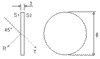
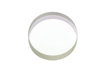
Plate Beamsplitters consist of a thin, flat glass plate that has been coated on the first surface of the substrate. Most plate beamsplitters feature an anti-reflection coating on the second surface to remove unwanted Fresnel reflections. Plate beamsplitters are often designed for a 45° AOI.

Supplier's Site

Technical Specifications

  Andover Corporation
Product Category Plate Beamsplitters
Product Name Beamsplitters
Unlock Full Specs
to access all available technical data

Similar Products

Fresnel Beamsplitter - PR 765 - ORAFOL Fresnel Optics GmbH
ORAFOL Fresnel Optics GmbH
Specs
Beamsplitter Shape Rectangular
View Details
Broadband Dielectric Beamsplitter, UVFS, 76.2mm, λ/10, 1290-1580 nm - 30Q20BS.3 - Newport MKS
Specs
Beamsplitter Incidence 45° Incidence
Beamsplitter Coating Antireflection Coating
Coating Type NC.3
View Details
50/50 Beamsplitter for optical coherence tomography(OCT) -  - Suzhou Jiujon Optics Co., Ltd
Specs
Beamsplitter Shape Circular
Transmission 50 %
View Details
Plate Beamsplitters -  - CeNing Optics Co., Ltd.
CeNing Optics Co., Ltd.
Specs
Beamsplitter Incidence 45° Incidence
Beamsplitter Coating Antireflection Coating
Coating Type Partial Reflective
View Details