Zygo Corporation Corner Cube Retroreflectors

Description
A corner cube retroreflector, also known as a CCR or trihedral prism, is an optical structure that consists of three adjacent, mutually-orthogonal plane-reflecting surfaces which form the corner of a cube. The corner cube reflects an incident ray at a specific angle, independent of the prism and beam orientations. Typical corner cube designs reflect the incident light at 180 degrees. Some applications require the reflected ray to return at a different angle. This type of design, known as a "spoiled" retroreflector, incorporates a precisely calculated offset of the dihedral surface angles. A number of coating options are available for corner cube retroreflectors. The front face may have an antireflective (AR) coating applied, and the three reflecting faces may have a metallic or dielectric coating, or may remain uncoated. Applications Corner cubes are used in a wide variety of applications such as spectroscopy, battlefield technology and satellites. Corner cubes enable range finding for weapons systems and aid in performing other precise displacement and distance measurements. For example, a satellite in orbit around the earth requires monitoring of its position while it measures plate tectonics and ocean surface topography. ZYGO Advanced Capabilities When off-the-shelf catalog retroreflectors do not meet the needs of your application, contact us with your requirements. At ZYGO, we leverage more than 40 years of experience in fabricating, coating, and measuring the highest quality optics. Our skilled engineers, opticians and technicians specialize in fabricating the most challenging designs. All fabrication, coating, and testing is done in-house by ZYGO. ZYGO master opticians and coating technicians routinely fabricate designs for the defense, aerospace, semiconductor, medical and other highly demanding industries. We frequently receive requests to test coatings on witness samples to meet military specifications for adhesion, salt fog, humidity, temperature and more. Our testing and inspection teams ensure each corner cube's performance meets or exceeds our customers' expectations. We recognize that each corner cube retroreflector design is unique, with specifications offering various benefits and tradeoffs. The specifications outlined here are an overview of what ZYGO typically offers. Contact us with your design requirements. Custom Designs Depending on their complexity, retroreflector designs may incorporate a number of customized specifications. Designs submitted to ZYGO typically involve special requests for one or more of the specifications noted below. Contact us to discuss the specifications applicable to your system requirements. Substrate material Diameter Height Beam deviation and angle tolerance Laser damage threshold Design wavelength reflectance requiremen Clear aperture Maximum beam diameter Surface flatness (PV or RMS) Surface quality (scratch/dig) Bevels and edge finishing Coating adhesion and other environmental considerations ZYGO Quality Assurance All ZYGO retroreflectors are manufactured and tested to the same high standard of excellence that the optics industry expects from ZYGO. The performance of every retroreflector is measured and verified for dihedral angle error, beam deviation, and transmitted wavefront quality using industry-standard ZYGO laser interferometer systems.
Request a Quote
Description
A corner cube retroreflector, also known as a CCR or trihedral prism, is an optical structure that consists of three adjacent, mutually-orthogonal plane-reflecting surfaces which form the corner of a cube. The corner cube reflects an incident ray at a specific angle, independent of the prism and beam orientations. Typical corner cube designs reflect the incident light at 180 degrees. Some applications require the reflected ray to return at a different angle. This type of design, known as a "spoiled" retroreflector, incorporates a precisely calculated offset of the dihedral surface angles. A number of coating options are available for corner cube retroreflectors. The front face may have an antireflective (AR) coating applied, and the three reflecting faces may have a metallic or dielectric coating, or may remain uncoated. Applications Corner cubes are used in a wide variety of applications such as spectroscopy, battlefield technology and satellites. Corner cubes enable range finding for weapons systems and aid in performing other precise displacement and distance measurements. For example, a satellite in orbit around the earth requires monitoring of its position while it measures plate tectonics and ocean surface topography. ZYGO Advanced Capabilities When off-the-shelf catalog retroreflectors do not meet the needs of your application, contact us with your requirements. At ZYGO, we leverage more than 40 years of experience in fabricating, coating, and measuring the highest quality optics. Our skilled engineers, opticians and technicians specialize in fabricating the most challenging designs. All fabrication, coating, and testing is done in-house by ZYGO. ZYGO master opticians and coating technicians routinely fabricate designs for the defense, aerospace, semiconductor, medical and other highly demanding industries. We frequently receive requests to test coatings on witness samples to meet military specifications for adhesion, salt fog, humidity, temperature and more. Our testing and inspection teams ensure each corner cube's performance meets or exceeds our customers' expectations. We recognize that each corner cube retroreflector design is unique, with specifications offering various benefits and tradeoffs. The specifications outlined here are an overview of what ZYGO typically offers. Contact us with your design requirements. Custom Designs Depending on their complexity, retroreflector designs may incorporate a number of customized specifications. Designs submitted to ZYGO typically involve special requests for one or more of the specifications noted below. Contact us to discuss the specifications applicable to your system requirements. Substrate material Diameter Height Beam deviation and angle tolerance Laser damage threshold Design wavelength reflectance requiremen Clear aperture Maximum beam diameter Surface flatness (PV or RMS) Surface quality (scratch/dig) Bevels and edge finishing Coating adhesion and other environmental considerations ZYGO Quality Assurance All ZYGO retroreflectors are manufactured and tested to the same high standard of excellence that the optics industry expects from ZYGO. The performance of every retroreflector is measured and verified for dihedral angle error, beam deviation, and transmitted wavefront quality using industry-standard ZYGO laser interferometer systems.
Request a Quote

Suppliers

Company
Product
Description
Supplier Links
Corner Cube Retroreflectors -  - Zygo Corporation
Middlefield, CT, United States
Corner Cube Retroreflectors
A corner cube retroreflector, also known as a CCR or trihedral prism, is an optical structure that consists of three adjacent, mutually-orthogonal plane-reflecting surfaces which form the corner of a cube. The corner cube reflects an incident ray at a specific angle, independent of the prism and beam orientations. Typical corner cube designs reflect the incident light at 180 degrees. Some applications require the reflected ray to return at a different angle. This type of design, known as a "spoiled" retroreflector, incorporates a precisely calculated offset of the dihedral surface angles. A number of coating options are available for corner cube retroreflectors. The front face may have an antireflective (AR) coating applied, and the three reflecting faces may have a metallic or dielectric coating, or may remain uncoated. Applications Corner cubes are used in a wide variety of applications such as spectroscopy, battlefield technology and satellites. Corner cubes enable range finding for weapons systems and aid in performing other precise displacement and distance measurements. For example, a satellite in orbit around the earth requires monitoring of its position while it measures plate tectonics and ocean surface topography. ZYGO Advanced Capabilities When off-the-shelf catalog retroreflectors do not meet the needs of your application, contact us with your requirements. At ZYGO, we leverage more than 40 years of experience in fabricating, coating, and measuring the highest quality optics. Our skilled engineers, opticians and technicians specialize in fabricating the most challenging designs. All fabrication, coating, and testing is done in-house by ZYGO. ZYGO master opticians and coating technicians routinely fabricate designs for the defense, aerospace, semiconductor, medical and other highly demanding industries. We frequently receive requests to test coatings on witness samples to meet military specifications for adhesion, salt fog, humidity, temperature and more. Our testing and inspection teams ensure each corner cube's performance meets or exceeds our customers' expectations. We recognize that each corner cube retroreflector design is unique, with specifications offering various benefits and tradeoffs. The specifications outlined here are an overview of what ZYGO typically offers. Contact us with your design requirements. Custom Designs Depending on their complexity, retroreflector designs may incorporate a number of customized specifications. Designs submitted to ZYGO typically involve special requests for one or more of the specifications noted below. Contact us to discuss the specifications applicable to your system requirements. Substrate material Diameter Height Beam deviation and angle tolerance Laser damage threshold Design wavelength reflectance requiremen Clear aperture Maximum beam diameter Surface flatness (PV or RMS) Surface quality (scratch/dig) Bevels and edge finishing Coating adhesion and other environmental considerations ZYGO Quality Assurance All ZYGO retroreflectors are manufactured and tested to the same high standard of excellence that the optics industry expects from ZYGO. The performance of every retroreflector is measured and verified for dihedral angle error, beam deviation, and transmitted wavefront quality using industry-standard ZYGO laser interferometer systems.

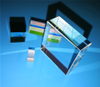
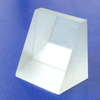
A corner cube retroreflector, also known as a CCR or trihedral prism, is an optical structure that consists of three adjacent, mutually-orthogonal plane-reflecting surfaces which form the corner of a cube. The corner cube reflects an incident ray at a specific angle, independent of the prism and beam orientations.

Typical corner cube designs reflect the incident light at 180 degrees. Some applications require the reflected ray to return at a different angle. This type of design, known as a "spoiled" retroreflector, incorporates a precisely calculated offset of the dihedral surface angles.

A number of coating options are available for corner cube retroreflectors. The front face may have an antireflective (AR) coating applied, and the three reflecting faces may have a metallic or dielectric coating, or may remain uncoated.

Applications

Corner cubes are used in a wide variety of applications such as spectroscopy, battlefield technology and satellites. Corner cubes enable range finding for weapons systems and aid in performing other precise displacement and distance measurements. For example, a satellite in orbit around the earth requires monitoring of its position while it measures plate tectonics and ocean surface topography.

ZYGO Advanced Capabilities

When off-the-shelf catalog retroreflectors do not meet the needs of your application, contact us with your requirements. At ZYGO, we leverage more than 40 years of experience in fabricating, coating, and measuring the highest quality optics. Our skilled engineers, opticians and technicians specialize in fabricating the most challenging designs. All fabrication, coating, and testing is done in-house by ZYGO.

ZYGO master opticians and coating technicians routinely fabricate designs for the defense, aerospace, semiconductor, medical and other highly demanding industries. We frequently receive requests to test coatings on witness samples to meet military specifications for adhesion, salt fog, humidity, temperature and more. Our testing and inspection teams ensure each corner cube's performance meets or exceeds our customers' expectations.

We recognize that each corner cube retroreflector design is unique, with specifications offering various benefits and tradeoffs. The specifications outlined here are an overview of what ZYGO typically offers. Contact us with your design requirements.

Custom Designs

Depending on their complexity, retroreflector designs may incorporate a number of customized specifications. Designs submitted to ZYGO typically involve special requests for one or more of the specifications noted below. Contact us to discuss the specifications applicable to your system requirements.

Substrate material

  • Diameter
  • Height
  • Beam deviation and angle tolerance
  • Laser damage threshold
  • Design wavelength reflectance requiremen
  • Clear aperture
  • Maximum beam diameter
  • Surface flatness (PV or RMS)
  • Surface quality (scratch/dig)
  • Bevels and edge finishing
  • Coating adhesion and other environmental considerations

ZYGO Quality Assurance

All ZYGO retroreflectors are manufactured and tested to the same high standard of excellence that the optics industry expects from ZYGO. The performance of every retroreflector is measured and verified for dihedral angle error, beam deviation, and transmitted wavefront quality using industry-standard ZYGO laser interferometer systems.

Supplier's Site

Technical Specifications

  Zygo Corporation
Product Category Optical Prisms
Product Name Corner Cube Retroreflectors
Prism Type Corner Cube Retroreflector
Largest Dimension 10 to 100 mm (0.3937 to 3.94 inch)
Prism Material BK7 Glass; UV Grade Fused Silica; BK7, Fused Silica, Germanium, Silicon and more
Unlock Full Specs
to access all available technical data

Similar Products

High Precision Prisms -  - Zygo Corporation
Zygo Corporation
Specs
Prism Type Custom
Coating Options Antireflection Coating (optional feature)
Surface Flatness Flatness better than λ/40
View Details