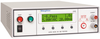
Sonel Test Earth Resistance and Resistivity Meter WMUSMRU200

Description
Multifunctional earthing and soil resistivity meter The Sonel MRU-200 earth resistance and soil resistivity meter for earth resistance and soil resistivity measurements with the use of various methods. The feature that definitely distinguishes this model from other meters of this kind is the use of all known methods of earth resistance measurement. The measurement can be carried out using the technical 3-pole and 4-wire method, also with additional clamps (multiple earthing), as well as the two-clamp method and the impulse method (earthing impedance measurement). The use of the two-probe method allows the testing to be carried out without the need for additional auxiliary probes which are driven into the ground. The impact method, on the other hand, is used, among other things, to diagnose lightning protection earthing. It is also used for extensive, multiple and bonded earthing measurements (also underground). The advantage of this method is that there is no need to tamper with the circuit. The impact method enables measurements to be made in accordance with EN 62305 - the need to measure earth impedance. This is not the end of the extended capabilities provided by the Sonel MRU-200 meter. The device additionally has the function of measuring the resistivity of soil, the continuity of protective and equalising connections, and, with the use of clamps, also leakage or fault currents. Apart from the large number of functions and many measurement possibilities, the MRU-200 meter deserves recognition also for the high accuracy of the obtained results. Measuring range - measurements in accordance with EN 61557 - from as low as 0.30 Ω. Measurement methods Impulse method – measurement of lightning protection systems with a measuring impulse ramp of 4/10 μs, 8/20 μs, 10/350 μs 3-pole and 4-wire method – measurement of earthing systems using auxiliary probes 3-pole method with clamp – measurement of earthing systems with multiple earth electrodes Two-clamp method – measurement of earthing system when the auxiliary probes cannot be used Earth resistivity – Wenner method Resistance of earth and compensatory conductors measured using current ≥200 mA with auto-zero function – meets the requirements of EN 61557-4 Measurement of leakage current Additional features Measurement of resistance of auxiliary electrodes RS and RH Measurement of interference voltage Measurement of interference frequency Measurement in the presence of interference voltage generated by power networks with frequency of 16 2/3 Hz, 50 Hz, 60 Hz, 400 Hz Selection of maximum measuring voltage (25 V and 50 V) Automatic calculation of soil resistivity in ohm-meters (Ωm) and ohm-feet (Ωft) Memory of 990 measurement results (10 banks of 99 cells each) Calibration of clamp used Real time clock (RTC) Data transmission to the computer and mobile devices Battery indication Application MRU-200 meter was created for the most difficult working conditions. It generates a measuring current exceeding 200 mA, which provides effective measurements of grounding of energy objects such as transformer stations and power stations. Thanks to the methods using clamps, it is not necessary to disconnect the control connectors, which is sometimes a very tedious operation. This plays a special role when performing works on objects exposed to weather conditions, where the connecting elements are sometimes corroded or tarnished. The graphical user interface provides clear readings and explicit messages. This translates into quick, trouble-free service. Impulse method MRU-200 may be used to test earthing of lightning protection systems, as this meter is able to simulate the conditions occurring during a lightning strike – it generates current with a standardized pulse leading edge and a time to half-peak. Available impulse ramps include 4/10 μs, 8/20 μs, 10/350 μs. Compatible with ERP-1 adapter ERP-1 adapter allows user to test earthing systems using flexible clamps. This is particularly useful, e.g. in case of lattice towers – there is no need to switch off the line or disconnect control connectors. Proprietary algorithm allows user to check the current direction in the individual measurements and facilitates damage detections, e.g. corroded steel strip (hoop). Capabilities The measuring methods available in the device allow for comprehensive control of working and protective grounding. The calibration function of the test leads eliminates the influence of their resistance on the result. However, this is just the beginning. The four-lead method provides very accurate measurement of the expected small values of resistance – eliminates the resistance of the test leads connecting the meter to grounding. Measurement of the continuity of protective connections and equipotential bondings with a current exceeding 200 mA meets the requirements of EN 61557-4 standard. Before performing the measurement, the meter checks whether the tested object is a subject to excessive interference voltage, which may indicate additional problems Memory and results The results can be saved to the device’s memory. It is divided into 10 banks of 99 cells, each corresponding to one measurement. These results can be easily transferred to the Sonel Reader software for archiving or subsequent analysis and research. Bluetooth wireless interface may be used to transfer measurement results to PC software or to a mobile phone with dedicated app – Sonel MRU Mobile. This provides not only data archiving function, but further data transfer – directly from the measurement site via an e-mail.
Datasheet
Description
Multifunctional earthing and soil resistivity meter The Sonel MRU-200 earth resistance and soil resistivity meter for earth resistance and soil resistivity measurements with the use of various methods. The feature that definitely distinguishes this model from other meters of this kind is the use of all known methods of earth resistance measurement. The measurement can be carried out using the technical 3-pole and 4-wire method, also with additional clamps (multiple earthing), as well as the two-clamp method and the impulse method (earthing impedance measurement). The use of the two-probe method allows the testing to be carried out without the need for additional auxiliary probes which are driven into the ground. The impact method, on the other hand, is used, among other things, to diagnose lightning protection earthing. It is also used for extensive, multiple and bonded earthing measurements (also underground). The advantage of this method is that there is no need to tamper with the circuit. The impact method enables measurements to be made in accordance with EN 62305 - the need to measure earth impedance. This is not the end of the extended capabilities provided by the Sonel MRU-200 meter. The device additionally has the function of measuring the resistivity of soil, the continuity of protective and equalising connections, and, with the use of clamps, also leakage or fault currents. Apart from the large number of functions and many measurement possibilities, the MRU-200 meter deserves recognition also for the high accuracy of the obtained results. Measuring range - measurements in accordance with EN 61557 - from as low as 0.30 Ω. Measurement methods Impulse method – measurement of lightning protection systems with a measuring impulse ramp of 4/10 μs, 8/20 μs, 10/350 μs 3-pole and 4-wire method – measurement of earthing systems using auxiliary probes 3-pole method with clamp – measurement of earthing systems with multiple earth electrodes Two-clamp method – measurement of earthing system when the auxiliary probes cannot be used Earth resistivity – Wenner method Resistance of earth and compensatory conductors measured using current ≥200 mA with auto-zero function – meets the requirements of EN 61557-4 Measurement of leakage current Additional features Measurement of resistance of auxiliary electrodes RS and RH Measurement of interference voltage Measurement of interference frequency Measurement in the presence of interference voltage generated by power networks with frequency of 16 2/3 Hz, 50 Hz, 60 Hz, 400 Hz Selection of maximum measuring voltage (25 V and 50 V) Automatic calculation of soil resistivity in ohm-meters (Ωm) and ohm-feet (Ωft) Memory of 990 measurement results (10 banks of 99 cells each) Calibration of clamp used Real time clock (RTC) Data transmission to the computer and mobile devices Battery indication Application MRU-200 meter was created for the most difficult working conditions. It generates a measuring current exceeding 200 mA, which provides effective measurements of grounding of energy objects such as transformer stations and power stations. Thanks to the methods using clamps, it is not necessary to disconnect the control connectors, which is sometimes a very tedious operation. This plays a special role when performing works on objects exposed to weather conditions, where the connecting elements are sometimes corroded or tarnished. The graphical user interface provides clear readings and explicit messages. This translates into quick, trouble-free service. Impulse method MRU-200 may be used to test earthing of lightning protection systems, as this meter is able to simulate the conditions occurring during a lightning strike – it generates current with a standardized pulse leading edge and a time to half-peak. Available impulse ramps include 4/10 μs, 8/20 μs, 10/350 μs. Compatible with ERP-1 adapter ERP-1 adapter allows user to test earthing systems using flexible clamps. This is particularly useful, e.g. in case of lattice towers – there is no need to switch off the line or disconnect control connectors. Proprietary algorithm allows user to check the current direction in the individual measurements and facilitates damage detections, e.g. corroded steel strip (hoop). Capabilities The measuring methods available in the device allow for comprehensive control of working and protective grounding. The calibration function of the test leads eliminates the influence of their resistance on the result. However, this is just the beginning. The four-lead method provides very accurate measurement of the expected small values of resistance – eliminates the resistance of the test leads connecting the meter to grounding. Measurement of the continuity of protective connections and equipotential bondings with a current exceeding 200 mA meets the requirements of EN 61557-4 standard. Before performing the measurement, the meter checks whether the tested object is a subject to excessive interference voltage, which may indicate additional problems Memory and results The results can be saved to the device’s memory. It is divided into 10 banks of 99 cells, each corresponding to one measurement. These results can be easily transferred to the Sonel Reader software for archiving or subsequent analysis and research. Bluetooth wireless interface may be used to transfer measurement results to PC software or to a mobile phone with dedicated app – Sonel MRU Mobile. This provides not only data archiving function, but further data transfer – directly from the measurement site via an e-mail.
Datasheet

Suppliers

Company
Product
Description
Supplier Links
Earth Resistance and Resistivity Meter - WMUSMRU200 - Sonel Test
Santa Clara, CA, United States
Earth Resistance and Resistivity Meter
WMUSMRU200
Earth Resistance and Resistivity Meter WMUSMRU200
Multifunctional earthing and soil resistivity meter The Sonel MRU-200 earth resistance and soil resistivity meter for earth resistance and soil resistivity measurements with the use of various methods. The feature that definitely distinguishes this model from other meters of this kind is the use of all known methods of earth resistance measurement. The measurement can be carried out using the technical 3-pole and 4-wire method, also with additional clamps (multiple earthing), as well as the two-clamp method and the impulse method (earthing impedance measurement). The use of the two-probe method allows the testing to be carried out without the need for additional auxiliary probes which are driven into the ground. The impact method, on the other hand, is used, among other things, to diagnose lightning protection earthing. It is also used for extensive, multiple and bonded earthing measurements (also underground). The advantage of this method is that there is no need to tamper with the circuit. The impact method enables measurements to be made in accordance with EN 62305 - the need to measure earth impedance. This is not the end of the extended capabilities provided by the Sonel MRU-200 meter. The device additionally has the function of measuring the resistivity of soil, the continuity of protective and equalising connections, and, with the use of clamps, also leakage or fault currents. Apart from the large number of functions and many measurement possibilities, the MRU-200 meter deserves recognition also for the high accuracy of the obtained results. Measuring range - measurements in accordance with EN 61557 - from as low as 0.30 Ω. Measurement methods Impulse method – measurement of lightning protection systems with a measuring impulse ramp of 4/10 μs, 8/20 μs, 10/350 μs 3-pole and 4-wire method – measurement of earthing systems using auxiliary probes 3-pole method with clamp – measurement of earthing systems with multiple earth electrodes Two-clamp method – measurement of earthing system when the auxiliary probes cannot be used Earth resistivity – Wenner method Resistance of earth and compensatory conductors measured using current ≥200 mA with auto-zero function – meets the requirements of EN 61557-4 Measurement of leakage current Additional features Measurement of resistance of auxiliary electrodes RS and RH Measurement of interference voltage Measurement of interference frequency Measurement in the presence of interference voltage generated by power networks with frequency of 16 2/3 Hz, 50 Hz, 60 Hz, 400 Hz Selection of maximum measuring voltage (25 V and 50 V) Automatic calculation of soil resistivity in ohm-meters (Ωm) and ohm-feet (Ωft) Memory of 990 measurement results (10 banks of 99 cells each) Calibration of clamp used Real time clock (RTC) Data transmission to the computer and mobile devices Battery indication Application MRU-200 meter was created for the most difficult working conditions. It generates a measuring current exceeding 200 mA, which provides effective measurements of grounding of energy objects such as transformer stations and power stations. Thanks to the methods using clamps, it is not necessary to disconnect the control connectors, which is sometimes a very tedious operation. This plays a special role when performing works on objects exposed to weather conditions, where the connecting elements are sometimes corroded or tarnished. The graphical user interface provides clear readings and explicit messages. This translates into quick, trouble-free service. Impulse method MRU-200 may be used to test earthing of lightning protection systems, as this meter is able to simulate the conditions occurring during a lightning strike – it generates current with a standardized pulse leading edge and a time to half-peak. Available impulse ramps include 4/10 μs, 8/20 μs, 10/350 μs. Compatible with ERP-1 adapter ERP-1 adapter allows user to test earthing systems using flexible clamps. This is particularly useful, e.g. in case of lattice towers – there is no need to switch off the line or disconnect control connectors. Proprietary algorithm allows user to check the current direction in the individual measurements and facilitates damage detections, e.g. corroded steel strip (hoop). Capabilities The measuring methods available in the device allow for comprehensive control of working and protective grounding. The calibration function of the test leads eliminates the influence of their resistance on the result. However, this is just the beginning. The four-lead method provides very accurate measurement of the expected small values of resistance – eliminates the resistance of the test leads connecting the meter to grounding. Measurement of the continuity of protective connections and equipotential bondings with a current exceeding 200 mA meets the requirements of EN 61557-4 standard. Before performing the measurement, the meter checks whether the tested object is a subject to excessive interference voltage, which may indicate additional problems Memory and results The results can be saved to the device’s memory. It is divided into 10 banks of 99 cells, each corresponding to one measurement. These results can be easily transferred to the Sonel Reader software for archiving or subsequent analysis and research. Bluetooth wireless interface may be used to transfer measurement results to PC software or to a mobile phone with dedicated app – Sonel MRU Mobile. This provides not only data archiving function, but further data transfer – directly from the measurement site via an e-mail.

Multifunctional earthing and soil resistivity meter

The Sonel MRU-200 earth resistance and soil resistivity meter for earth resistance and soil resistivity measurements with the use of various methods.

The feature that definitely distinguishes this model from other meters of this kind is the use of all known methods of earth resistance measurement. The measurement can be carried out using the technical 3-pole and 4-wire method, also with additional clamps (multiple earthing), as well as the two-clamp method and the impulse method (earthing impedance measurement).

The use of the two-probe method allows the testing to be carried out without the need for additional auxiliary probes which are driven into the ground. The impact method, on the other hand, is used, among other things, to diagnose lightning protection earthing. It is also used for extensive, multiple and bonded earthing measurements (also underground). The advantage of this method is that there is no need to tamper with the circuit. The impact method enables measurements to be made in accordance with EN 62305 - the need to measure earth impedance.

This is not the end of the extended capabilities provided by the Sonel MRU-200 meter. The device additionally has the function of measuring the resistivity of soil, the continuity of protective and equalising connections, and, with the use of clamps, also leakage or fault currents.

Apart from the large number of functions and many measurement possibilities, the MRU-200 meter deserves recognition also for the high accuracy of the obtained results. Measuring range - measurements in accordance with EN 61557 - from as low as 0.30 Ω.


Measurement methods


  • Impulse method – measurement of lightning protection systems with a measuring impulse ramp of 4/10 μs, 8/20 μs, 10/350 μs
  • 3-pole and 4-wire method – measurement of earthing systems using auxiliary probes
  • 3-pole method with clamp – measurement of earthing systems with multiple earth electrodes
  • Two-clamp method – measurement of earthing system when the auxiliary probes cannot be used
  • Earth resistivity – Wenner method
  • Resistance of earth and compensatory conductors measured using current ≥200 mA with auto-zero function – meets the requirements of EN 61557-4
  • Measurement of leakage current

Additional features


  • Measurement of resistance of auxiliary electrodes RS and RH
  • Measurement of interference voltage
  • Measurement of interference frequency
  • Measurement in the presence of interference voltage generated by power networks with frequency of 16 2/3 Hz, 50 Hz, 60 Hz, 400 Hz
  • Selection of maximum measuring voltage (25 V and 50 V)
  • Automatic calculation of soil resistivity in ohm-meters (Ωm) and ohm-feet (Ωft)
  • Memory of 990 measurement results (10 banks of 99 cells each)
  • Calibration of clamp used
  • Real time clock (RTC)
  • Data transmission to the computer and mobile devices
  • Battery indication

Application


MRU-200 meter was created for the most difficult working conditions. It generates a measuring current exceeding 200 mA, which provides effective measurements of grounding of energy objects such as transformer stations and power stations.

Thanks to the methods using clamps, it is not necessary to disconnect the control connectors, which is sometimes a very tedious operation. This plays a special role when performing works on objects exposed to weather conditions, where the connecting elements are sometimes corroded or tarnished.

The graphical user interface provides clear readings and explicit messages. This translates into quick, trouble-free service.


Impulse method


MRU-200 may be used to test earthing of lightning protection systems, as this meter is able to simulate the conditions occurring during a lightning strike – it generates current with a standardized pulse leading edge and a time to half-peak. Available impulse ramps include 4/10 μs, 8/20 μs, 10/350 μs.


Compatible with ERP-1 adapter


ERP-1 adapter allows user to test earthing systems using flexible clamps. This is particularly useful, e.g. in case of lattice towers – there is no need to switch off the line or disconnect control connectors. Proprietary algorithm allows user to check the current direction in the individual measurements and facilitates damage detections, e.g. corroded steel strip (hoop).


Capabilities


The measuring methods available in the device allow for comprehensive control of working and protective grounding. The calibration function of the test leads eliminates the influence of their resistance on the result. However, this is just the beginning.

  • The four-lead method provides very accurate measurement of the expected small values of resistance – eliminates the resistance of the test leads connecting the meter to grounding.
  • Measurement of the continuity of protective connections and equipotential bondings with a current exceeding 200 mA meets the requirements of EN 61557-4 standard.
  • Before performing the measurement, the meter checks whether the tested object is a subject to excessive interference voltage, which may indicate additional problems

Memory and results


The results can be saved to the device’s memory. It is divided into 10 banks of 99 cells, each corresponding to one measurement. These results can be easily transferred to the Sonel Reader software for archiving or subsequent analysis and research.

Bluetooth wireless interface may be used to transfer measurement results to PC software or to a mobile phone with dedicated app – Sonel MRU Mobile. This provides not only data archiving function, but further data transfer – directly from the measurement site via an e-mail.

Supplier's Site Datasheet

Technical Specifications

  Sonel Test
Product Category Ground Bond Testers
Product Number WMUSMRU200
Product Name Earth Resistance and Resistivity Meter
Testing Method Manual
Unlock Full Specs
to access all available technical data

Similar Products

Earth-Rite® II MGV -  - Newson Gale
Specs
Input Voltage 12V DC or 24V DC
Display LEDIndicator
Safety Agency Rating IP66, NEMA 4X
View Details
 - Model 8030 Ground Verification Monitor - OPW Engineered Systems
Specs
Input Voltage 115 - 120 VAC (optional feature); 220 - 240 VAC (optional feature)
AC Voltage Out 240 volts
AC Current Out 5 amps
View Details
Earth Resistance and Resistivity Meter - WMUSMRU200XL3 - Sonel Test
Specs
Testing Method Manual
Display DigitalMeter; graphic, monochrome, backlit; Bluetooth, USB
Types of Measurements Earth Continuity; CAT III 600 V, CAT IV 300 V
View Details
[30A] Ground Bond Tester - TOS6200 - Kikusui America, Inc.
Specs
Input Voltage 115 - 120 VAC; 220 - 240 VAC
AC Current Out 3 to 33 amps
Resistance Range 1.00E-6 to 0.0012 kohms
View Details
2 suppliers