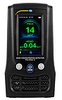
PCE Instruments / PCE Americas Inc. VOC Environmental Meter PCE-VOC 1

Description
VOCs are airborne gaseous or vaporous substances of organic origin. Examples of VOCs include hydrocarbons, alcohols, aldehydes and organic chemicals. Where do VOCs come from? Many detergents, solvents, paints, varnishes, adhesives and other synthetically manufactured substances can produce VOCs. In addition, numerous naturally occurring organic compounds formed by biological processes such as plant metabolism, decay and degradation can create VOCs. How do VOCs get into the air? VOCs can become airborne through evaporation or emission. Evaporation sources can include household cleaning products, construction and building materials, and indoor furnishings, flooring and decor. Emission sources can include traffic exhaust, tobacco or cigarette smoke and industrial pollution. Even food preparation and human metabolism can be sources for airborne VOCs. Less obvious is the proliferation of various impurities not firmly embedded in products. These impurities can be slowly released from the product's surface into the air. This applies, for example, to residual solvents in plastics (monomers), auxiliaries such as plasticizers, solubilizers, antioxidants, stabilizers and catalysts used in the production process, as well as by-products such as fragrances, flame retardants and biocidal agents. VOCs called terpenes can be released from materials of natural origin, like wood. VOCs also can be formed during reactions between oxygen, ozone or water with natural ingredients in wood and vegetable oils. What are the health effects of VOCs? Usually, indoor VOC concentrations are low and present little risk to human health or safety. However, prolonged or excessive exposure to VOCs can lead to adverse health effects including headaches, dizziness, fatigue, nausea, liver and kidney damage, and cancer. Occupants worried about the presence of VOCs in homes, schools and businesses should seek advice from IAQ experts such as industrial hygienists and heating, ventilation and air conditioning (HVAC) professionals. How can indoor VOC concentrations be reduced? Consumers should choose low-emission products and materials. Environmentally friendly labeling such as the Blue Angel is a helpful purchasing aid. Construction materials successfully tested according to the AgBB scheme with a recognized Ecolabel provide assurance that the potential for VOC emissions is minimized. Regular testing, adjusting and balancing (TAB) of HVAC systems should be performed to alleviate VOC concentration through proper ventilation.
Request a Quote Datasheet
Description
VOCs are airborne gaseous or vaporous substances of organic origin. Examples of VOCs include hydrocarbons, alcohols, aldehydes and organic chemicals. Where do VOCs come from? Many detergents, solvents, paints, varnishes, adhesives and other synthetically manufactured substances can produce VOCs. In addition, numerous naturally occurring organic compounds formed by biological processes such as plant metabolism, decay and degradation can create VOCs. How do VOCs get into the air? VOCs can become airborne through evaporation or emission. Evaporation sources can include household cleaning products, construction and building materials, and indoor furnishings, flooring and decor. Emission sources can include traffic exhaust, tobacco or cigarette smoke and industrial pollution. Even food preparation and human metabolism can be sources for airborne VOCs. Less obvious is the proliferation of various impurities not firmly embedded in products. These impurities can be slowly released from the product's surface into the air. This applies, for example, to residual solvents in plastics (monomers), auxiliaries such as plasticizers, solubilizers, antioxidants, stabilizers and catalysts used in the production process, as well as by-products such as fragrances, flame retardants and biocidal agents. VOCs called terpenes can be released from materials of natural origin, like wood. VOCs also can be formed during reactions between oxygen, ozone or water with natural ingredients in wood and vegetable oils. What are the health effects of VOCs? Usually, indoor VOC concentrations are low and present little risk to human health or safety. However, prolonged or excessive exposure to VOCs can lead to adverse health effects including headaches, dizziness, fatigue, nausea, liver and kidney damage, and cancer. Occupants worried about the presence of VOCs in homes, schools and businesses should seek advice from IAQ experts such as industrial hygienists and heating, ventilation and air conditioning (HVAC) professionals. How can indoor VOC concentrations be reduced? Consumers should choose low-emission products and materials. Environmentally friendly labeling such as the Blue Angel is a helpful purchasing aid. Construction materials successfully tested according to the AgBB scheme with a recognized Ecolabel provide assurance that the potential for VOC emissions is minimized. Regular testing, adjusting and balancing (TAB) of HVAC systems should be performed to alleviate VOC concentration through proper ventilation.
Request a Quote Datasheet

Suppliers

Company
Product
Description
Supplier Links
VOC Environmental Meter - PCE-VOC 1 - PCE Instruments / PCE Americas Inc.
Jupiter, FL, United States
VOC Environmental Meter
PCE-VOC 1
VOC Environmental Meter PCE-VOC 1
VOCs are airborne gaseous or vaporous substances of organic origin. Examples of VOCs include hydrocarbons, alcohols, aldehydes and organic chemicals. Where do VOCs come from? Many detergents, solvents, paints, varnishes, adhesives and other synthetically manufactured substances can produce VOCs. In addition, numerous naturally occurring organic compounds formed by biological processes such as plant metabolism, decay and degradation can create VOCs. How do VOCs get into the air? VOCs can become airborne through evaporation or emission. Evaporation sources can include household cleaning products, construction and building materials, and indoor furnishings, flooring and decor. Emission sources can include traffic exhaust, tobacco or cigarette smoke and industrial pollution. Even food preparation and human metabolism can be sources for airborne VOCs. Less obvious is the proliferation of various impurities not firmly embedded in products. These impurities can be slowly released from the product's surface into the air. This applies, for example, to residual solvents in plastics (monomers), auxiliaries such as plasticizers, solubilizers, antioxidants, stabilizers and catalysts used in the production process, as well as by-products such as fragrances, flame retardants and biocidal agents. VOCs called terpenes can be released from materials of natural origin, like wood. VOCs also can be formed during reactions between oxygen, ozone or water with natural ingredients in wood and vegetable oils. What are the health effects of VOCs? Usually, indoor VOC concentrations are low and present little risk to human health or safety. However, prolonged or excessive exposure to VOCs can lead to adverse health effects including headaches, dizziness, fatigue, nausea, liver and kidney damage, and cancer. Occupants worried about the presence of VOCs in homes, schools and businesses should seek advice from IAQ experts such as industrial hygienists and heating, ventilation and air conditioning (HVAC) professionals. How can indoor VOC concentrations be reduced? Consumers should choose low-emission products and materials. Environmentally friendly labeling such as the Blue Angel is a helpful purchasing aid. Construction materials successfully tested according to the AgBB scheme with a recognized Ecolabel provide assurance that the potential for VOC emissions is minimized. Regular testing, adjusting and balancing (TAB) of HVAC systems should be performed to alleviate VOC concentration through proper ventilation.

VOCs are airborne gaseous or vaporous substances of organic origin. Examples of VOCs include hydrocarbons, alcohols, aldehydes and organic chemicals.

Where do VOCs come from?
Many detergents, solvents, paints, varnishes, adhesives and other synthetically manufactured substances can produce VOCs. In addition, numerous naturally occurring organic compounds formed by biological processes such as plant metabolism, decay and degradation can create VOCs.

How do VOCs get into the air?
VOCs can become airborne through evaporation or emission. Evaporation sources can include household cleaning products, construction and building materials, and indoor furnishings, flooring and decor. Emission sources can include traffic exhaust, tobacco or cigarette smoke and industrial pollution. Even food preparation and human metabolism can be sources for airborne VOCs.

Less obvious is the proliferation of various impurities not firmly embedded in products. These impurities can be slowly released from the product's surface into the air. This applies, for example, to residual solvents in plastics (monomers), auxiliaries such as plasticizers, solubilizers, antioxidants, stabilizers and catalysts used in the production process, as well as by-products such as fragrances, flame retardants and biocidal agents. VOCs called terpenes can be released from materials of natural origin, like wood. VOCs also can be formed during reactions between oxygen, ozone or water with natural ingredients in wood and vegetable oils.

What are the health effects of VOCs?
Usually, indoor VOC concentrations are low and present little risk to human health or safety. However, prolonged or excessive exposure to VOCs can lead to adverse health effects including headaches, dizziness, fatigue, nausea, liver and kidney damage, and cancer. Occupants worried about the presence of VOCs in homes, schools and businesses should seek advice from IAQ experts such as industrial hygienists and heating, ventilation and air conditioning (HVAC) professionals.

How can indoor VOC concentrations be reduced?
Consumers should choose low-emission products and materials. Environmentally friendly labeling such as the Blue Angel is a helpful purchasing aid. Construction materials successfully tested according to the AgBB scheme with a recognized Ecolabel provide assurance that the potential for VOC emissions is minimized. Regular testing, adjusting and balancing (TAB) of HVAC systems should be performed to alleviate VOC concentration through proper ventilation.

Supplier's Site Datasheet

Technical Specifications

  PCE Instruments / PCE Americas Inc.
Product Category Gas Instruments
Product Number PCE-VOC 1
Product Name VOC Environmental Meter
Gas Types Toxic; (Formaldehyde (HCHO))
Unlock Full Specs
to access all available technical data

Similar Products

CFC / HFC Refrigerant Gas Detector - PCE-LD 1 - PCE Instruments / PCE Americas Inc.
PCE Instruments / PCE Americas Inc.
Specs
Measurement Type Leakage
Gas Types (CFC / HFC Refrigerant Gas)
Features Audible or Visual Alarms
View Details
Air Sampler - PCE-AS1 - PCE Instruments / PCE Americas Inc.
PCE Instruments / PCE Americas Inc.
Specs
Display Digital
Instrument Type Monitor
Mounting Type Portable
View Details
Gas Detector - PCE-WMM 50 - PCE Instruments / PCE Americas Inc.
PCE Instruments / PCE Americas Inc.
Specs
Measurement Type Trace
Application Confined Space Entry
Gas Types CO2
View Details
Particle Counter - PCE-RCM 11 - PCE Instruments / PCE Americas Inc.
PCE Instruments / PCE Americas Inc.
Specs
Gas Types Toxic; Combustible; Water Vapor; (0 ... 100% rh); (Formaldehyde (HCHO))
Display Digital
Instrument Type Detector
View Details