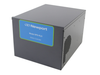
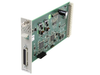
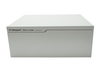
The XPS-RLDM is a high-performance,ver
y easy to use, single axis integrated motion controller/driver for direct drive motors. It has 10kHz servo rate. High-speed communication, outstanding trajectory accuracy and powerful programming functionality are achieved through 10/100 Base-T Ethernet Basic.
I/O and PCO functions, as well as XPS-DRV02 driver card are included.
Cable Kits have to be ordered separely based on the selected/provided drivercard .
Single-click Configuration
The web interface allows a quick configuration of the XPS-RLD, as simple as that in the ESP301 controller.
Intuitive File Management
The system files stored in the XPS-RLD are easily accessible, much like a Windows environment. At the same time, these files can be edited and saved in situ, without having to pull them from the folders and opening them with notepad or other text editor.
Meaningful Error Messages
Moving away from numerical error codes, a new set of more descriptive error codes is now available and visible in the XPS-RLD.
Optimum Position Grouping
The XPS incorporates pre-configured motion groups and user-definable motion groups to optimize the performance and simplify the use of advanced features like line-arc trajectories, splines, contouring, and complex PVT trajectories. These motion groups can be single axis positioners, spindles, gantry groups, XY groups, XYZ groups or multiple axis groups. The flexibility of grouping stages greatly improves process flow and error handling and provides a uniform structure for easy application development.
Compensation for Maximum Accuracy
An extensive set of compensation features are available to the user including backlash, linear error and error mapping in single, 2D or 3D. All compensations are corrected dynamically at each servo cycle, updated at the rate of 10 kHz. This broad selection of options transforms the most basic positioner into a high performance device, thus increasing the accuracy and performance of any motion application, culminating in more reliable results.
Example error before (left) and after (right) compensation
The XPS-RLDM is a high-performance,very easy to use, single axis integrated motion controller/driver for direct drive motors. It has 10kHz servo rate. High-speed communication, outstanding trajectory accuracy and powerful programming functionality are achieved through 10/100 Base-T Ethernet Basic.
I/O and PCO functions, as well as XPS-DRV02 driver card are included.
Cable Kits have to be ordered separely based on the selected/provided drivercard .
Single-click Configuration
The web interface allows a quick configuration of the XPS-RLD, as simple as that in the ESP301 controller.
Intuitive File Management
The system files stored in the XPS-RLD are easily accessible, much like a Windows environment. At the same time, these files can be edited and saved in situ, without having to pull them from the folders and opening them with notepad or other text editor.
Meaningful Error Messages
Moving away from numerical error codes, a new set of more descriptive error codes is now available and visible in the XPS-RLD.
Optimum Position Grouping
The XPS incorporates pre-configured motion groups and user-definable motion groups to optimize the performance and simplify the use of advanced features like line-arc trajectories, splines, contouring, and complex PVT trajectories. These motion groups can be single axis positioners, spindles, gantry groups, XY groups, XYZ groups or multiple axis groups. The flexibility of grouping stages greatly improves process flow and error handling and provides a uniform structure for easy application development.
Compensation for Maximum Accuracy
An extensive set of compensation features are available to the user including backlash, linear error and error mapping in single, 2D or 3D. All compensations are corrected dynamically at each servo cycle, updated at the rate of 10 kHz. This broad selection of options transforms the most basic positioner into a high performance device, thus increasing the accuracy and performance of any motion application, culminating in more reliable results.
Example error before (left) and after (right) compensation