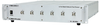
GL Communications, Inc. MAPS™ CAS Protocol Emulator XX651

Description
Signaling that occurs between switches (such as PBXs, local exchange carrier and interexchange carrier) in telephone networks is sent either within the voice traffic or on a separate dedicated signaling channel. Channel Associated Signaling (CAS) is a method of signaling where a channel or timeslot carrying speech also carries with it the signaling and addressing to set up and tear down calls. This supervisory signaling carried as "on-hook" and "off-hook". The addressing is carried as DTMF (Dual Tone Multi Frequency) or as MF (Multi Frequency). This form of signaling is still used to route calls on the public switched telephone network (PSTN) including subscriber lines like 2wire local loops, on trunks between central offices (CO), and on access trunks such as PBXs. Typical CAS signaling methods are: Loop Start, R1, MFC-R2, SS5, Sweden P7, FGD, and other variants of these methods. In the T1 world, CAS protocols are implemented through "robbed bit signaling", a unique way of signaling that has always caused confusion among engineers. In the E1 world, CAS protocols are implemented through time-shared use of timeslot 16. In both systems, dual tones representing digits are used for ANI and DID identifiers. CAS emulation is added to GL's Message Automation and Protocol Simulation (MAPS™) platform. MAPS™ is a protocol simulation and conformance test tool that supports a variety of protocols such as SIP, MEGACO, MGCP, SS7, ISDN, GSM, MAP, CAS, LTE, UMTS, SS7 SIGTRAN, ISDN SIGTRAN, SIP I, GSM AoIP, Diameter and many others. MAPS™ CAS Emulator is a client-side application that works along with GL’s T1/E1 Analyzer Cards and Windows Client/Server software. This test tool is used to perform testing using CAS signaling and transmission and detection of TDM traffic over T1/E1 using scripts, and offers a complete solution for testing, troubleshooting, and maintenance of devices and networks implementing CAS. MAPS™ CAS automates the testing procedure with ready scripts for inbound and outbound calls. Calls are established, once the signaling information such as signaling bits, DTMF/MF digits, or Tones are sent or detected. MAPS™ CAS is widely used for following test solutions- High density FXO Simulation - supports up to 96 Analog Channels (using MAPS™ CAS and Channel Bank) Testing Hybrid networks - using MAPS™ CAS and MAPS™ SIP/MGCP (using MAPS™ CAS, Channel Bank, and MAPS™ SIP/MGCP) GL’s MAPS™ CAS Emulator requires additional licenses: XX610 - Client Server w/Tx-Rx File XX620 - Client Server w/Dtmf XX630 - Client Server w/Dsp Channel Bank (APSCB-24 or APSCB-48) for 2wire emulation XXXFT0 - Fax emulation option MAPS™ CAS includes powerful utilities like Profile Editor and Script Editor which allow new scenarios to be created or existing scenarios to be modified for CAS Signaling. The test configuration window allows users to configure various CAS signaling types including R1 digit parameters, flow control parameters, forward/ backward tone parameters and various others to transmit and receive CAS inbound and outbound signals. MAPS™ CAS also supports simulation of CAMA trunks connected to the 911 selective router (SR). CAMA type signaling trunks are used to provide the calling party’s Automatic Number Identification (ANI) to the selective router. The selective router then routes the call to the appropriate Public Safety Answering Point (PSAP) based on the calling party’s location. Both analog and digital (T1) CAMA simulations are supported. Analog simulation requires an additional channel bank specially configured for CAMA. MAPS™ application supports a Command Line Interface (CLI) such as the Java, VBScripts, TCL, Python scripting tools, to provide the capability of remote operation, automation, and multi-site connectivity. With the purchase of additional licenses (xx610, xx620, xxFT0) traffic can be simulated over T1/E1 interfaces. Supported traffic includes transmission and detection of TDM digits, voice files, single tone, dual tone, speech and FAX. Also supports various traffic events simulation during the course of a call.
Datasheet
Description
Signaling that occurs between switches (such as PBXs, local exchange carrier and interexchange carrier) in telephone networks is sent either within the voice traffic or on a separate dedicated signaling channel. Channel Associated Signaling (CAS) is a method of signaling where a channel or timeslot carrying speech also carries with it the signaling and addressing to set up and tear down calls. This supervisory signaling carried as "on-hook" and "off-hook". The addressing is carried as DTMF (Dual Tone Multi Frequency) or as MF (Multi Frequency). This form of signaling is still used to route calls on the public switched telephone network (PSTN) including subscriber lines like 2wire local loops, on trunks between central offices (CO), and on access trunks such as PBXs. Typical CAS signaling methods are: Loop Start, R1, MFC-R2, SS5, Sweden P7, FGD, and other variants of these methods. In the T1 world, CAS protocols are implemented through "robbed bit signaling", a unique way of signaling that has always caused confusion among engineers. In the E1 world, CAS protocols are implemented through time-shared use of timeslot 16. In both systems, dual tones representing digits are used for ANI and DID identifiers. CAS emulation is added to GL's Message Automation and Protocol Simulation (MAPS™) platform. MAPS™ is a protocol simulation and conformance test tool that supports a variety of protocols such as SIP, MEGACO, MGCP, SS7, ISDN, GSM, MAP, CAS, LTE, UMTS, SS7 SIGTRAN, ISDN SIGTRAN, SIP I, GSM AoIP, Diameter and many others. MAPS™ CAS Emulator is a client-side application that works along with GL’s T1/E1 Analyzer Cards and Windows Client/Server software. This test tool is used to perform testing using CAS signaling and transmission and detection of TDM traffic over T1/E1 using scripts, and offers a complete solution for testing, troubleshooting, and maintenance of devices and networks implementing CAS. MAPS™ CAS automates the testing procedure with ready scripts for inbound and outbound calls. Calls are established, once the signaling information such as signaling bits, DTMF/MF digits, or Tones are sent or detected. MAPS™ CAS is widely used for following test solutions- High density FXO Simulation - supports up to 96 Analog Channels (using MAPS™ CAS and Channel Bank) Testing Hybrid networks - using MAPS™ CAS and MAPS™ SIP/MGCP (using MAPS™ CAS, Channel Bank, and MAPS™ SIP/MGCP) GL’s MAPS™ CAS Emulator requires additional licenses: XX610 - Client Server w/Tx-Rx File XX620 - Client Server w/Dtmf XX630 - Client Server w/Dsp Channel Bank (APSCB-24 or APSCB-48) for 2wire emulation XXXFT0 - Fax emulation option MAPS™ CAS includes powerful utilities like Profile Editor and Script Editor which allow new scenarios to be created or existing scenarios to be modified for CAS Signaling. The test configuration window allows users to configure various CAS signaling types including R1 digit parameters, flow control parameters, forward/ backward tone parameters and various others to transmit and receive CAS inbound and outbound signals. MAPS™ CAS also supports simulation of CAMA trunks connected to the 911 selective router (SR). CAMA type signaling trunks are used to provide the calling party’s Automatic Number Identification (ANI) to the selective router. The selective router then routes the call to the appropriate Public Safety Answering Point (PSAP) based on the calling party’s location. Both analog and digital (T1) CAMA simulations are supported. Analog simulation requires an additional channel bank specially configured for CAMA. MAPS™ application supports a Command Line Interface (CLI) such as the Java, VBScripts, TCL, Python scripting tools, to provide the capability of remote operation, automation, and multi-site connectivity. With the purchase of additional licenses (xx610, xx620, xxFT0) traffic can be simulated over T1/E1 interfaces. Supported traffic includes transmission and detection of TDM digits, voice files, single tone, dual tone, speech and FAX. Also supports various traffic events simulation during the course of a call.
Datasheet

Suppliers

Company
Product
Description
Supplier Links
MAPS™ CAS Protocol Emulator - XX651 - GL Communications, Inc.
Gaithersburg, MD, United States
MAPS™ CAS Protocol Emulator
XX651
MAPS™ CAS Protocol Emulator XX651
Signaling that occurs between switches (such as PBXs, local exchange carrier and interexchange carrier) in telephone networks is sent either within the voice traffic or on a separate dedicated signaling channel. Channel Associated Signaling (CAS) is a method of signaling where a channel or timeslot carrying speech also carries with it the signaling and addressing to set up and tear down calls. This supervisory signaling carried as "on-hook" and "off-hook". The addressing is carried as DTMF (Dual Tone Multi Frequency) or as MF (Multi Frequency). This form of signaling is still used to route calls on the public switched telephone network (PSTN) including subscriber lines like 2wire local loops, on trunks between central offices (CO), and on access trunks such as PBXs. Typical CAS signaling methods are: Loop Start, R1, MFC-R2, SS5, Sweden P7, FGD, and other variants of these methods. In the T1 world, CAS protocols are implemented through "robbed bit signaling", a unique way of signaling that has always caused confusion among engineers. In the E1 world, CAS protocols are implemented through time-shared use of timeslot 16. In both systems, dual tones representing digits are used for ANI and DID identifiers. CAS emulation is added to GL's Message Automation and Protocol Simulation (MAPS™) platform. MAPS™ is a protocol simulation and conformance test tool that supports a variety of protocols such as SIP, MEGACO, MGCP, SS7, ISDN, GSM, MAP, CAS, LTE, UMTS, SS7 SIGTRAN, ISDN SIGTRAN, SIP I, GSM AoIP, Diameter and many others. MAPS™ CAS Emulator is a client-side application that works along with GL’s T1/E1 Analyzer Cards and Windows Client/Server software. This test tool is used to perform testing using CAS signaling and transmission and detection of TDM traffic over T1/E1 using scripts, and offers a complete solution for testing, troubleshooting, and maintenance of devices and networks implementing CAS. MAPS™ CAS automates the testing procedure with ready scripts for inbound and outbound calls. Calls are established, once the signaling information such as signaling bits, DTMF/MF digits, or Tones are sent or detected. MAPS™ CAS is widely used for following test solutions- High density FXO Simulation - supports up to 96 Analog Channels (using MAPS™ CAS and Channel Bank) Testing Hybrid networks - using MAPS™ CAS and MAPS™ SIP/MGCP (using MAPS™ CAS, Channel Bank, and MAPS™ SIP/MGCP) GL’s MAPS™ CAS Emulator requires additional licenses: XX610 - Client Server w/Tx-Rx File XX620 - Client Server w/Dtmf XX630 - Client Server w/Dsp Channel Bank (APSCB-24 or APSCB-48) for 2wire emulation XXXFT0 - Fax emulation option MAPS™ CAS includes powerful utilities like Profile Editor and Script Editor which allow new scenarios to be created or existing scenarios to be modified for CAS Signaling. The test configuration window allows users to configure various CAS signaling types including R1 digit parameters, flow control parameters, forward/ backward tone parameters and various others to transmit and receive CAS inbound and outbound signals. MAPS™ CAS also supports simulation of CAMA trunks connected to the 911 selective router (SR). CAMA type signaling trunks are used to provide the calling party’s Automatic Number Identification (ANI) to the selective router. The selective router then routes the call to the appropriate Public Safety Answering Point (PSAP) based on the calling party’s location. Both analog and digital (T1) CAMA simulations are supported. Analog simulation requires an additional channel bank specially configured for CAMA. MAPS™ application supports a Command Line Interface (CLI) such as the Java, VBScripts, TCL, Python scripting tools, to provide the capability of remote operation, automation, and multi-site connectivity. With the purchase of additional licenses (xx610, xx620, xxFT0) traffic can be simulated over T1/E1 interfaces. Supported traffic includes transmission and detection of TDM digits, voice files, single tone, dual tone, speech and FAX. Also supports various traffic events simulation during the course of a call.

Signaling that occurs between switches (such as PBXs, local exchange carrier and interexchange carrier) in telephone networks is sent either within the voice traffic or on a separate dedicated signaling channel. Channel Associated Signaling (CAS) is a method of signaling where a channel or timeslot carrying speech also carries with it the signaling and addressing to set up and tear down calls. This supervisory signaling carried as "on-hook" and "off-hook". The addressing is carried as DTMF (Dual Tone Multi Frequency) or as MF (Multi Frequency). This form of signaling is still used to route calls on the public switched telephone network (PSTN) including subscriber lines like 2wire local loops, on trunks between central offices (CO), and on access trunks such as PBXs. Typical CAS signaling methods are: Loop Start, R1, MFC-R2, SS5, Sweden P7, FGD, and other variants of these methods.

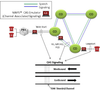
In the T1 world, CAS protocols are implemented through "robbed bit signaling", a unique way of signaling that has always caused confusion among engineers. In the E1 world, CAS protocols are implemented through time-shared use of timeslot 16. In both systems, dual tones representing digits are used for ANI and DID identifiers.

CAS emulation is added to GL's Message Automation and Protocol Simulation (MAPS™) platform. MAPS™ is a protocol simulation and conformance test tool that supports a variety of protocols such as SIP, MEGACO, MGCP, SS7, ISDN, GSM, MAP, CAS, LTE, UMTS, SS7 SIGTRAN, ISDN SIGTRAN, SIP I, GSM AoIP, Diameter and many others.

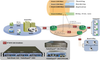
MAPS™ CAS Emulator is a client-side application that works along with GL’s T1/E1 Analyzer Cards and Windows Client/Server software. This test tool is used to perform testing using CAS signaling and transmission and detection of TDM traffic over T1/E1 using scripts, and offers a complete solution for testing, troubleshooting, and maintenance of devices and networks implementing CAS. MAPS™ CAS automates the testing procedure with ready scripts for inbound and outbound calls. Calls are established, once the signaling information such as signaling bits, DTMF/MF digits, or Tones are sent or detected.

MAPS™ CAS is widely used for following test solutions-

  • High density FXO Simulation - supports up to 96 Analog Channels
    (using MAPS™ CAS and Channel Bank)
  • Testing Hybrid networks - using MAPS™ CAS and MAPS™ SIP/MGCP
    (using MAPS™ CAS, Channel Bank, and MAPS™ SIP/MGCP)

GL’s MAPS™ CAS Emulator requires additional licenses:

  • XX610 - Client Server w/Tx-Rx File
  • XX620 - Client Server w/Dtmf
  • XX630 - Client Server w/Dsp
  • Channel Bank (APSCB-24 or APSCB-48) for 2wire emulation
  • XXXFT0 - Fax emulation option

MAPS™ CAS includes powerful utilities like Profile Editor and Script Editor which allow new scenarios to be created or existing scenarios to be modified for CAS Signaling. The test configuration window allows users to configure various CAS signaling types including R1 digit parameters, flow control parameters, forward/ backward tone parameters and various others to transmit and receive CAS inbound and outbound signals.

MAPS™ CAS also supports simulation of CAMA trunks connected to the 911 selective router (SR). CAMA type signaling trunks are used to provide the calling party’s Automatic Number Identification (ANI) to the selective router. The selective router then routes the call to the appropriate Public Safety Answering Point (PSAP) based on the calling party’s location. Both analog and digital (T1) CAMA simulations are supported. Analog simulation requires an additional channel bank specially configured for CAMA.

MAPS™ application supports a Command Line Interface (CLI) such as the Java, VBScripts, TCL, Python scripting tools, to provide the capability of remote operation, automation, and multi-site connectivity.

With the purchase of additional licenses (xx610, xx620, xxFT0) traffic can be simulated over T1/E1 interfaces. Supported traffic includes transmission and detection of TDM digits, voice files, single tone, dual tone, speech and FAX. Also supports various traffic events simulation during the course of a call.
Supplier's Site Datasheet

Technical Specifications

  GL Communications, Inc.
Product Category Network Test Equipment
Product Number XX651
Product Name MAPS™ CAS Protocol Emulator
Network Protocol CAS
Unlock Full Specs
to access all available technical data

Similar Products

Network Testers - 468570 - RS Components, Ltd.
RS Components, Ltd.
Specs
Equipment Type Network Tester
Port Type RJ-45; USB; SFP, USB Type C, USB Type-A, RJ45
Standards and Certifications RoHS
View Details
Profibus Diagnostic & Troubleshooting Device -  - Softing Inc. Industrial Automation
Softing Inc. Industrial Automation
Specs
Equipment Type Protocol Analyzer
View Details
MAPS™ SIGTRAN (SS7over IP) Protocol Emulator - PKS130 - GL Communications, Inc.
Specs
Network Protocol TCP/IP
View Details
BusTrACEr™ - Data Bus Analyzer and Monitor Software (DASO) - BU-69066 - Data Device Corporation (DDC)
Specs
Equipment Type Network / LAN Analyzer
Features Software Included
View Details