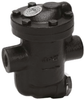
Watson McDaniel Company Float and Thermostatic Steam Trap 3/4" FT-3

Description
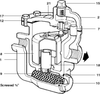
The FT Series float and thermostatic steam traps are used for HVAC and light industrial process applications, and can be applied to unit heaters, water heaters, pressing machines, heat exchangers, and coils. These traps have excellent air removal capability making them an excellent choice for HVAC and process applications requiring quick start-up. Float and thermostatic steam traps have a float and thermostatic element that work together to remove both condensate and air from the steam system. The float, which is attached to a valve, opens when condensate enters the trap. Air is discharged through the thermostatic air vent to the outlet side of the trap. The thermostatic air vent closes when steam enters the trap.
Datasheet
Description
The FT Series float and thermostatic steam traps are used for HVAC and light industrial process applications, and can be applied to unit heaters, water heaters, pressing machines, heat exchangers, and coils. These traps have excellent air removal capability making them an excellent choice for HVAC and process applications requiring quick start-up. Float and thermostatic steam traps have a float and thermostatic element that work together to remove both condensate and air from the steam system. The float, which is attached to a valve, opens when condensate enters the trap. Air is discharged through the thermostatic air vent to the outlet side of the trap. The thermostatic air vent closes when steam enters the trap.
Datasheet

Suppliers

Company
Product
Description
Supplier Links
Pottstown, PA, USA
Float and Thermostatic Steam Trap
3/4" FT-3
Float and Thermostatic Steam Trap 3/4" FT-3
The FT Series float and thermostatic steam traps are used for HVAC and light industrial process applications, and can be applied to unit heaters, water heaters, pressing machines, heat exchangers, and coils. These traps have excellent air removal capability making them an excellent choice for HVAC and process applications requiring quick start-up. Float and thermostatic steam traps have a float and thermostatic element that work together to remove both condensate and air from the steam system. The float, which is attached to a valve, opens when condensate enters the trap. Air is discharged through the thermostatic air vent to the outlet side of the trap. The thermostatic air vent closes when steam enters the trap.

The FT Series float and thermostatic steam traps are used for HVAC and light industrial process applications, and can be applied to unit heaters, water heaters, pressing machines, heat exchangers, and coils. These traps have excellent air removal capability making them an excellent choice for HVAC and process applications requiring quick start-up. Float and thermostatic steam traps have a float and thermostatic element that work together to remove both condensate and air from the steam system. The float, which is attached to a valve, opens when condensate enters the trap. Air is discharged through the thermostatic air vent to the outlet side of the trap. The thermostatic air vent closes when steam enters the trap.

Datasheet

Technical Specifications

  Watson McDaniel Company
Product Category Steam Traps
Product Number 3/4" FT-3
Product Name Float and Thermostatic Steam Trap
Steam Trap Type FloatThermostatic
Material Iron - Cast
Operating Pressure 15 psi (10.56 m H2O)
Unlock Full Specs
to access all available technical data

Similar Products

 - 7209254 - RS Components, Ltd.
RS Components, Ltd.
Specs
Steam Trap Type Bucket
Material Iron
Operating Pressure 174 psi (122 m H2O)
View Details
Specs
Steam Trap Type FloatThermostatic
Material Iron - Cast
Operating Pressure 175 psi (123 m H2O)
View Details
Compressed Air Drain Trap - Type MFAS - Velan, Inc.
Specs
Steam Trap Type Bimetallic
Material Steel - Stainless
Operating Pressure 300 psi (211 m H2O)
View Details
Stainless Steel Sealed Inverted Bucket Steam Trap - SIB45 - Spirax-Sarco
Specs
Steam Trap Type Bucket
Material Steel - Stainless
Operating Pressure 1450 psi (1021 m H2O)
View Details