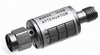
The 8493A is a 26.5 GHz Fixed Attenuator from Agilent. Attenuators are a type of radio frequency (RF) test equipment that’s useful during RF design. When an engineer needs to reduce (attenuate) the level of an electronic signal, he or she uses an attenuator. Attenuation can protect circuit stages from receiving signal levels that are too high. RF attenuators may be fixed, switched, or variable, depending on their capabilities and applications.
Additional Features:
Frequency Range: DC to 12.4 GHz
Maximum SWR: 1.15 to 8 GHz, 1.13 to 12.4 GHz
Maximum Input Power: 2 W (average), 100 W (peak)
Connector: SMA male, female
The Agilent 8493A coaxial fixed attenuator provides precision attenuation, flat frequency response, low SWR over broad frequency range at a low price. The attenuator is available in nominal attenuations of 3 dB and 6 dB, also 10 dB increments from 10 dB to 30 dB. This attenuator is swept-frequency tested to ensure it meets specifications at all frequencies. Calibration points are provided on a nameplate chart attached to each unit.
The 8493A is a 26.5 GHz Fixed Attenuator from Agilent. Attenuators are a type of radio frequency (RF) test equipment that’s useful during RF design. When an engineer needs to reduce (attenuate) the level of an electronic signal, he or she uses an attenuator. Attenuation can protect circuit stages from receiving signal levels that are too high. RF attenuators may be fixed, switched, or variable, depending on their capabilities and applications.
Additional Features:
- Frequency Range: DC to 12.4 GHz
- Maximum SWR: 1.15 to 8 GHz, 1.13 to 12.4 GHz
- Maximum Input Power: 2 W (average), 100 W (peak)
- Connector: SMA male, female
The Agilent 8493A coaxial fixed attenuator provides precision attenuation, flat frequency response, low SWR over broad frequency range at a low price. The attenuator is available in nominal attenuations of 3 dB and 6 dB, also 10 dB increments from 10 dB to 30 dB. This attenuator is swept-frequency tested to ensure it meets specifications at all frequencies. Calibration points are provided on a nameplate chart attached to each unit.