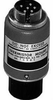
The 478A is a used 10 GHz Watt RF Sensor from Agilent. Electronic test equipment sensors measure the power of waveforms, such as multi-tone and modulated radiofrequency (RF) waveforms. Sensors gather highly accurate modulation measurements using diode detectors. Additional Features:
High accuracy even in routine power measurements
Temperature compensated for low drift
Measures microwave power as low as one microwatt
Shows calibration factor and effective efficiency at six frequencies
The Agilent 478A provides high efficiency and good radio frequency (RF) match . Used in conjunction with the Agilent 432A power meter, they provide high accuracy even in routine power measurements. These thermistor mounts are temperature compensated for low drift, even in the presence of thermal shocks, permitting measurement of microwave power as low as one microwatt. Each mount contains data showing calibration factor and effective efficiency at six frequencies, directly traceable to the U.S. National Institute Standards and Technology (NIST) at those frequencies where NIST provides calibration service.
The 478A is a used 10 GHz Watt RF Sensor from Agilent. Electronic test equipment sensors measure the power of waveforms, such as multi-tone and modulated radiofrequency (RF) waveforms. Sensors gather highly accurate modulation measurements using diode detectors.
Additional Features:
- High accuracy even in routine power measurements
- Temperature compensated for low drift
- Measures microwave power as low as one microwatt
- Shows calibration factor and effective efficiency at six frequencies
The Agilent 478A provides high efficiency and good radio frequency (RF) match . Used in conjunction with the Agilent 432A power meter, they provide high accuracy even in routine power measurements. These thermistor mounts are temperature compensated for low drift, even in the presence of thermal shocks, permitting measurement of microwave power as low as one microwatt. Each mount contains data showing calibration factor and effective efficiency at six frequencies, directly traceable to the U.S. National Institute Standards and Technology (NIST) at those frequencies where NIST provides calibration service.