ValueTronics International, Inc. RF Generator 2026Q

Description
The 2026Q is a 2.4 GHz RF Generator from IFR . An RF generator is a tool engineers use to generate sinusoidal outputs while testing electronic equipment. The output will automatically have its frequency varied or swept between frequencies. A “sweep” is one complete cycle of a frequency variation. Engineers use RF signal generators as test equipment, mostly to measure responses of filters, amplifiers, and electrical components. Additional Features: Independent source frequency range: 10 kHz to 2.4 GHz with a resolution of 1 Hz Combined output frequency range: 800 MHz to 2.0 GHz with a resolution of 1 Hz Two tone interference generation for AMPS/CDMA receiver testing in accordance with IS-97-A/IS-98-A Provides single calibrated point of reference for the transceiver under test Excellent phase noise and spectral purity Elimination of additional RF combining or signal conditioning High internal isolation of returned signals Includes two independent, fully featured 10 kHz to 2.4 GHz RF signal generators Very low levels of internally generated intermodulation products Single unit solution for CDMA interference testing The IFR 2026Q CDMA Interferer MultiSource Generator is a purpose built instrument for testing CDMA hand-set and base station equipment. It features two synthesized RF signal generators with both independent and combined RF outputs. The combined RF output provides a path to and from the radio under test and an appropriate CDMA radio test set. Each signal source covers the frequency range 10 kHz to 2.4 GHz, whilst the combined path covers the range 800 MHz to 2.0 GHz. The 2026Q is a derivative of the popular 2026 MultiSource RF signal generator. It has been designed to work directly with a CDMA radio test set to produce a fully integrated radio receiver test solution for CDMA cellular and PCS systems in accordance with IS-97-A/IS-98-A.
Datasheet
Description
The 2026Q is a 2.4 GHz RF Generator from IFR . An RF generator is a tool engineers use to generate sinusoidal outputs while testing electronic equipment. The output will automatically have its frequency varied or swept between frequencies. A “sweep” is one complete cycle of a frequency variation. Engineers use RF signal generators as test equipment, mostly to measure responses of filters, amplifiers, and electrical components. Additional Features: Independent source frequency range: 10 kHz to 2.4 GHz with a resolution of 1 Hz Combined output frequency range: 800 MHz to 2.0 GHz with a resolution of 1 Hz Two tone interference generation for AMPS/CDMA receiver testing in accordance with IS-97-A/IS-98-A Provides single calibrated point of reference for the transceiver under test Excellent phase noise and spectral purity Elimination of additional RF combining or signal conditioning High internal isolation of returned signals Includes two independent, fully featured 10 kHz to 2.4 GHz RF signal generators Very low levels of internally generated intermodulation products Single unit solution for CDMA interference testing The IFR 2026Q CDMA Interferer MultiSource Generator is a purpose built instrument for testing CDMA hand-set and base station equipment. It features two synthesized RF signal generators with both independent and combined RF outputs. The combined RF output provides a path to and from the radio under test and an appropriate CDMA radio test set. Each signal source covers the frequency range 10 kHz to 2.4 GHz, whilst the combined path covers the range 800 MHz to 2.0 GHz. The 2026Q is a derivative of the popular 2026 MultiSource RF signal generator. It has been designed to work directly with a CDMA radio test set to produce a fully integrated radio receiver test solution for CDMA cellular and PCS systems in accordance with IS-97-A/IS-98-A.
Datasheet

Suppliers

Company
Product
Description
Supplier Links
RF Generator 2026Q
The 2026Q is a 2.4 GHz RF Generator from IFR . An RF generator is a tool engineers use to generate sinusoidal outputs while testing electronic equipment. The output will automatically have its frequency varied or swept between frequencies. A “sweep” is one complete cycle of a frequency variation. Engineers use RF signal generators as test equipment, mostly to measure responses of filters, amplifiers, and electrical components. Additional Features: Independent source frequency range: 10 kHz to 2.4 GHz with a resolution of 1 Hz Combined output frequency range: 800 MHz to 2.0 GHz with a resolution of 1 Hz Two tone interference generation for AMPS/CDMA receiver testing in accordance with IS-97-A/IS-98-A Provides single calibrated point of reference for the transceiver under test Excellent phase noise and spectral purity Elimination of additional RF combining or signal conditioning High internal isolation of returned signals Includes two independent, fully featured 10 kHz to 2.4 GHz RF signal generators Very low levels of internally generated intermodulation products Single unit solution for CDMA interference testing The IFR 2026Q CDMA Interferer MultiSource Generator is a purpose built instrument for testing CDMA hand-set and base station equipment. It features two synthesized RF signal generators with both independent and combined RF outputs. The combined RF output provides a path to and from the radio under test and an appropriate CDMA radio test set. Each signal source covers the frequency range 10 kHz to 2.4 GHz, whilst the combined path covers the range 800 MHz to 2.0 GHz. The 2026Q is a derivative of the popular 2026 MultiSource RF signal generator. It has been designed to work directly with a CDMA radio test set to produce a fully integrated radio receiver test solution for CDMA cellular and PCS systems in accordance with IS-97-A/IS-98-A.

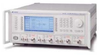
The 2026Q is a 2.4 GHz RF Generator from IFR . An RF generator is a tool engineers use to generate sinusoidal outputs while testing electronic equipment. The output will automatically have its frequency varied or swept between frequencies. A “sweep” is one complete cycle of a frequency variation. Engineers use RF signal generators as test equipment, mostly to measure responses of filters, amplifiers, and electrical components.

Additional Features:

  • Independent source frequency range: 10 kHz to 2.4 GHz with a resolution of 1 Hz
  • Combined output frequency range: 800 MHz to 2.0 GHz with a resolution of 1 Hz
  • Two tone interference generation for AMPS/CDMA receiver testing in accordance with IS-97-A/IS-98-A
  • Provides single calibrated point of reference for the transceiver under test
  • Excellent phase noise and spectral purity
  • Elimination of additional RF combining or signal conditioning
  • High internal isolation of returned signals
  • Includes two independent, fully featured 10 kHz to 2.4 GHz RF signal generators
  • Very low levels of internally generated intermodulation products
  • Single unit solution for CDMA interference testing

The IFR 2026Q CDMA Interferer MultiSource Generator is a purpose built instrument for testing CDMA hand-set and base station equipment. It features two synthesized RF signal generators with both independent and combined RF outputs. The combined RF output provides a path to and from the radio under test and an appropriate CDMA radio test set. Each signal source covers the frequency range 10 kHz to 2.4 GHz, whilst the combined path covers the range 800 MHz to 2.0 GHz.

The 2026Q is a derivative of the popular 2026 MultiSource RF signal generator. It has been designed to work directly with a CDMA radio test set to produce a fully integrated radio receiver test solution for CDMA cellular and PCS systems in accordance with IS-97-A/IS-98-A.

Supplier's Site Datasheet

Technical Specifications

  ValueTronics International, Inc.
Product Category Signal Generators
Product Number 2026Q
Product Name RF Generator
Device Type Generator
Unlock Full Specs
to access all available technical data

Similar Products

10MHz to 6GHz Low Phase Noise Signal Generator Module - MSG10M6G - Corech Microwave
Specs
Device Type Generator
Generator Type Pulse
Form Factor Other Form Factor
View Details
Pulse generator - VLG-4-1/4 - Festo Corporation
Specs
Device Type Generator
Generator Type Pulse
View Details