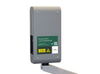
Tinius Olsen, Inc. 600LS Laser Extensometer

Description
Tinius Olsen model 600LS non-contacting extensometer is designed to measure the extension of medium to high elongation materials, typically elastomers. Since there is no contact of this extensometer with the sample, the 600LS is ideal for also measuring the elongation of fragile samples where such contact could induce a premature sample break. The model 600LS uses a low power laser diode with precision optical components and a dedicated 32 bit processor. The laser projects a visible red scanning beam that is directed at two reflective targets attached to the specimen. An additional benefit of using laser technology is its ability to scan the test specimen through the glass viewing window of an environmental test chamber. Elongation characteristics can then be evaluated from –70° C to 300° C. Measuring Extension Marking the test specimen with gauge marks is easy using two pieces of self-adhesive reflective tape (supplied) no less than 2mm in width. Any gauge length size maybe defined, minimum 10mm, this is accurately measured and automatically recorded by the extensometer at the start of the test. Once the test starts the instantaneous strain is automatically captured using the scanning laser at a scan rate of 660 times per second (660 Hz). If the scanning beam is interrupted for any reason, strain measurements are automatically corrected and continued when the laser beam is clear and picks up the gauge mark targets. Specifications Range of measurement: up to 600mm/up to 23.6in Gage lengths: 10mm to full scan/0.39in to full scan Accuracy: 1% on 25mm gauge length, BS 5214 grade D Resolution: 0.002mm with filtering/7.87e-5in with filtering Optical scan: 660 scans per second/90 degrees Dimensions (HxWxD): 290 x 95 x 144mm/11.4 x 3.7 x 5.7in Weight: 4.0kg/8.8lb
Description
Tinius Olsen model 600LS non-contacting extensometer is designed to measure the extension of medium to high elongation materials, typically elastomers. Since there is no contact of this extensometer with the sample, the 600LS is ideal for also measuring the elongation of fragile samples where such contact could induce a premature sample break. The model 600LS uses a low power laser diode with precision optical components and a dedicated 32 bit processor. The laser projects a visible red scanning beam that is directed at two reflective targets attached to the specimen. An additional benefit of using laser technology is its ability to scan the test specimen through the glass viewing window of an environmental test chamber. Elongation characteristics can then be evaluated from –70° C to 300° C. Measuring Extension Marking the test specimen with gauge marks is easy using two pieces of self-adhesive reflective tape (supplied) no less than 2mm in width. Any gauge length size maybe defined, minimum 10mm, this is accurately measured and automatically recorded by the extensometer at the start of the test. Once the test starts the instantaneous strain is automatically captured using the scanning laser at a scan rate of 660 times per second (660 Hz). If the scanning beam is interrupted for any reason, strain measurements are automatically corrected and continued when the laser beam is clear and picks up the gauge mark targets. Specifications Range of measurement: up to 600mm/up to 23.6in Gage lengths: 10mm to full scan/0.39in to full scan Accuracy: 1% on 25mm gauge length, BS 5214 grade D Resolution: 0.002mm with filtering/7.87e-5in with filtering Optical scan: 660 scans per second/90 degrees Dimensions (HxWxD): 290 x 95 x 144mm/11.4 x 3.7 x 5.7in Weight: 4.0kg/8.8lb

Suppliers

Company
Product
Description
Supplier Links
600LS Laser Extensometer -  - Tinius Olsen, Inc.
Horsham, PA, United States
600LS Laser Extensometer
Tinius Olsen model 600LS non-contacting extensometer is designed to measure the extension of medium to high elongation materials, typically elastomers. Since there is no contact of this extensometer with the sample, the 600LS is ideal for also measuring the elongation of fragile samples where such contact could induce a premature sample break. The model 600LS uses a low power laser diode with precision optical components and a dedicated 32 bit processor. The laser projects a visible red scanning beam that is directed at two reflective targets attached to the specimen. An additional benefit of using laser technology is its ability to scan the test specimen through the glass viewing window of an environmental test chamber. Elongation characteristics can then be evaluated from –70° C to 300° C. Measuring Extension Marking the test specimen with gauge marks is easy using two pieces of self-adhesive reflective tape (supplied) no less than 2mm in width. Any gauge length size maybe defined, minimum 10mm, this is accurately measured and automatically recorded by the extensometer at the start of the test. Once the test starts the instantaneous strain is automatically captured using the scanning laser at a scan rate of 660 times per second (660 Hz). If the scanning beam is interrupted for any reason, strain measurements are automatically corrected and continued when the laser beam is clear and picks up the gauge mark targets. Specifications Range of measurement: up to 600mm/up to 23.6in Gage lengths: 10mm to full scan/0.39in to full scan Accuracy: 1% on 25mm gauge length, BS 5214 grade D Resolution: 0.002mm with filtering/7.87e-5in with filtering Optical scan: 660 scans per second/90 degrees Dimensions (HxWxD): 290 x 95 x 144mm/11.4 x 3.7 x 5.7in Weight: 4.0kg/8.8lb

Tinius Olsen model 600LS non-contacting extensometer is designed to measure the extension of medium to high elongation materials, typically elastomers. Since there is no contact of this extensometer with the sample, the 600LS is ideal for also measuring the elongation of fragile samples where such contact could induce a premature sample break.
The model 600LS uses a low power laser diode with precision optical components and a dedicated 32 bit processor. The laser projects a visible red scanning beam that is directed at two reflective targets attached to the specimen. An additional benefit of using laser technology is its ability to scan the test specimen through the glass viewing window of an environmental test chamber. Elongation characteristics can then be evaluated from –70° C to 300° C.

Measuring Extension

Marking the test specimen with gauge marks is easy using two pieces of self-adhesive reflective tape (supplied) no less than 2mm in width. Any gauge length size maybe defined, minimum 10mm, this is accurately measured and automatically recorded by the extensometer at the start of the test. Once the test starts the instantaneous strain is automatically captured using the scanning laser at a scan rate of 660 times per second (660 Hz). If the scanning beam is interrupted for any reason, strain measurements are automatically corrected and continued when the laser beam is clear and picks up the gauge mark targets.

Specifications

  • Range of measurement: up to 600mm/up to 23.6in
  • Gage lengths: 10mm to full scan/0.39in to full scan
  • Accuracy: 1% on 25mm gauge length, BS 5214 grade D
  • Resolution: 0.002mm with filtering/7.87e-5in with filtering
  • Optical scan: 660 scans per second/90 degrees
  • Dimensions (HxWxD): 290 x 95 x 144mm/11.4 x 3.7 x 5.7in
  • Weight: 4.0kg/8.8lb
Supplier's Site

Technical Specifications

  Tinius Olsen, Inc.
Product Category Product and Material Test Fixtures and Accessories
Product Name 600LS Laser Extensometer
Test Fixture Type Extensometer
Unlock Full Specs
to access all available technical data