Starrett Gage STR-1175Z

Description
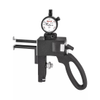
Dial indicators are capable of measuring small distances between two surfaces that a standard gauge cannot reach. These precision instruments translate the small linear distance into rotational movement and display the measurement on a continuous dial numbered clockwise around the face. Also known as test indicators, dial indicators are frequently used to measure machinery calibrations and equipment tolerances. . This lightweight gage is used for in-process or bench inspection of oil grooves, snap ring retainer grooves, O- ring seat retainer grooves and similar internal recesses. It is also useful for checking bore dimensions and testing for taper, bell-mouth and out-of-roundness. The movable, sensitive gaging contact has a 1/2" (12.7mm) retractable range and transfers the measurement through a linear, friction-free transfer mechanism to the dial indicator. The lower reference jaw is fixed and supports the entire weight of the gage and the operator's hands, thus preventing incorrect gaging pressure and false readings. The reference jaw can be mounted in two positions on the range adjusting bar. The bar itself is also adjustable for greater or lesser range. A fine adjustment screw and a lock are also provided.
Description
Dial indicators are capable of measuring small distances between two surfaces that a standard gauge cannot reach. These precision instruments translate the small linear distance into rotational movement and display the measurement on a continuous dial numbered clockwise around the face. Also known as test indicators, dial indicators are frequently used to measure machinery calibrations and equipment tolerances. . This lightweight gage is used for in-process or bench inspection of oil grooves, snap ring retainer grooves, O- ring seat retainer grooves and similar internal recesses. It is also useful for checking bore dimensions and testing for taper, bell-mouth and out-of-roundness. The movable, sensitive gaging contact has a 1/2" (12.7mm) retractable range and transfers the measurement through a linear, friction-free transfer mechanism to the dial indicator. The lower reference jaw is fixed and supports the entire weight of the gage and the operator's hands, thus preventing incorrect gaging pressure and false readings. The reference jaw can be mounted in two positions on the range adjusting bar. The bar itself is also adjustable for greater or lesser range. A fine adjustment screw and a lock are also provided.

Suppliers

Company
Product
Description
Supplier Links
Gage - STR-1175Z - Reid Supply
Norton Shores, MI, United States
Dial indicators are capable of measuring small distances between two surfaces that a standard gauge cannot reach. These precision instruments translate the small linear distance into rotational movement and display the measurement on a continuous dial numbered clockwise around the face. Also known as test indicators, dial indicators are frequently used to measure machinery calibrations and equipment tolerances. . This lightweight gage is used for in-process or bench inspection of oil grooves, snap ring retainer grooves, O- ring seat retainer grooves and similar internal recesses. It is also useful for checking bore dimensions and testing for taper, bell-mouth and out-of-roundness. The movable, sensitive gaging contact has a 1/2" (12.7mm) retractable range and transfers the measurement through a linear, friction-free transfer mechanism to the dial indicator. The lower reference jaw is fixed and supports the entire weight of the gage and the operator's hands, thus preventing incorrect gaging pressure and false readings. The reference jaw can be mounted in two positions on the range adjusting bar. The bar itself is also adjustable for greater or lesser range. A fine adjustment screw and a lock are also provided.

Dial indicators are capable of measuring small distances between two surfaces that a standard gauge cannot reach. These precision instruments translate the small linear distance into rotational movement and display the measurement on a continuous dial numbered clockwise around the face. Also known as test indicators, dial indicators are frequently used to measure machinery calibrations and equipment tolerances.


. This lightweight gage is used for in-process or bench inspection of oil grooves, snap ring retainer grooves, O- ring seat retainer grooves and similar internal recesses. It is also useful for checking bore dimensions and testing for taper, bell-mouth and out-of-roundness. The movable, sensitive gaging contact has a 1/2" (12.7mm) retractable range and transfers the measurement through a linear, friction-free transfer mechanism to the dial indicator. The lower reference jaw is fixed and supports the entire weight of the gage and the operator's hands, thus preventing incorrect gaging pressure and false readings. The reference jaw can be mounted in two positions on the range adjusting bar. The bar itself is also adjustable for greater or lesser range. A fine adjustment screw and a lock are also provided.

Supplier's Site

Technical Specifications

  Reid Supply
Product Category Dimensional Gages and Instruments
Product Number STR-1175Z
Product Name Gage
Display Dial / Analog / Direct Reading
Unlock Full Specs
to access all available technical data

Similar Products

Standard Tooling Balls - 29031 - Jergens, Inc.
Specs
Measurement Scale / Units English
View Details
International Connector Thread Identification Kit -  - HydraCheck Inc.
Specs
Mounting / Loading Options Handheld or Portable
Measurement Scale / Units English; Metric
Gage / Instrument Type Caliper; Gage Set or Tool Kit
View Details
UT343E Coating Thickness Gauge - Professional Grade - UT343E - Uni-Trend US
Specs
Attribute Measurement Capability Thickness Gage
View Details
Sensor system for precise thickness measurement (laser triangulation sensors) - thicknessGAUGE C.LL-6/400 - Micro-Epsilon Group
Specs
Mounting / Loading Options Machine Mounted; Automatic or Inline
Measurement Scale / Units English; Metric
Gage / Instrument Type Laser micrometer; Gage Set or Tool Kit; Laser triangulation
View Details