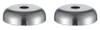
Standex-Meder Electronics Hard Ferrite Magnet

Description
Features Inexpensive magnet material Working Temperature up to 250°C Low Corrosion Tendency Used in many Floats Brittle Hard ferrite magnets are produced with iron oxide and barium or strontium oxide. The raw materials are mixed together and normally pre sintered, to generate the magnetic phase. The pre sintered mixture then gets crushed. The resulting powder gets pressed together (wet or dry) either in a magnetic field (an – isotropic) or without a magnetic field (isotropic) and in the end sintered. Proceedings are only possible by grinding. Due to the low cost of the raw material, hard ferrite magnets are the cheapest magnet type available. Hard ferrite magnets have very good electrical isolation effects and are hard to demagnetize even in strong external magnetic fields. Corrosion tendency is low, making them very suitable for liquid applications. Disadvantages are the high breakability and the low tensile strength. The strength and brittleness of hard ferrites are similar to ceramics. Furthermore the temperature resistance is limited and they have only a low energy to volume ratio.
Description
Features Inexpensive magnet material Working Temperature up to 250°C Low Corrosion Tendency Used in many Floats Brittle Hard ferrite magnets are produced with iron oxide and barium or strontium oxide. The raw materials are mixed together and normally pre sintered, to generate the magnetic phase. The pre sintered mixture then gets crushed. The resulting powder gets pressed together (wet or dry) either in a magnetic field (an – isotropic) or without a magnetic field (isotropic) and in the end sintered. Proceedings are only possible by grinding. Due to the low cost of the raw material, hard ferrite magnets are the cheapest magnet type available. Hard ferrite magnets have very good electrical isolation effects and are hard to demagnetize even in strong external magnetic fields. Corrosion tendency is low, making them very suitable for liquid applications. Disadvantages are the high breakability and the low tensile strength. The strength and brittleness of hard ferrites are similar to ceramics. Furthermore the temperature resistance is limited and they have only a low energy to volume ratio.

Suppliers

Company
Product
Description
Supplier Links
Hard Ferrite Magnet -  - Standex-Meder Electronics
Cincinnati, OH, USA
Hard Ferrite Magnet
Hard Ferrite Magnet
Features Inexpensive magnet material Working Temperature up to 250°C Low Corrosion Tendency Used in many Floats Brittle Hard ferrite magnets are produced with iron oxide and barium or strontium oxide. The raw materials are mixed together and normally pre sintered, to generate the magnetic phase. The pre sintered mixture then gets crushed. The resulting powder gets pressed together (wet or dry) either in a magnetic field (an – isotropic) or without a magnetic field (isotropic) and in the end sintered. Proceedings are only possible by grinding. Due to the low cost of the raw material, hard ferrite magnets are the cheapest magnet type available. Hard ferrite magnets have very good electrical isolation effects and are hard to demagnetize even in strong external magnetic fields. Corrosion tendency is low, making them very suitable for liquid applications. Disadvantages are the high breakability and the low tensile strength. The strength and brittleness of hard ferrites are similar to ceramics. Furthermore the temperature resistance is limited and they have only a low energy to volume ratio.

Features

  • Inexpensive magnet material
  • Working Temperature up to 250°C
  • Low Corrosion Tendency
  • Used in many Floats
  • Brittle

Hard ferrite magnets are produced with iron oxide and barium or strontium oxide. The raw materials are mixed together and normally pre sintered, to generate the magnetic phase. The pre sintered mixture then gets crushed. The resulting powder gets pressed together (wet or dry) either in a magnetic field (an – isotropic) or without a magnetic field (isotropic) and in the end sintered. Proceedings are only possible by grinding. Due to the low cost of the raw material, hard ferrite magnets are the cheapest magnet type available. Hard ferrite magnets have very good electrical isolation effects and are hard to demagnetize even in strong external magnetic fields. Corrosion tendency is low, making them very suitable for liquid applications.

Disadvantages are the high breakability and the low tensile strength. The strength and brittleness of hard ferrites are similar to ceramics. Furthermore the temperature resistance is limited and they have only a low energy to volume ratio.

Supplier's Site

Technical Specifications

  Standex-Meder Electronics
Product Category Industrial Magnets
Product Name Hard Ferrite Magnet
Industrial Magnets Rare-Earth Magnet
Unlock Full Specs
to access all available technical data

Similar Products

Neodymium Magnets - 2192250 - RS Components, Ltd.
RS Components, Ltd.
Specs
Material Neodymium Iron Boron
Holding Force 2.62 lbs (1.19 kg)
Width 0.3150 inch (8 mm)
View Details
HVAC Sensors, ExMag (EXM) electric magnets -  - Rotork plc
Specs
Industrial Magnets Magnetic Assembly
View Details
L Type Laminated Rare Earth Magnets -  - Arnold Magnetic Technologies
Arnold Magnetic Technologies
Specs
Industrial Magnets Bulk Magnet Materials; Magnetic Assembly; Rare-Earth Magnet
Material Neodymium Iron Boron; Samarium Cobalt
Manufacturing Method Laminated
View Details
Alnico Magnet -  - Essen Magnetics Pty Ltd
Essen Magnetics Pty Ltd
Specs
Industrial Magnets Bulk Magnet Materials; Rare-Earth Magnet
Material Aluminum-Nickel-Cobalt
Manufacturing Method Sintered or Cast
View Details