OMEGA Engineering, Inc. Discriminating Liquid Level Sensor LV132

Description
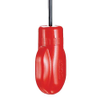
Proven electro-optic and conductive technologies are combined to deliver advanced capabilities in the LV132 discriminating liquid sensor. Internal logic discriminates between water- and hydrocarbon-based liquids. No moving parts and solid-state switching encased in a rugged housing ensure dependable, long service. A slim, compact form allows easy installation into interstitial areas of double-wall pipes and tanks using an integral pull ring to “snake” into place. Remove the pull ring and the LV132 installs into any tank or reservoir via 1/4 FNPT fittings for high, low, or intermediate level detection. The LV132 sensor is easy to remove, clean, and reinstall after an alarm condition is triggered, or for maintenance. The LV132 electro-optical/ conductivity sensor contains an infrared LED and a light receiver. Continuous light from the LED is directed into a prism which forms the tip of the sensor. Two probes extend from the prism to measure conductivity. With no liquid present, light from the LED is reflected within the prism to the receiver. When rising liquid immerses the prism, the light is refracted out into the liquid, leaving little or no light to reach the receiver. Simultaneously, the conductivity probes determine if the liquid is conductive (water-based) or non-conductive (hydrocarbon-based). Sensing the change in light intensity and measuring the liquid’s conductivity level, the receiver actuates electronic switching within the unit. A logic circuit built into the sensor housing evaluates the two inputs and gives one of three output signals: Dry, Water Present, or Hydrocarbon Present.
Datasheet
Description
Proven electro-optic and conductive technologies are combined to deliver advanced capabilities in the LV132 discriminating liquid sensor. Internal logic discriminates between water- and hydrocarbon-based liquids. No moving parts and solid-state switching encased in a rugged housing ensure dependable, long service. A slim, compact form allows easy installation into interstitial areas of double-wall pipes and tanks using an integral pull ring to “snake” into place. Remove the pull ring and the LV132 installs into any tank or reservoir via 1/4 FNPT fittings for high, low, or intermediate level detection. The LV132 sensor is easy to remove, clean, and reinstall after an alarm condition is triggered, or for maintenance. The LV132 electro-optical/ conductivity sensor contains an infrared LED and a light receiver. Continuous light from the LED is directed into a prism which forms the tip of the sensor. Two probes extend from the prism to measure conductivity. With no liquid present, light from the LED is reflected within the prism to the receiver. When rising liquid immerses the prism, the light is refracted out into the liquid, leaving little or no light to reach the receiver. Simultaneously, the conductivity probes determine if the liquid is conductive (water-based) or non-conductive (hydrocarbon-based). Sensing the change in light intensity and measuring the liquid’s conductivity level, the receiver actuates electronic switching within the unit. A logic circuit built into the sensor housing evaluates the two inputs and gives one of three output signals: Dry, Water Present, or Hydrocarbon Present.
Datasheet

Suppliers

Company
Product
Description
Supplier Links
Discriminating Liquid Level Sensor - LV132 - OMEGA Engineering, Inc.
Norwalk, CT, USA
Discriminating Liquid Level Sensor
LV132
Discriminating Liquid Level Sensor LV132
Proven electro-optic and conductive technologies are combined to deliver advanced capabilities in the LV132 discriminating liquid sensor. Internal logic discriminates between water- and hydrocarbon-based liquids. No moving parts and solid-state switching encased in a rugged housing ensure dependable, long service. A slim, compact form allows easy installation into interstitial areas of double-wall pipes and tanks using an integral pull ring to “snake” into place. Remove the pull ring and the LV132 installs into any tank or reservoir via 1/4 FNPT fittings for high, low, or intermediate level detection. The LV132 sensor is easy to remove, clean, and reinstall after an alarm condition is triggered, or for maintenance. The LV132 electro-optical/ conductivity sensor contains an infrared LED and a light receiver. Continuous light from the LED is directed into a prism which forms the tip of the sensor. Two probes extend from the prism to measure conductivity. With no liquid present, light from the LED is reflected within the prism to the receiver. When rising liquid immerses the prism, the light is refracted out into the liquid, leaving little or no light to reach the receiver. Simultaneously, the conductivity probes determine if the liquid is conductive (water-based) or non-conductive (hydrocarbon-based). Sensing the change in light intensity and measuring the liquid’s conductivity level, the receiver actuates electronic switching within the unit. A logic circuit built into the sensor housing evaluates the two inputs and gives one of three output signals: Dry, Water Present, or Hydrocarbon Present.

Proven electro-optic and conductive technologies are combined to deliver advanced capabilities in the LV132 discriminating liquid sensor. Internal logic discriminates between water- and hydrocarbon-based liquids. No moving parts and solid-state switching encased in a rugged housing ensure dependable, long service.
A slim, compact form allows easy installation into interstitial areas of double-wall pipes and tanks using an integral pull ring to “snake” into place. Remove the pull ring and the LV132 installs into any tank or reservoir via 1/4 FNPT fittings for high, low, or intermediate level detection. The LV132 sensor is easy to remove, clean, and reinstall after an alarm condition is triggered, or for maintenance.
The LV132 electro-optical/ conductivity sensor contains an infrared LED and a light receiver. Continuous light from the LED is directed into a prism which forms the tip of the sensor. Two probes extend from the prism to measure conductivity.
With no liquid present, light from the LED is reflected within the prism to the receiver. When rising liquid immerses the prism, the light is refracted out into the liquid, leaving little or no light to reach the receiver. Simultaneously, the conductivity probes determine if the liquid is conductive (water-based) or non-conductive (hydrocarbon-based). Sensing the change in light intensity and measuring the liquid’s conductivity level, the receiver actuates electronic switching within the unit. A logic circuit built into the sensor housing evaluates the two inputs and gives one of three output signals: Dry, Water Present, or Hydrocarbon Present.

Buy Now Datasheet

Technical Specifications

  OMEGA Engineering, Inc.
Product Category Level Sensors
Product Number LV132
Product Name Discriminating Liquid Level Sensor
Device Classification Sensor Only
Media Type Liquid
Level Measurement Type Continuous Level
Meter Technology Type Optical
Unlock Full Specs
to access all available technical data

Similar Products

EBE Capacitive Level Sensor for Liquids and Solids - capaTEC® LCPB025 - EBE Elektro-Bau-Elemente GmbH
Specs
Device Classification Sensor Only
Measuring Range 0.9843 inch (25 mm)
Accuracy (Continuous Level) 0.0787 +/-inch (2 +/-mm)
View Details
Smaller Diameter Submersible Borehole Level Sensor - HPT607-E - Holykell Technology Company Limited
Specs
Device Classification Sensor Only
Media Type Liquid
Output Options AnalogVoltage; AnalogCurrent
View Details
InnovaSwitch™ Level Switch -  - Sierra Instruments, Inc.
Sierra Instruments, Inc.
Specs
Device Classification Transmitter
Measuring Range 0.5000 to 120 inch (12.7 to 3048 mm)
Repeatability (Point Level) 0.0312 +/-inch (0.7937 +/-mm)
View Details
Magnetostrictive Level Transmitter - LMT100 - ABB Measurement & Analytics
Specs
Device Classification Sensor System; Transmitter
Repeatability (Point Level) 0.0122 +/-inch (0.3100 +/-mm)
Accuracy (Continuous Level) 0.0500 +/-inch (1.27 +/-mm)
View Details