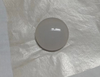
Shanghai Optics Si Window

Description
Silicon is the principal component of most semiconductor devices, most importantly integrated circuits or microchips. Silicon is widely used in semiconductors because it remains a semiconductor at higher temperatures than the semiconductor germanium. Shanghai Optics Silicon Windows Silicon windows are optical components that allow light to pass through without scatter or diffraction. Shanghai Optics manufactures silicon windows with diameters from 5 mm to 400mm, and can also provide custom optics on request. These windows are precision made and cause little to no wavelength distortion. They are an economic choice for many applications. Silicon, due to its low density (2.329 g/cm3 is ideal for weight sensitive applications. It is a good choice for IR and has high transparency in the 1.2 – 7.0 µm region. Note that standard silicon windows not a good option for CO2 laser transmission applications because they do have a strong absorption band at 9 µm. For applications where that is a problem, we can provide float zone silicon windows which do not have the Si-O absorption band at 9 µm. Float zone (FZ) silicon is a very pure type of silicon which is manufactured through the process of vertical melting. This involves a rod of very pure electronic grade silicon being passed through a RF heating coil in an evacuated chamber. A localized molten zone is created, and a seed crystal is applied to one end to start the growth of a crystal ingot. Due to surface tension limitations, float zone silicon is difficult to manufacture at sizes greater than 200 mm. Float zone silicon windows are also a good choice for terahertz radiation. Their higher conversion efficiency, as compared to standard silicon, makes them ideal for such applications as the solar arrays of satellites. Silicon windows are often used when the semiconductor properties of silicon are desirable. It has a resistivity of 5 to 40 ohm. Silicon remains a semiconductor at higher temperatures than germanium, and is also harder and less brittle than germanium. It has about half the density of both zinc selenide and germanium. Our factory standard silicon windows feature a clear aperture of at least 90 percent of the central dimension. They have a surface quality of 20-10 scratch dig; which means there are no digs (pits) with a diameter of more than 0.1mm, and no scratches longer or deeper than that designated by 20 in MIL-PRF-13830B. The lower a scratch dig number; the better the quality of an optic; industry standard is generally 80-50, with 20-10, like ours, being high precision quality. Parallelism tells you how parallel the two surfaces of an optical window are to each other. Low deviation means light distortion will be minimized. Our factory standard for parallelism allows for tolerances of no greater than 5”. We can provide silicon windows without reflection coatings, or with AR coatings on both optical surfaces. We provide antireflection coatings for wavelengths from 3-12 µm. If you require custom coatings, or more stringent specifications, please contact us for manufacturing limits and to discuss a custom order. If you’d like design help, we also offer consulting. Our design team can help you decide what optics are best for your situation, and can work with you, from initial blueprint to prototype to full scale manufacturing, as you design the perfect optical system for your application. Si Windows Factory Standards Factory Standard Material: Silicon Size: 5mm-400mm Surface figure: l/10@633nm Parallelism: 5″ Clear Aperture: >90% of central dimension Antireflection Coating: @ 3-12 um Surface Quality: 20-10 Contact us for manufacturing limit or custom specifications.
Description
Silicon is the principal component of most semiconductor devices, most importantly integrated circuits or microchips. Silicon is widely used in semiconductors because it remains a semiconductor at higher temperatures than the semiconductor germanium. Shanghai Optics Silicon Windows Silicon windows are optical components that allow light to pass through without scatter or diffraction. Shanghai Optics manufactures silicon windows with diameters from 5 mm to 400mm, and can also provide custom optics on request. These windows are precision made and cause little to no wavelength distortion. They are an economic choice for many applications. Silicon, due to its low density (2.329 g/cm3 is ideal for weight sensitive applications. It is a good choice for IR and has high transparency in the 1.2 – 7.0 µm region. Note that standard silicon windows not a good option for CO2 laser transmission applications because they do have a strong absorption band at 9 µm. For applications where that is a problem, we can provide float zone silicon windows which do not have the Si-O absorption band at 9 µm. Float zone (FZ) silicon is a very pure type of silicon which is manufactured through the process of vertical melting. This involves a rod of very pure electronic grade silicon being passed through a RF heating coil in an evacuated chamber. A localized molten zone is created, and a seed crystal is applied to one end to start the growth of a crystal ingot. Due to surface tension limitations, float zone silicon is difficult to manufacture at sizes greater than 200 mm. Float zone silicon windows are also a good choice for terahertz radiation. Their higher conversion efficiency, as compared to standard silicon, makes them ideal for such applications as the solar arrays of satellites. Silicon windows are often used when the semiconductor properties of silicon are desirable. It has a resistivity of 5 to 40 ohm. Silicon remains a semiconductor at higher temperatures than germanium, and is also harder and less brittle than germanium. It has about half the density of both zinc selenide and germanium. Our factory standard silicon windows feature a clear aperture of at least 90 percent of the central dimension. They have a surface quality of 20-10 scratch dig; which means there are no digs (pits) with a diameter of more than 0.1mm, and no scratches longer or deeper than that designated by 20 in MIL-PRF-13830B. The lower a scratch dig number; the better the quality of an optic; industry standard is generally 80-50, with 20-10, like ours, being high precision quality. Parallelism tells you how parallel the two surfaces of an optical window are to each other. Low deviation means light distortion will be minimized. Our factory standard for parallelism allows for tolerances of no greater than 5”. We can provide silicon windows without reflection coatings, or with AR coatings on both optical surfaces. We provide antireflection coatings for wavelengths from 3-12 µm. If you require custom coatings, or more stringent specifications, please contact us for manufacturing limits and to discuss a custom order. If you’d like design help, we also offer consulting. Our design team can help you decide what optics are best for your situation, and can work with you, from initial blueprint to prototype to full scale manufacturing, as you design the perfect optical system for your application. Si Windows Factory Standards Factory Standard Material: Silicon Size: 5mm-400mm Surface figure: l/10@633nm Parallelism: 5″ Clear Aperture: >90% of central dimension Antireflection Coating: @ 3-12 um Surface Quality: 20-10 Contact us for manufacturing limit or custom specifications.

Suppliers

Company
Product
Description
Supplier Links
Si Window -  - Shanghai Optics
North Plainfield, NJ, United States
Si Window
Si Window
Silicon is the principal component of most semiconductor devices, most importantly integrated circuits or microchips. Silicon is widely used in semiconductors because it remains a semiconductor at higher temperatures than the semiconductor germanium. Shanghai Optics Silicon Windows Silicon windows are optical components that allow light to pass through without scatter or diffraction. Shanghai Optics manufactures silicon windows with diameters from 5 mm to 400mm, and can also provide custom optics on request. These windows are precision made and cause little to no wavelength distortion. They are an economic choice for many applications. Silicon, due to its low density (2.329 g/cm3 is ideal for weight sensitive applications. It is a good choice for IR and has high transparency in the 1.2 – 7.0 µm region. Note that standard silicon windows not a good option for CO2 laser transmission applications because they do have a strong absorption band at 9 µm. For applications where that is a problem, we can provide float zone silicon windows which do not have the Si-O absorption band at 9 µm. Float zone (FZ) silicon is a very pure type of silicon which is manufactured through the process of vertical melting. This involves a rod of very pure electronic grade silicon being passed through a RF heating coil in an evacuated chamber. A localized molten zone is created, and a seed crystal is applied to one end to start the growth of a crystal ingot. Due to surface tension limitations, float zone silicon is difficult to manufacture at sizes greater than 200 mm. Float zone silicon windows are also a good choice for terahertz radiation. Their higher conversion efficiency, as compared to standard silicon, makes them ideal for such applications as the solar arrays of satellites. Silicon windows are often used when the semiconductor properties of silicon are desirable. It has a resistivity of 5 to 40 ohm. Silicon remains a semiconductor at higher temperatures than germanium, and is also harder and less brittle than germanium. It has about half the density of both zinc selenide and germanium. Our factory standard silicon windows feature a clear aperture of at least 90 percent of the central dimension. They have a surface quality of 20-10 scratch dig; which means there are no digs (pits) with a diameter of more than 0.1mm, and no scratches longer or deeper than that designated by 20 in MIL-PRF-13830B. The lower a scratch dig number; the better the quality of an optic; industry standard is generally 80-50, with 20-10, like ours, being high precision quality. Parallelism tells you how parallel the two surfaces of an optical window are to each other. Low deviation means light distortion will be minimized. Our factory standard for parallelism allows for tolerances of no greater than 5”. We can provide silicon windows without reflection coatings, or with AR coatings on both optical surfaces. We provide antireflection coatings for wavelengths from 3-12 µm. If you require custom coatings, or more stringent specifications, please contact us for manufacturing limits and to discuss a custom order. If you’d like design help, we also offer consulting. Our design team can help you decide what optics are best for your situation, and can work with you, from initial blueprint to prototype to full scale manufacturing, as you design the perfect optical system for your application. Si Windows Factory Standards Factory Standard Material: Silicon Size: 5mm-400mm Surface figure: l/10@633nm Parallelism: 5″ Clear Aperture: >90% of central dimension Antireflection Coating: @ 3-12 um Surface Quality: 20-10 Contact us for manufacturing limit or custom specifications.

Silicon is the principal component of most semiconductor devices, most importantly integrated circuits or microchips. Silicon is widely used in semiconductors because it remains a semiconductor at higher temperatures than the semiconductor germanium.

Shanghai Optics Silicon Windows

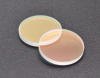
Silicon windows are optical components that allow light to pass through without scatter or diffraction. Shanghai Optics manufactures silicon windows with diameters from 5 mm to 400mm, and can also provide custom optics on request. These windows are precision made and cause little to no wavelength distortion. They are an economic choice for many applications.

Silicon, due to its low density (2.329 g/cm<sup>3</sup> is ideal for weight sensitive applications. It is a good choice for IR and has high transparency in the 1.2 – 7.0 µm region. Note that standard silicon windows not a good option for CO<sub>2</sub> laser transmission applications because they do have a strong absorption band at 9 µm. For applications where that is a problem, we can provide float zone silicon windows which do not have the Si-O absorption band at 9 µm.

Float zone (FZ) silicon is a very pure type of silicon which is manufactured through the process of vertical melting. This involves a rod of very pure electronic grade silicon being passed through a RF heating coil in an evacuated chamber. A localized molten zone is created, and a seed crystal is applied to one end to start the growth of a crystal ingot. Due to surface tension limitations, float zone silicon is difficult to manufacture at sizes greater than 200 mm.

Float zone silicon windows are also a good choice for terahertz radiation. Their higher conversion efficiency, as compared to standard silicon, makes them ideal for such applications as the solar arrays of satellites.

Silicon windows are often used when the semiconductor properties of silicon are desirable. It has a resistivity of 5 to 40 ohm. Silicon remains a semiconductor at higher temperatures than germanium, and is also harder and less brittle than germanium. It has about half the density of both zinc selenide and germanium.

Our factory standard silicon windows feature a clear aperture of at least 90 percent of the central dimension. They have a surface quality of 20-10 scratch dig; which means there are no digs (pits) with a diameter of more than 0.1mm, and no scratches longer or deeper than that designated by 20 in MIL-PRF-13830B. The lower a scratch dig number; the better the quality of an optic; industry standard is generally 80-50, with 20-10, like ours, being high precision quality.

Parallelism tells you how parallel the two surfaces of an optical window are to each other. Low deviation means light distortion will be minimized. Our factory standard for parallelism allows for tolerances of no greater than 5”.

We can provide silicon windows without reflection coatings, or with AR coatings on both optical surfaces. We provide antireflection coatings for wavelengths from 3-12 µm. If you require custom coatings, or more stringent specifications, please contact us for manufacturing limits and to discuss a custom order. If you’d like design help, we also offer consulting. Our design team can help you decide what optics are best for your situation, and can work with you, from initial blueprint to prototype to full scale manufacturing, as you design the perfect optical system for your application.


Si Windows Factory Standards

Factory Standard

  • Material: Silicon
  • Size: 5mm-400mm
  • Surface figure: l/10@633nm
  • Parallelism: 5″
  • Clear Aperture: >90% of central dimension
  • Antireflection Coating: @ 3-12 um
  • Surface Quality: 20-10

Contact us for manufacturing limit or custom specifications.
Supplier's Site

Technical Specifications

  Shanghai Optics
Product Category Optical Windows
Product Name Si Window
Unlock Full Specs
to access all available technical data

Similar Products

Illuminated Reticle for rifle scopes -  - Suzhou Jiujon Optics Co., Ltd
Suzhou Jiujon Optics Co., Ltd
Specs
Window Material B270 / N-BK7/ H-K9L / H-K51
Window Shape Circular
Wedged or Parallel? Parallel
View Details
405nm Blue Laser Windows -  - Gurley Precision Instruments
Gurley Precision Instruments
Specs
Wavelength Range 405 nm (4050 Å)
Window Material Sapphire (optional feature); UV Grade Fused Silica (optional feature)
Windows Features No Coating
View Details
Fused Silica Windows with Hole -  - Changchun Yutai Optics Co., Ltd.
Changchun Yutai Optics Co., Ltd.
Specs
Parallelism or Wedge Angle 180 arcmin
Surface Quality 60-40 Scratch / Dig
Surface Flatness λ/10
View Details
Windows -  - CRYSTECH, Inc.
CRYSTECH, Inc.
Specs
Window Material BK7 Glass; Calcium Fluoride; UV Grade Fused Silica; MgF 2, CaF 2
Windows Features No Coating
Window Shape Circular; Square; Rectangular
View Details