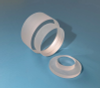
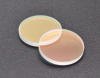
Shanghai Optics Fused Silica Windows

Description
Optical windows are used to allow optical radiation to pass from one environment to another without allowing other elements of these environments to mix. And it does not change the wavelength distribution of the beam, the transmitted wavefront, nor does it scatter any of the light out of the beam. Fused Silica Windows: Features and Applications Fused silica windows are an excellent choice for demanding applications where precision and clear transmittance are key. They feature low bulk scatter and autofluorescence, and are available with very high surface quality and parallelism. Optical windows are flat, transparent plates designed to maximize transmission. They minimize reflection and absorption of light. These windows are commonly used to protect electronic sensors or other optical systems from their environment. They can be used to allow light into an instrument, or to separate two chambers from each other. When compared to N-BK7, fused silica has better homogeneity, a lower coefficient of thermal expansion, and a lower index of refraction for any given wavelength. This makes it ideal for applications which need good transmission deep into the UV range. Uncoated Fused silica windows have a loss of about 4 % per surface. We can also provide AR coatings for specified wavelengths, in which case reflection can be reduced to an average of 0.5%. Substrates Used in Fused Silica Windows Shanghai Optics supplies fused silica with a number of different substrate options. Our fused silica windows can be made of Corning 7980 fused silica, JGS1, JGS2, or Heraeus fused silica. Corning 7980 is high purity non crystalline silica glass that features very low refractive index variations. It has exceptional transmittance from deep ultraviolet through the infrared region. Homogeneity is certified both in use-axis AA, A, C, F as well as off-axis. At 589.3nm, the index of refraction is 1.45840. Density is 2.20 g/cm3, and Knoop hardness 522 kg/mm. The tensile strength is 54 MPa at 25 degrees Celsius. Heraeus fused silica is available in different options for applications in UV, IR, Vis, or broadband spectrum. This noncrystalline isotopic glass is produced with the highest standards in purity and substrate homogeneity. JGS1 is suitable for transmission deep into the UV range. This ultraviolet grade fused silica, a synthetic amorphous silicon dioxide, is equivalent to Corning 7950 or Heraeus Suprasil 1 and 2. It has no absorption bands in the 170-250 nm interval, but does have an intensive OH absorption band in wavelength 2600-2800 nm. It is a high quality glass with practically no bubbles or inclusions. JGS2 is suitable for light transmission between 220 and 2500nm. It is widely used in the solar industry and for semiconductors. It has only tiny bubbles, but more than JGS1. OH content is about 120 ppm/. Fused Silica Windows Factory Standards Shanghai Optics produces fused silica windows with diameters from 3.5 to 25.4 mm, and with thicknesses ranging from 1.0 to 3.0 mm. Our factory standard for diameter tolerance is +0.0, -0.05mm, and for thickness tolerance, +/- 0.1mm. Clear aperture is greater than 85 percent, and parallelism is always better than 5 arc min. The wavefront distortion of our factory standard windows are l/10 per 25mm. Surface quality is 10-5 scratch-dig, which is sufficient for the most demanding laser applications. This number is calibrated with reference to U.S. Military Performance Specification MIL-PRF-13830B. For information on our manufacturing limits or to request custom sizes or specifications, please contact us. Factory Standard Material: Corning 7980 fused silica, JGS1, JGS2, Heraeus fused silica Irregularity (fringe): l/10 Diameter Tolerance: +0.0, -0.05mm Thickness Tolerance: +/- 0.1mm Clear Aperture: >85% Parallelism: 5 arc min Surface Quality: 10-5 Wavefront Distortion: l/10 per 25mm Contact us for manufacturing limit or custom specifications.
Description
Optical windows are used to allow optical radiation to pass from one environment to another without allowing other elements of these environments to mix. And it does not change the wavelength distribution of the beam, the transmitted wavefront, nor does it scatter any of the light out of the beam. Fused Silica Windows: Features and Applications Fused silica windows are an excellent choice for demanding applications where precision and clear transmittance are key. They feature low bulk scatter and autofluorescence, and are available with very high surface quality and parallelism. Optical windows are flat, transparent plates designed to maximize transmission. They minimize reflection and absorption of light. These windows are commonly used to protect electronic sensors or other optical systems from their environment. They can be used to allow light into an instrument, or to separate two chambers from each other. When compared to N-BK7, fused silica has better homogeneity, a lower coefficient of thermal expansion, and a lower index of refraction for any given wavelength. This makes it ideal for applications which need good transmission deep into the UV range. Uncoated Fused silica windows have a loss of about 4 % per surface. We can also provide AR coatings for specified wavelengths, in which case reflection can be reduced to an average of 0.5%. Substrates Used in Fused Silica Windows Shanghai Optics supplies fused silica with a number of different substrate options. Our fused silica windows can be made of Corning 7980 fused silica, JGS1, JGS2, or Heraeus fused silica. Corning 7980 is high purity non crystalline silica glass that features very low refractive index variations. It has exceptional transmittance from deep ultraviolet through the infrared region. Homogeneity is certified both in use-axis AA, A, C, F as well as off-axis. At 589.3nm, the index of refraction is 1.45840. Density is 2.20 g/cm3, and Knoop hardness 522 kg/mm. The tensile strength is 54 MPa at 25 degrees Celsius. Heraeus fused silica is available in different options for applications in UV, IR, Vis, or broadband spectrum. This noncrystalline isotopic glass is produced with the highest standards in purity and substrate homogeneity. JGS1 is suitable for transmission deep into the UV range. This ultraviolet grade fused silica, a synthetic amorphous silicon dioxide, is equivalent to Corning 7950 or Heraeus Suprasil 1 and 2. It has no absorption bands in the 170-250 nm interval, but does have an intensive OH absorption band in wavelength 2600-2800 nm. It is a high quality glass with practically no bubbles or inclusions. JGS2 is suitable for light transmission between 220 and 2500nm. It is widely used in the solar industry and for semiconductors. It has only tiny bubbles, but more than JGS1. OH content is about 120 ppm/. Fused Silica Windows Factory Standards Shanghai Optics produces fused silica windows with diameters from 3.5 to 25.4 mm, and with thicknesses ranging from 1.0 to 3.0 mm. Our factory standard for diameter tolerance is +0.0, -0.05mm, and for thickness tolerance, +/- 0.1mm. Clear aperture is greater than 85 percent, and parallelism is always better than 5 arc min. The wavefront distortion of our factory standard windows are l/10 per 25mm. Surface quality is 10-5 scratch-dig, which is sufficient for the most demanding laser applications. This number is calibrated with reference to U.S. Military Performance Specification MIL-PRF-13830B. For information on our manufacturing limits or to request custom sizes or specifications, please contact us. Factory Standard Material: Corning 7980 fused silica, JGS1, JGS2, Heraeus fused silica Irregularity (fringe): l/10 Diameter Tolerance: +0.0, -0.05mm Thickness Tolerance: +/- 0.1mm Clear Aperture: >85% Parallelism: 5 arc min Surface Quality: 10-5 Wavefront Distortion: l/10 per 25mm Contact us for manufacturing limit or custom specifications.

Suppliers

Company
Product
Description
Supplier Links
Fused Silica Windows -  - Shanghai Optics
North Plainfield, NJ, United States
Fused Silica Windows
Optical windows are used to allow optical radiation to pass from one environment to another without allowing other elements of these environments to mix. And it does not change the wavelength distribution of the beam, the transmitted wavefront, nor does it scatter any of the light out of the beam. Fused Silica Windows: Features and Applications Fused silica windows are an excellent choice for demanding applications where precision and clear transmittance are key. They feature low bulk scatter and autofluorescence, and are available with very high surface quality and parallelism. Optical windows are flat, transparent plates designed to maximize transmission. They minimize reflection and absorption of light. These windows are commonly used to protect electronic sensors or other optical systems from their environment. They can be used to allow light into an instrument, or to separate two chambers from each other. When compared to N-BK7, fused silica has better homogeneity, a lower coefficient of thermal expansion, and a lower index of refraction for any given wavelength. This makes it ideal for applications which need good transmission deep into the UV range. Uncoated Fused silica windows have a loss of about 4 % per surface. We can also provide AR coatings for specified wavelengths, in which case reflection can be reduced to an average of 0.5%. Substrates Used in Fused Silica Windows Shanghai Optics supplies fused silica with a number of different substrate options. Our fused silica windows can be made of Corning 7980 fused silica, JGS1, JGS2, or Heraeus fused silica. Corning 7980 is high purity non crystalline silica glass that features very low refractive index variations. It has exceptional transmittance from deep ultraviolet through the infrared region. Homogeneity is certified both in use-axis AA, A, C, F as well as off-axis. At 589.3nm, the index of refraction is 1.45840. Density is 2.20 g/cm3, and Knoop hardness 522 kg/mm. The tensile strength is 54 MPa at 25 degrees Celsius. Heraeus fused silica is available in different options for applications in UV, IR, Vis, or broadband spectrum. This noncrystalline isotopic glass is produced with the highest standards in purity and substrate homogeneity. JGS1 is suitable for transmission deep into the UV range. This ultraviolet grade fused silica, a synthetic amorphous silicon dioxide, is equivalent to Corning 7950 or Heraeus Suprasil 1 and 2. It has no absorption bands in the 170-250 nm interval, but does have an intensive OH absorption band in wavelength 2600-2800 nm. It is a high quality glass with practically no bubbles or inclusions. JGS2 is suitable for light transmission between 220 and 2500nm. It is widely used in the solar industry and for semiconductors. It has only tiny bubbles, but more than JGS1. OH content is about 120 ppm/. Fused Silica Windows Factory Standards Shanghai Optics produces fused silica windows with diameters from 3.5 to 25.4 mm, and with thicknesses ranging from 1.0 to 3.0 mm. Our factory standard for diameter tolerance is +0.0, -0.05mm, and for thickness tolerance, +/- 0.1mm. Clear aperture is greater than 85 percent, and parallelism is always better than 5 arc min. The wavefront distortion of our factory standard windows are l/10 per 25mm. Surface quality is 10-5 scratch-dig, which is sufficient for the most demanding laser applications. This number is calibrated with reference to U.S. Military Performance Specification MIL-PRF-13830B. For information on our manufacturing limits or to request custom sizes or specifications, please contact us. Factory Standard Material: Corning 7980 fused silica, JGS1, JGS2, Heraeus fused silica Irregularity (fringe): l/10 Diameter Tolerance: +0.0, -0.05mm Thickness Tolerance: +/- 0.1mm Clear Aperture: >85% Parallelism: 5 arc min Surface Quality: 10-5 Wavefront Distortion: l/10 per 25mm Contact us for manufacturing limit or custom specifications.
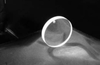
Optical windows are used to allow optical radiation to pass from one environment to another without allowing other elements of these environments to mix. And it does not change the wavelength distribution of the beam, the transmitted wavefront, nor does it scatter any of the light out of the beam.


Fused Silica Windows: Features and Applications

Fused silica windows are an excellent choice for demanding applications where precision and clear transmittance are key. They feature low bulk scatter and autofluorescence, and are available with very high surface quality and parallelism.

Optical windows are flat, transparent plates designed to maximize transmission. They minimize reflection and absorption of light. These windows are commonly used to protect electronic sensors or other optical systems from their environment. They can be used to allow light into an instrument, or to separate two chambers from each other.

When compared to N-BK7, fused silica has better homogeneity, a lower coefficient of thermal expansion, and a lower index of refraction for any given wavelength. This makes it ideal for applications which need good transmission deep into the UV range. Uncoated Fused silica windows have a loss of about 4 % per surface. We can also provide AR coatings for specified wavelengths, in which case reflection can be reduced to an average of 0.5%.


Substrates Used in Fused Silica Windows

Shanghai Optics supplies fused silica with a number of different substrate options. Our fused silica windows can be made of Corning 7980 fused silica, JGS1, JGS2, or Heraeus fused silica.

Corning 7980 is high purity non crystalline silica glass that features very low refractive index variations. It has exceptional transmittance from deep ultraviolet through the infrared region. Homogeneity is certified both in use-axis AA, A, C, F as well as off-axis. At 589.3nm, the index of refraction is 1.45840. Density is 2.20 g/cm3, and Knoop hardness 522 kg/mm. The tensile strength is 54 MPa at 25 degrees Celsius.

Heraeus fused silica is available in different options for applications in UV, IR, Vis, or broadband spectrum. This noncrystalline isotopic glass is produced with the highest standards in purity and substrate homogeneity.

JGS1 is suitable for transmission deep into the UV range. This ultraviolet grade fused silica, a synthetic amorphous silicon dioxide, is equivalent to Corning 7950 or Heraeus Suprasil 1 and 2. It has no absorption bands in the 170-250 nm interval, but does have an intensive OH absorption band in wavelength 2600-2800 nm. It is a high quality glass with practically no bubbles or inclusions.

JGS2 is suitable for light transmission between 220 and 2500nm. It is widely used in the solar industry and for semiconductors. It has only tiny bubbles, but more than JGS1. OH content is about 120 ppm/.


Fused Silica Windows Factory Standards

Shanghai Optics produces fused silica windows with diameters from 3.5 to 25.4 mm, and with thicknesses ranging from 1.0 to 3.0 mm. Our factory standard for diameter tolerance is +0.0, -0.05mm, and for thickness tolerance, +/- 0.1mm. Clear aperture is greater than 85 percent, and parallelism is always better than 5 arc min.

The wavefront distortion of our factory standard windows are l/10 per 25mm. Surface quality is 10-5 scratch-dig, which is sufficient for the most demanding laser applications. This number is calibrated with reference to U.S. Military Performance Specification MIL-PRF-13830B.

For information on our manufacturing limits or to request custom sizes or specifications, please contact us.

Factory Standard

  • Material: Corning 7980 fused silica, JGS1, JGS2, Heraeus fused silica
  • Irregularity (fringe): l/10
  • Diameter Tolerance: +0.0, -0.05mm
  • Thickness Tolerance: +/- 0.1mm
  • Clear Aperture: >85%
  • Parallelism: 5 arc min
  • Surface Quality: 10-5
  • Wavefront Distortion: l/10 per 25mm

Contact us for manufacturing limit or custom specifications.

Supplier's Site

Technical Specifications

  Shanghai Optics
Product Category Optical Windows
Product Name Fused Silica Windows
Window Material UV Grade Fused Silica
Unlock Full Specs
to access all available technical data

Similar Products

AR Laser Windows -  - Gurley Precision Instruments
Gurley Precision Instruments
Specs
Wavelength Range 266 to 1064 nm (2660 to 10640 Å)
Window Material UV Grade Fused Silica
Windows Features Anti-Reflection Coating
View Details
Optical Window, Calcium Fluoride, 5.0 mm Dia., 1.0 mm thick, Uncoated - CAW10 - Newport MKS
Specs
Window Material Calcium Fluoride; Vacuum UV Grade Calcium Fluoride
Windows Features No Coating
Coating Material Uncoated
View Details
Rectangular Sapphire Windows with Round Corners -  - Changchun Yutai Optics Co., Ltd.
Specs
Window Shape Rectangular
Parallelism or Wedge Angle 180 arcmin
Surface Quality 60-40 Scratch / Dig
View Details
Windows -  - CRYSTECH, Inc.
CRYSTECH, Inc.
Specs
Window Material BK7 Glass; Calcium Fluoride; UV Grade Fused Silica; MgF 2, CaF 2
Windows Features No Coating
Window Shape Circular; Square; Rectangular
View Details