OSI Optoelectronics UV Enhanced Standard Response UV-035D

Description
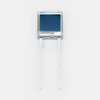
OSI Optoelectronics offers two distinct families of UV enhanced silicon photodiodes. Inversion channel series and planar diffused series. Both families of devices are especially designed for low noise detection in the UV region of electromagnetic spectrum. Inversion layer structure UV enhanced photodiodes exhibit 100% internal quantum efficiency and are well suited for low intensity light measurements. They have high shunt resistance, low noise and high breakdown voltages. The response uniformity across the surface and quantum efficiency improves with 5 to 10 volts applied reverse bias. Photocurrent non-linearity sets in at lower photocurrents for inversion layer devices compared to the diffused ones. Below 700nm, their responsivities vary little with temperature. Planar diffused structure (UV-D Series) UV enhanced photodiodes show significant advantages over inversion layer devices, such as lower capacitance and higher response time. These devices exhibit linearity of photocurrent up to higher response time. The devices exhibit linearity of photocurrent up to higher light input power compared to inversion layer devices. They have relatively lower responsivities and quantum efficiencies compared to inversion layer devices. There are two types of planar diffused UV enhanced photodiodes available: UVD and UVE. Both series have almost similar electro-optical characteristics, except in the UVE series, where the near IR responses of the devices are suppressed. This is especially desirable if blocking the near IR region of the spectrum is necessary. UVD devices peak at 970 nm and UVE devices at 720 nm (see graph). Both series may be biased for lower capacitance, faster response and wider dynamic range. Or they may be operated in the photovoltaic (unbiased) mode for applications requiring low drift with temperature variations. The UVE devices have a higher shunt resistance than their counterparts of UVD devices, but have a higher capacitance.
Datasheet
Description
OSI Optoelectronics offers two distinct families of UV enhanced silicon photodiodes. Inversion channel series and planar diffused series. Both families of devices are especially designed for low noise detection in the UV region of electromagnetic spectrum. Inversion layer structure UV enhanced photodiodes exhibit 100% internal quantum efficiency and are well suited for low intensity light measurements. They have high shunt resistance, low noise and high breakdown voltages. The response uniformity across the surface and quantum efficiency improves with 5 to 10 volts applied reverse bias. Photocurrent non-linearity sets in at lower photocurrents for inversion layer devices compared to the diffused ones. Below 700nm, their responsivities vary little with temperature. Planar diffused structure (UV-D Series) UV enhanced photodiodes show significant advantages over inversion layer devices, such as lower capacitance and higher response time. These devices exhibit linearity of photocurrent up to higher response time. The devices exhibit linearity of photocurrent up to higher light input power compared to inversion layer devices. They have relatively lower responsivities and quantum efficiencies compared to inversion layer devices. There are two types of planar diffused UV enhanced photodiodes available: UVD and UVE. Both series have almost similar electro-optical characteristics, except in the UVE series, where the near IR responses of the devices are suppressed. This is especially desirable if blocking the near IR region of the spectrum is necessary. UVD devices peak at 970 nm and UVE devices at 720 nm (see graph). Both series may be biased for lower capacitance, faster response and wider dynamic range. Or they may be operated in the photovoltaic (unbiased) mode for applications requiring low drift with temperature variations. The UVE devices have a higher shunt resistance than their counterparts of UVD devices, but have a higher capacitance.
Datasheet

Suppliers

Company
Product
Description
Supplier Links
UV Enhanced Standard Response - UV-035D - OSI Optoelectronics
Hawthorne, CA, United States
UV Enhanced Standard Response
UV-035D
UV Enhanced Standard Response UV-035D
OSI Optoelectronics offers two distinct families of UV enhanced silicon photodiodes. Inversion channel series and planar diffused series. Both families of devices are especially designed for low noise detection in the UV region of electromagnetic spectrum. Inversion layer structure UV enhanced photodiodes exhibit 100% internal quantum efficiency and are well suited for low intensity light measurements. They have high shunt resistance, low noise and high breakdown voltages. The response uniformity across the surface and quantum efficiency improves with 5 to 10 volts applied reverse bias. Photocurrent non-linearity sets in at lower photocurrents for inversion layer devices compared to the diffused ones. Below 700nm, their responsivities vary little with temperature. Planar diffused structure (UV-D Series) UV enhanced photodiodes show significant advantages over inversion layer devices, such as lower capacitance and higher response time. These devices exhibit linearity of photocurrent up to higher response time. The devices exhibit linearity of photocurrent up to higher light input power compared to inversion layer devices. They have relatively lower responsivities and quantum efficiencies compared to inversion layer devices. There are two types of planar diffused UV enhanced photodiodes available: UVD and UVE. Both series have almost similar electro-optical characteristics, except in the UVE series, where the near IR responses of the devices are suppressed. This is especially desirable if blocking the near IR region of the spectrum is necessary. UVD devices peak at 970 nm and UVE devices at 720 nm (see graph). Both series may be biased for lower capacitance, faster response and wider dynamic range. Or they may be operated in the photovoltaic (unbiased) mode for applications requiring low drift with temperature variations. The UVE devices have a higher shunt resistance than their counterparts of UVD devices, but have a higher capacitance.

OSI Optoelectronics offers two distinct families of UV enhanced silicon photodiodes. Inversion channel series and planar diffused series. Both families of devices are especially designed for low noise detection in the UV region of electromagnetic spectrum. Inversion layer structure UV enhanced photodiodes exhibit 100% internal quantum efficiency and are well suited for low intensity light measurements. They have high shunt resistance, low noise and high breakdown voltages. The response uniformity across the surface and quantum efficiency improves with 5 to 10 volts applied reverse bias. Photocurrent non-linearity sets in at lower photocurrents for inversion layer devices compared to the diffused ones. Below 700nm, their responsivities vary little with temperature. Planar diffused structure (UV-D Series) UV enhanced photodiodes show significant advantages over inversion layer devices, such as lower capacitance and higher response time. These devices exhibit linearity of photocurrent up to higher response time. The devices exhibit linearity of photocurrent up to higher light input power compared to inversion layer devices. They have relatively lower responsivities and quantum efficiencies compared to inversion layer devices. There are two types of planar diffused UV enhanced photodiodes available: UVD and UVE. Both series have almost similar electro-optical characteristics, except in the UVE series, where the near IR responses of the devices are suppressed. This is especially desirable if blocking the near IR region of the spectrum is necessary. UVD devices peak at 970 nm and UVE devices at 720 nm (see graph). Both series may be biased for lower capacitance, faster response and wider dynamic range. Or they may be operated in the photovoltaic (unbiased) mode for applications requiring low drift with temperature variations. The UVE devices have a higher shunt resistance than their counterparts of UVD devices, but have a higher capacitance.

Supplier's Site Datasheet

Technical Specifications

  OSI Optoelectronics
Product Category Photodiodes
Product Number UV-035D
Product Name UV Enhanced Standard Response
Photodiode Type PIN Photodiode
Photodiode Spectral Response UV; Visible; IR
Spectral Response Range 200 to 1100 nm (2000 to 11000 Å)
Peak Sensitivity Wavelength 970 nm (9700 Å)
Photodiode Material Silicon
Unlock Full Specs
to access all available technical data

Similar Products

Si APDs - S8664-1010 - Hamamatsu Photonics
Hamamatsu Photonics
Specs
Photodiode Type Avalanche Photodiode
Spectral Response Range 320 to 1000 nm (3200 to 10000 Å)
Peak Sensitivity Wavelength 600 nm (6000 Å)
View Details
Photodiodes - 2121833 - RS Components, Ltd.
RS Components, Ltd.
Specs
Photodiode Spectral Response IR
Peak Sensitivity Wavelength 5000 nm (50000 Å)
Photodiode Package Ceramic
View Details
Integrating Sphere Detector, Diverging Beam, 2.0 in., 200-1100 nm - 819D-UV-2-CALV2 - Newport MKS
Specs
Spectral Response Range 200 to 1100 nm (2000 to 11000 Å)
View Details
Micropac Industries, Inc.
Specs
Photodiode Type PN Photodiode; PIN Photodiode (optional feature)
Photodiode Spectral Response UV; Visible; IR
Spectral Response Range 290 to 1200 nm (2900 to 12000 Å)
View Details