Nexperia B.V. Low-voltage 8-bit I²C-bus and SMBus low power I/O port with interrupt, weak pull-up NCA9538PWJ

Description
The NCA9538 is an 8-bit bidirectional I/O expander compliant with I²C and SMBus protocols, operating over a wide supply range of 1.65 V to 5.5 V. It enables remote GPIO expansion for microcontroller-base d systems via a standard two⁠⁠-⁠⁠wire interface (SCL/SDA), supporting clock frequencies up to 1 MHz (Fast-Mode Plus). Key performance features include high output drive capability, 5 V-tolerant I/O pins for mixed-voltage interfacing, reduced supply current, individual I/O direction configuration and compact TSSOP16 package. I/O expanders such as the NCA9538 provide an efficient, low-overhead solution for extending microcontroller GPIO resources in applications requiring additional digital interfaces, including user interface (LEDs, push-buttons, switches), sensing and monitoring (sensor inputs, peripheral status), power and control (relays, fan control and peripheral enable/ disable), industrial automation (PLC expansion, motor drivers), automotive systems (ECU controls, dashboard indicators), consumer electronics (wearables, remotes and tablets) and medical devices (monitoring interface, alarms). The NCA9538 device incorporates four 8-bit registers accessible via the I²C/SMBus interface: Configuration register (defines each I/O pin as input or output), Input Port register (reflects the real-time logic state of the I/O pins when configured as inputs), Output Port register (stores the drive state for pins configured as outputs in push-pull operation), and Polarity Inversion register (enables optional logic inversion of the Input Port register values for active-high or active-low operation). The system controller configures I/O direction by writing to the Configuration register. Input data is latched into the Input Port register and may be read at any time. Output data is driven according to the contents of the Output Port register. Polarity inversion, when enabled, inverts the logical sense of the Input Port register without affecting the physical pin state. An active-low, open-drain interrupt (INT) output asserts when any input pin differs from its corresponding bit in the Input Port register. This change-on-state detection minimizes host polling and supports event-driven system architecture. The INTsignal is de-asserted upon a read of the Input Port register that captures the current pin states. Integrated power on reset (POR circuitry initializes all registers to their default states and resets the internal state machine), resetting the IC through dynamic power sequencing in case of bus stuck. To recover from errors like I²C time-outs, a system controller can also drive the RESETinput low. This resets all registers to their default state and reinitializes the I²C/SMBus interface without requiring a power cycle. Two hardware address pins (A0, A1) allow the configuration of up to four unique NCA9538 devices on the same I²C/SMBus segment without address conflicts. Features and benefits Operating power supply voltage range of 1.65 V to 5.5 V 5 V tolerant I/Os Polarity Inversion register Active LOW open-drain interrupt output (INT) Active LOW reset input (RESET) for external reset control Low standby current Noise filter on SCL/SDA inputs No glitch on power-up Internal power-on reset 8 I/O pins which default to 8 inputs 0 Hz to 1 MHz clock frequency Fast-mode Plus I²C-bus ESD protection: HBM ANSI/ESDA/JEDEC JS-001 class 2 exceeds 2000 V CDM ANSI/ESDA/JEDEC JS-002 class C3 exceeds 1000 V Latch-up testing is done to JEDEC Standard JESD78 which exceeds 100 mA Package offered: SOT403-1 (TSSOP16) Specified from -40 °C to +85 °C and from -40 °C to +125 °C
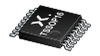
Request a Quote Datasheet
Description
The NCA9538 is an 8-bit bidirectional I/O expander compliant with I²C and SMBus protocols, operating over a wide supply range of 1.65 V to 5.5 V. It enables remote GPIO expansion for microcontroller-base d systems via a standard two⁠⁠-⁠⁠wire interface (SCL/SDA), supporting clock frequencies up to 1 MHz (Fast-Mode Plus). Key performance features include high output drive capability, 5 V-tolerant I/O pins for mixed-voltage interfacing, reduced supply current, individual I/O direction configuration and compact TSSOP16 package. I/O expanders such as the NCA9538 provide an efficient, low-overhead solution for extending microcontroller GPIO resources in applications requiring additional digital interfaces, including user interface (LEDs, push-buttons, switches), sensing and monitoring (sensor inputs, peripheral status), power and control (relays, fan control and peripheral enable/ disable), industrial automation (PLC expansion, motor drivers), automotive systems (ECU controls, dashboard indicators), consumer electronics (wearables, remotes and tablets) and medical devices (monitoring interface, alarms). The NCA9538 device incorporates four 8-bit registers accessible via the I²C/SMBus interface: Configuration register (defines each I/O pin as input or output), Input Port register (reflects the real-time logic state of the I/O pins when configured as inputs), Output Port register (stores the drive state for pins configured as outputs in push-pull operation), and Polarity Inversion register (enables optional logic inversion of the Input Port register values for active-high or active-low operation). The system controller configures I/O direction by writing to the Configuration register. Input data is latched into the Input Port register and may be read at any time. Output data is driven according to the contents of the Output Port register. Polarity inversion, when enabled, inverts the logical sense of the Input Port register without affecting the physical pin state. An active-low, open-drain interrupt (INT) output asserts when any input pin differs from its corresponding bit in the Input Port register. This change-on-state detection minimizes host polling and supports event-driven system architecture. The INTsignal is de-asserted upon a read of the Input Port register that captures the current pin states. Integrated power on reset (POR circuitry initializes all registers to their default states and resets the internal state machine), resetting the IC through dynamic power sequencing in case of bus stuck. To recover from errors like I²C time-outs, a system controller can also drive the RESETinput low. This resets all registers to their default state and reinitializes the I²C/SMBus interface without requiring a power cycle. Two hardware address pins (A0, A1) allow the configuration of up to four unique NCA9538 devices on the same I²C/SMBus segment without address conflicts. Features and benefits Operating power supply voltage range of 1.65 V to 5.5 V 5 V tolerant I/Os Polarity Inversion register Active LOW open-drain interrupt output (INT) Active LOW reset input (RESET) for external reset control Low standby current Noise filter on SCL/SDA inputs No glitch on power-up Internal power-on reset 8 I/O pins which default to 8 inputs 0 Hz to 1 MHz clock frequency Fast-mode Plus I²C-bus ESD protection: HBM ANSI/ESDA/JEDEC JS-001 class 2 exceeds 2000 V CDM ANSI/ESDA/JEDEC JS-002 class C3 exceeds 1000 V Latch-up testing is done to JEDEC Standard JESD78 which exceeds 100 mA Package offered: SOT403-1 (TSSOP16) Specified from -40 °C to +85 °C and from -40 °C to +125 °C
Request a Quote Datasheet

Suppliers

Company
Product
Description
Supplier Links
Low-voltage 8-bit I²C-bus and SMBus low power I/O port with interrupt, weak pull-up - NCA9538PWJ - Nexperia B.V.
Nijmegen, Netherlands
Low-voltage 8-bit I²C-bus and SMBus low power I/O port with interrupt, weak pull-up
NCA9538PWJ
Low-voltage 8-bit I²C-bus and SMBus low power I/O port with interrupt, weak pull-up NCA9538PWJ
The NCA9538 is an 8-bit bidirectional I/O expander compliant with I²C and SMBus protocols, operating over a wide supply range of 1.65 V to 5.5 V. It enables remote GPIO expansion for microcontroller-base d systems via a standard two⁠⁠-⁠⁠wire interface (SCL/SDA), supporting clock frequencies up to 1 MHz (Fast-Mode Plus). Key performance features include high output drive capability, 5 V-tolerant I/O pins for mixed-voltage interfacing, reduced supply current, individual I/O direction configuration and compact TSSOP16 package. I/O expanders such as the NCA9538 provide an efficient, low-overhead solution for extending microcontroller GPIO resources in applications requiring additional digital interfaces, including user interface (LEDs, push-buttons, switches), sensing and monitoring (sensor inputs, peripheral status), power and control (relays, fan control and peripheral enable/ disable), industrial automation (PLC expansion, motor drivers), automotive systems (ECU controls, dashboard indicators), consumer electronics (wearables, remotes and tablets) and medical devices (monitoring interface, alarms). The NCA9538 device incorporates four 8-bit registers accessible via the I²C/SMBus interface: Configuration register (defines each I/O pin as input or output), Input Port register (reflects the real-time logic state of the I/O pins when configured as inputs), Output Port register (stores the drive state for pins configured as outputs in push-pull operation), and Polarity Inversion register (enables optional logic inversion of the Input Port register values for active-high or active-low operation). The system controller configures I/O direction by writing to the Configuration register. Input data is latched into the Input Port register and may be read at any time. Output data is driven according to the contents of the Output Port register. Polarity inversion, when enabled, inverts the logical sense of the Input Port register without affecting the physical pin state. An active-low, open-drain interrupt (INT) output asserts when any input pin differs from its corresponding bit in the Input Port register. This change-on-state detection minimizes host polling and supports event-driven system architecture. The INTsignal is de-asserted upon a read of the Input Port register that captures the current pin states. Integrated power on reset (POR circuitry initializes all registers to their default states and resets the internal state machine), resetting the IC through dynamic power sequencing in case of bus stuck. To recover from errors like I²C time-outs, a system controller can also drive the RESETinput low. This resets all registers to their default state and reinitializes the I²C/SMBus interface without requiring a power cycle. Two hardware address pins (A0, A1) allow the configuration of up to four unique NCA9538 devices on the same I²C/SMBus segment without address conflicts. Features and benefits Operating power supply voltage range of 1.65 V to 5.5 V 5 V tolerant I/Os Polarity Inversion register Active LOW open-drain interrupt output (INT) Active LOW reset input (RESET) for external reset control Low standby current Noise filter on SCL/SDA inputs No glitch on power-up Internal power-on reset 8 I/O pins which default to 8 inputs 0 Hz to 1 MHz clock frequency Fast-mode Plus I²C-bus ESD protection: HBM ANSI/ESDA/JEDEC JS-001 class 2 exceeds 2000 V CDM ANSI/ESDA/JEDEC JS-002 class C3 exceeds 1000 V Latch-up testing is done to JEDEC Standard JESD78 which exceeds 100 mA Package offered: SOT403-1 (TSSOP16) Specified from -40 °C to +85 °C and from -40 °C to +125 °C

The NCA9538 is an 8-bit bidirectional I/O expander compliant with I²C and SMBus protocols, operating over a wide supply range of 1.65 V to 5.5 V. It enables remote GPIO expansion for microcontroller-based systems via a standard two⁠⁠-⁠⁠wire interface (SCL/SDA), supporting clock frequencies up to 1 MHz (Fast-Mode Plus). Key performance features include high output drive capability, 5 V-tolerant I/O pins for mixed-voltage interfacing, reduced supply current, individual I/O direction configuration and compact TSSOP16 package.

I/O expanders such as the NCA9538 provide an efficient, low-overhead solution for extending microcontroller GPIO resources in applications requiring additional digital interfaces, including user interface (LEDs, push-buttons, switches), sensing and monitoring (sensor inputs, peripheral status), power and control (relays, fan control and peripheral enable/ disable), industrial automation (PLC expansion, motor drivers), automotive systems (ECU controls, dashboard indicators), consumer electronics (wearables, remotes and tablets) and medical devices (monitoring interface, alarms).

The NCA9538 device incorporates four 8-bit registers accessible via the I²C/SMBus interface: Configuration register (defines each I/O pin as input or output), Input Port register (reflects the real-time logic state of the I/O pins when configured as inputs), Output Port register (stores the drive state for pins configured as outputs in push-pull operation), and Polarity Inversion register (enables optional logic inversion of the Input Port register values for active-high or active-low operation).

The system controller configures I/O direction by writing to the Configuration register. Input data is latched into the Input Port register and may be read at any time. Output data is driven according to the contents of the Output Port register. Polarity inversion, when enabled, inverts the logical sense of the Input Port register without affecting the physical pin state.

An active-low, open-drain interrupt (INT) output asserts when any input pin differs from its corresponding bit in the Input Port register. This change-on-state detection minimizes host polling and supports event-driven system architecture. The INTsignal is de-asserted upon a read of the Input Port register that captures the current pin states. Integrated power on reset (POR circuitry initializes all registers to their default states and resets the internal state machine), resetting the IC through dynamic power sequencing in case of bus stuck. To recover from errors like I²C time-outs, a system controller can also drive the RESETinput low. This resets all registers to their default state and reinitializes the I²C/SMBus interface without requiring a power cycle. Two hardware address pins (A0, A1) allow the configuration of up to four unique NCA9538 devices on the same I²C/SMBus segment without address conflicts.

Features and benefits

  • Operating power supply voltage range of 1.65 V to 5.5 V
  • 5 V tolerant I/Os
  • Polarity Inversion register
  • Active LOW open-drain interrupt output (INT)
  • Active LOW reset input (RESET) for external reset control
  • Low standby current
  • Noise filter on SCL/SDA inputs
  • No glitch on power-up
  • Internal power-on reset
  • 8 I/O pins which default to 8 inputs
  • 0 Hz to 1 MHz clock frequency Fast-mode Plus I²C-bus
  • ESD protection:
    • HBM ANSI/ESDA/JEDEC JS-001 class 2 exceeds 2000 V
    • CDM ANSI/ESDA/JEDEC JS-002 class C3 exceeds 1000 V
  • Latch-up testing is done to JEDEC Standard JESD78 which exceeds 100 mA
  • Package offered: SOT403-1 (TSSOP16)
  • Specified from -40 °C to +85 °C and from -40 °C to +125 °C

Supplier's Site Datasheet
I/O Expanders - 1727-NCA9538PWJTR-ND - DigiKey
Thief River Falls, MN, United States
NCA9538PW/SOT403/TSS OP16

NCA9538PW/SOT403/TSSOP16

Buy Now Datasheet
I/O Expanders - 1727-NCA9538PWJCT-ND - DigiKey
Thief River Falls, MN, United States
NCA9538PW/SOT403/TSS OP16

NCA9538PW/SOT403/TSSOP16

Buy Now Datasheet
I/O Expanders - 1727-NCA9538PWJDKR-ND - DigiKey
Thief River Falls, MN, United States
NCA9538PW/SOT403/TSS OP16

NCA9538PW/SOT403/TSSOP16

Buy Now Datasheet

Technical Specifications

  Nexperia B.V. DigiKey
Product Category IC Interfaces IC Interfaces
Product Number NCA9538PWJ 1727-NCA9538PWJTR-ND
Product Name Low-voltage 8-bit I²C-bus and SMBus low power I/O port with interrupt, weak pull-up I/O Expanders
Features RoHS
Supply Voltage Other; +6.0 Other; 1.65V ~ 5.5V
Operating Temperature 125 C (257 F) -40 to 125 C (-40 to 257 F)
Unlock Full Specs
to access all available technical data

Similar Products

Inverting Schmitt trigger - 74AHC1G14GV,125 - Nexperia B.V.
Specs
Features RoHS
Supply Voltage Other; +7.0
Package Type SOT753 SOT753
View Details
Unbuffered inverter - 74AHC1GU04GZ-Q10YL - Nexperia B.V.
Specs
Device Type Buffer
Features RoHS
Supply Voltage Other; +7.0
View Details
 - 74ABT125D,602 - Rochester Electronics
Nexperia B.V.
Specs
Device Type Line / Bus Driver
Features RoHS
Package Type SO14
View Details
16-bit buffer/line driver with 30 Ohm termination resistor; 3-state - 74ALVCH162244DGG:1 - Nexperia B.V.
Specs
Device Type Buffer
Features RoHS
Supply Voltage Other; +4.6
View Details
3 suppliers