Additional Properties
Hydrolytic Sensitivity 3: reacts with aqueous base Application Silylates phenols in presence of tris(pentafluorophen
yl)borane.1 Precursor for SiC thin films by supersonic jet epitaxy.2 Reference 1. Blackwell, J. M. et al. J. Org. Chem. 1999, 64, 4887. 2. Boo, J. et al. Thin Solid Films 1998, 324, 124. Safety
Packaging Under Nitrogen Trialkylsilyl Blocking Agent Used as a protecting group for reactive hydrogens in alcohols, amines, thiols, and carboxylic acids. Organosilanes are hydrogen-like, can be introduced in high yield, and can be removed under selective conditions. They are stable over a wide range of reaction conditions and can be removed in the presence of other functional groups, including other protecting groups. The tolerance of silylated alcohols to chemical transformations summary is presented in Table 1 of the Silicon-Based Blocking Agents brochure. tert-Butyldimethylsi
lane; Dimethyl-t-butylsila
ne; tert-Butyl(dimethyl)
silane; TBS-H
Sterically hindered organosilane capable of dehydrogenative coupling
Used for the protection of alcohols, amines, thiols, lactams, and carboxylic acids
Clean NMR characteristics of protecting group
Facile removal with flouride ion sources
Summary of selective deprotection conditions is provided in Table 7 through Table 20 of the Silicon-Based Blocking Agents brochure
Gelest, Inc.
Done
Datasheet
Description
Additional Properties
Hydrolytic Sensitivity 3: reacts with aqueous base Application Silylates phenols in presence of tris(pentafluorophen
yl)borane.1 Precursor for SiC thin films by supersonic jet epitaxy.2 Reference 1. Blackwell, J. M. et al. J. Org. Chem. 1999, 64, 4887. 2. Boo, J. et al. Thin Solid Films 1998, 324, 124. Safety
Packaging Under Nitrogen Trialkylsilyl Blocking Agent Used as a protecting group for reactive hydrogens in alcohols, amines, thiols, and carboxylic acids. Organosilanes are hydrogen-like, can be introduced in high yield, and can be removed under selective conditions. They are stable over a wide range of reaction conditions and can be removed in the presence of other functional groups, including other protecting groups. The tolerance of silylated alcohols to chemical transformations summary is presented in Table 1 of the Silicon-Based Blocking Agents brochure. tert-Butyldimethylsi
lane; Dimethyl-t-butylsila
ne; tert-Butyl(dimethyl)
silane; TBS-H
Sterically hindered organosilane capable of dehydrogenative coupling
Used for the protection of alcohols, amines, thiols, lactams, and carboxylic acids
Clean NMR characteristics of protecting group
Facile removal with flouride ion sources
Summary of selective deprotection conditions is provided in Table 7 through Table 20 of the Silicon-Based Blocking Agents brochure
Additional Properties
Hydrolytic Sensitivity 3: reacts with aqueous base Application Silylates phenols in presence of tris(pentafluorophen
yl)borane.1 Precursor for SiC thin films by supersonic jet epitaxy.2 Reference 1. Blackwell, J. M. et al. J. Org. Chem. 1999, 64, 4887. 2. Boo, J. et al. Thin Solid Films 1998, 324, 124. Safety
Packaging Under Nitrogen Trialkylsilyl Blocking Agent Used as a protecting group for reactive hydrogens in alcohols, amines, thiols, and carboxylic acids. Organosilanes are hydrogen-like, can be introduced in high yield, and can be removed under selective conditions. They are stable over a wide range of reaction conditions and can be removed in the presence of other functional groups, including other protecting groups. The tolerance of silylated alcohols to chemical transformations summary is presented in Table 1 of the Silicon-Based Blocking Agents brochure. tert-Butyldimethylsi
lane; Dimethyl-t-butylsila
ne; tert-Butyl(dimethyl)
silane; TBS-H
Sterically hindered organosilane capable of dehydrogenative coupling
Used for the protection of alcohols, amines, thiols, lactams, and carboxylic acids
Clean NMR characteristics of protecting group
Facile removal with flouride ion sources
Summary of selective deprotection conditions is provided in Table 7 through Table 20 of the Silicon-Based Blocking Agents brochure
Additional Properties
Hydrolytic Sensitivity 3: reacts with aqueous base
Application
Silylates phenols in presence of tris(pentafluorophenyl)borane.1 Precursor for SiC thin films by supersonic jet epitaxy.2
Reference
1. Blackwell, J. M. et al. J. Org. Chem. 1999, 64, 4887. 2. Boo, J. et al. Thin Solid Films 1998, 324, 124.
Safety
Packaging Under Nitrogen
Trialkylsilyl Blocking Agent
Used as a protecting group for reactive hydrogens in alcohols, amines, thiols, and carboxylic acids. Organosilanes are hydrogen-like, can be introduced in high yield, and can be removed under selective conditions. They are stable over a wide range of reaction conditions and can be removed in the presence of other functional groups, including other protecting groups. The tolerance of silylated alcohols to chemical transformations summary is presented in Table 1 of the Silicon-Based Blocking Agents brochure.
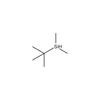
tert-Butyldimethylsilane; Dimethyl-t-butylsilane; tert-Butyl(dimethyl)silane; TBS-H
Sterically hindered organosilane capable of dehydrogenative coupling
Used for the protection of alcohols, amines, thiols, lactams, and carboxylic acids
Clean NMR characteristics of protecting group
Facile removal with flouride ion sources
Summary of selective deprotection conditions is provided in Table 7 through Table 20 of the Silicon-Based Blocking Agents brochure