Safety
Packaging Under Nitrogen Siloxane-Based Silane Reducing Agent Organosilanes are hydrocarbon-like and possess the ability to serve as both ionic and free-radical reducing agents. These reagents and their reaction by-products are safer and more easily handled and disposed than many other reducing agents. The metallic nature of silicon and its low electronegativity relative to hydrogen lead to polarization of the Si-H bond yielding a hydridic hydrogen and a milder reducing agent compared to aluminum-, boron-, and other metal-based hydrides. A summary of some key silane reductions are presented in Table 1 of the Silicon-Based Reducing Agents brochure. Pendant Functional Fluid; polyMethylHydrosilox
anes, TMS Terminated MethylHydrosiloxane homopolymers are used as water-proofing agents, reducing agents and as components in some foamed silicone systems. Poly(methylhydrosilo
xane); Methyl hydrogen siloxane; Polysiloxanes, methyl hydrogen; Siloxanes and silicones, methyl hydrogen
Viscosity: 15-25 cSt
Molecular Weight: 1,400-1,800 g/mol
Mol% Hydride: 100
Reduces lactones to lactols
Reduces aldehydes, ketones, esters, lactones, triglycerides and epoxides to alcohols with zinc hydride catalysis
With titanium tetraisopropoxide catalysis carries out reductive amination of ketones and aldehydes and the reduction of acids or esters to 1° alcohols
With TBAF catalysis selectively reduces aldehydes over ketones
Used to generate tri-n-butyltin hydride ‘in-situ’ and in a one-pot hydrostannylation/St
ille coupling sequence
Reduces esters to alcohols
Extensive review of silicon based reducing agents: Larson, G.; Fry, J. L. "Ionic and Organometallic-Catal
yzed Organosilane Reductions", Wipf, P., Ed.; Wiley, 2007
Gelest, Inc.
Done
Datasheet
Description
Safety
Packaging Under Nitrogen Siloxane-Based Silane Reducing Agent Organosilanes are hydrocarbon-like and possess the ability to serve as both ionic and free-radical reducing agents. These reagents and their reaction by-products are safer and more easily handled and disposed than many other reducing agents. The metallic nature of silicon and its low electronegativity relative to hydrogen lead to polarization of the Si-H bond yielding a hydridic hydrogen and a milder reducing agent compared to aluminum-, boron-, and other metal-based hydrides. A summary of some key silane reductions are presented in Table 1 of the Silicon-Based Reducing Agents brochure. Pendant Functional Fluid; polyMethylHydrosilox
anes, TMS Terminated MethylHydrosiloxane homopolymers are used as water-proofing agents, reducing agents and as components in some foamed silicone systems. Poly(methylhydrosilo
xane); Methyl hydrogen siloxane; Polysiloxanes, methyl hydrogen; Siloxanes and silicones, methyl hydrogen
Viscosity: 15-25 cSt
Molecular Weight: 1,400-1,800 g/mol
Mol% Hydride: 100
Reduces lactones to lactols
Reduces aldehydes, ketones, esters, lactones, triglycerides and epoxides to alcohols with zinc hydride catalysis
With titanium tetraisopropoxide catalysis carries out reductive amination of ketones and aldehydes and the reduction of acids or esters to 1° alcohols
With TBAF catalysis selectively reduces aldehydes over ketones
Used to generate tri-n-butyltin hydride ‘in-situ’ and in a one-pot hydrostannylation/St
ille coupling sequence
Reduces esters to alcohols
Extensive review of silicon based reducing agents: Larson, G.; Fry, J. L. "Ionic and Organometallic-Catal
yzed Organosilane Reductions", Wipf, P., Ed.; Wiley, 2007
Safety
Packaging Under Nitrogen Siloxane-Based Silane Reducing Agent Organosilanes are hydrocarbon-like and possess the ability to serve as both ionic and free-radical reducing agents. These reagents and their reaction by-products are safer and more easily handled and disposed than many other reducing agents. The metallic nature of silicon and its low electronegativity relative to hydrogen lead to polarization of the Si-H bond yielding a hydridic hydrogen and a milder reducing agent compared to aluminum-, boron-, and other metal-based hydrides. A summary of some key silane reductions are presented in Table 1 of the Silicon-Based Reducing Agents brochure. Pendant Functional Fluid; polyMethylHydrosilox
anes, TMS Terminated MethylHydrosiloxane homopolymers are used as water-proofing agents, reducing agents and as components in some foamed silicone systems. Poly(methylhydrosilo
xane); Methyl hydrogen siloxane; Polysiloxanes, methyl hydrogen; Siloxanes and silicones, methyl hydrogen
Viscosity: 15-25 cSt
Molecular Weight: 1,400-1,800 g/mol
Mol% Hydride: 100
Reduces lactones to lactols
Reduces aldehydes, ketones, esters, lactones, triglycerides and epoxides to alcohols with zinc hydride catalysis
With titanium tetraisopropoxide catalysis carries out reductive amination of ketones and aldehydes and the reduction of acids or esters to 1° alcohols
With TBAF catalysis selectively reduces aldehydes over ketones
Used to generate tri-n-butyltin hydride ‘in-situ’ and in a one-pot hydrostannylation/St
ille coupling sequence
Reduces esters to alcohols
Extensive review of silicon based reducing agents: Larson, G.; Fry, J. L. "Ionic and Organometallic-Catal
yzed Organosilane Reductions", Wipf, P., Ed.; Wiley, 2007
Safety
Packaging Under Nitrogen
Siloxane-Based Silane Reducing Agent
Organosilanes are hydrocarbon-like and possess the ability to serve as both ionic and free-radical reducing agents. These reagents and their reaction by-products are safer and more easily handled and disposed than many other reducing agents. The metallic nature of silicon and its low electronegativity relative to hydrogen lead to polarization of the Si-H bond yielding a hydridic hydrogen and a milder reducing agent compared to aluminum-, boron-, and other metal-based hydrides. A summary of some key silane reductions are presented in Table 1 of the Silicon-Based Reducing Agents brochure.
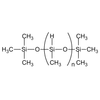
Pendant Functional Fluid; polyMethylHydrosiloxanes, TMS Terminated
MethylHydrosiloxane homopolymers are used as water-proofing agents, reducing agents and as components in some foamed silicone systems.
Poly(methylhydrosiloxane); Methyl hydrogen siloxane; Polysiloxanes, methyl hydrogen; Siloxanes and silicones, methyl hydrogen
Viscosity: 15-25 cSt
Molecular Weight: 1,400-1,800 g/mol
Mol% Hydride: 100
Reduces lactones to lactols
Reduces aldehydes, ketones, esters, lactones, triglycerides and epoxides to alcohols with zinc hydride catalysis
With titanium tetraisopropoxide catalysis carries out reductive amination of ketones and aldehydes and the reduction of acids or esters to 1° alcohols
With TBAF catalysis selectively reduces aldehydes over ketones
Used to generate tri-n-butyltin hydride ‘in-situ’ and in a one-pot hydrostannylation/Stille coupling sequence
Reduces esters to alcohols
Extensive review of silicon based reducing agents: Larson, G.; Fry, J. L. "Ionic and Organometallic-Catalyzed Organosilane Reductions", Wipf, P., Ed.; Wiley, 2007