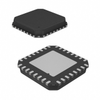
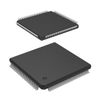
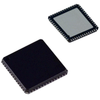
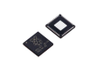
The PIC18-Q84 family expands the 8-bit MCUs by combining an extensive array of Core Independent Peripherals (CIPs) with Controller Area Network Flexible Data Rate (CAN FD). These cost optimized MCUs contain time-saving CIPs in up to 48-pins with up to 128 KB of flash memory. The family introduces new features and peripherals like the Universal Timer (UTMR) with customization capability; context switching added to the 12-bit ADC with Computation for automating analog signal analysis for real-time system response. Additionally, it includes industry standard options, JTAG Boundary Scan, 32-bit Cyclic Redundancy Check (CRC) with memory scan on boot for added system safety. System designers can benefit greatly by saving time, as it is significantly easier to configure a hardware-based peripheral, as opposed to writing and validating an entire software routine, to accomplish a task.
Additional Features
CAN Flexible Data-Rate (FD) module:
Functional in CAN FD or CAN 2.0B modes
Eight Direct Memory Access (DMA) Controllers:
Data transfers capabilities
User programmable source and destination sizes
Hardware and software triggered data transfers
Vectored Interrupt Capability:
Selectable high/low priority
Fixed interrupt latency of three instruction cycles
Programmable vector table base address
Backwards compatible with previous interrupt capabilities
Analog-to-Digital Converter with Computation and Context Switching (ADC):
Automated math functions on input signals:
Averaging, filter calculations, oversampling and threshold comparison
4 Separate Contexts (settings and results) saved and accessible separately
Contexts can be accessed through firmware or DMA
Five internal analog channels
Hardware Capacitive Voltage Divider (CVD) Support:
Automates touch sampling and reduces software size and CPU usage when touch or proximity
Universal Timer (UTMR)
Two Customizable 16-bit Timers - Combine to create larger bit timer
8-Bit Digital-to-Analog Converter (DAC):
Two Comparators (CMP):
Four 16-Bit Pulse-Width Modulators (PWM):
Data Signal Modulator (DSM):
Programmable CRC with Memory Scan:
Reliable data/program memory monitoring for Fail-Safe operation (e.g., Class B)
Calculate 32-bit CRC over any portion of Program Flash Memory
Communication:
Five UART modules:
LIN master and slave, DMX mode, DALI gear and device protocols
SPI / I2C
Doze: CPU and Peripherals Running at Different Cycle Rates (typically CPU is lower)
Idle: CPU Halted While Peripherals Operate
Sleep: Lowest Power Consumption
Peripheral Module Disable (PMD):
Ability to selectively disable hardware module to minimize active power consumption of unused peripherals
JTAG: Supports boundary scan
The PIC18-Q84 family expands the 8-bit MCUs by combining an extensive array of Core Independent Peripherals (CIPs) with Controller Area Network Flexible Data Rate (CAN FD). These cost optimized MCUs contain time-saving CIPs in up to 48-pins with up to 128 KB of flash memory. The family introduces new features and peripherals like the Universal Timer (UTMR) with customization capability; context switching added to the 12-bit ADC with Computation for automating analog signal analysis for real-time system response. Additionally, it includes industry standard options, JTAG Boundary Scan, 32-bit Cyclic Redundancy Check (CRC) with memory scan on boot for added system safety. System designers can benefit greatly by saving time, as it is significantly easier to configure a hardware-based peripheral, as opposed to writing and validating an entire software routine, to accomplish a task.
Additional Features
- CAN Flexible Data-Rate (FD) module:
- Functional in CAN FD or CAN 2.0B modes
- Eight Direct Memory Access (DMA) Controllers:
- Data transfers capabilities
- User programmable source and destination sizes
- Hardware and software triggered data transfers
- Vectored Interrupt Capability:
- Selectable high/low priority
- Fixed interrupt latency of three instruction cycles
- Programmable vector table base address
- Backwards compatible with previous interrupt capabilities
- Analog-to-Digital Converter with Computation and Context Switching (ADC):
- Automated math functions on input signals:
- Averaging, filter calculations, oversampling and threshold comparison
- 4 Separate Contexts (settings and results) saved and accessible separately
- Contexts can be accessed through firmware or DMA
- Five internal analog channels
- Hardware Capacitive Voltage Divider (CVD) Support:
- Automates touch sampling and reduces software size and CPU usage when touch or proximity
- Universal Timer (UTMR)
- Two Customizable 16-bit Timers - Combine to create larger bit timer
- 8-Bit Digital-to-Analog Converter (DAC):
- Two Comparators (CMP):
- Four 16-Bit Pulse-Width Modulators (PWM):
- Data Signal Modulator (DSM):
- Programmable CRC with Memory Scan:
- Reliable data/program memory monitoring for Fail-Safe operation (e.g., Class B)
- Calculate 32-bit CRC over any portion of Program Flash Memory
- Communication:
- Five UART modules:
- LIN master and slave, DMX mode, DALI gear and device protocols
- SPI / I2C
- Doze: CPU and Peripherals Running at Different Cycle Rates (typically CPU is lower)
- Idle: CPU Halted While Peripherals Operate
- Sleep: Lowest Power Consumption
- Peripheral Module Disable (PMD):
- Ability to selectively disable hardware module to minimize active power consumption of unused peripherals
- JTAG: Supports boundary scan