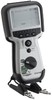
The CFL510G (1001-790) is a tdr from Megger.
Additional Features:
Dual cursors for pinpointing faults
Auto set-up for instant use
2 ns pulse width virtually eliminates dead zones
Unique trace HOLD feature for comparison between cables
IP54 rating
Designed for use on all metallic cable pairs
Three-year warranty
Accessories:
Hard carry case
Miniature clip test lead set
Bed of nails test lead set
Socket BNC to 2x4mm 50 Ohm
User guide CD
Applications:
This CFL510G is primarily designed for linemen in both the communication and power industries. Specific capabilities include:
Telephony
Provides fast and accurate results when uncovering transmission related problems. Designed to be carried on a linesman’s belt and used in the first line of defense when diagnosing and locating cable faults.
Specific line activities identified by this unit include:
Bridge taps and splices
Presence of water in the cable
Opens in tip, ring, or sheath
Shorts between tip, ring, and/or sheath
Capacitive networks
Load coils
Wet splices and high-resistance splices
CATV/Cellular
Ideal for testing the physical integrity of cables within a network. The unit is also capable of locating illegal cable taps.
Specific cable conditions identified include:
Bends or crimps in the cable
Cuts or shorts in the cable
Taps and splits
Water saturation
Power
An ideal tool for identifying faults on secondary power cables.
This unit identifies:
Burnouts in aluminum conductors
Good splices, wet splices, and high-resistance splices
Shorts between phases
The CFL510G is a hand held, compact Time Domain Reflectometer for locating faults on metallic cables. It has a minimum resolution of 0.1 m/0.3 ft and a 5 km/15,000 ft maximum range depending on velocity factor selected and cable type.
Four output impedances (25, 50, 75, and 100 ω) are available and a velocity factor between 0.2 and 0.99 will meet any cable test requirements.
The CFL510G has a simple selection option which, together with a four-way control switch, offers an intuitive operation for the user.
The CFL510G (1001-790) is a tdr from Megger.
Additional Features:
- Dual cursors for pinpointing faults
- Auto set-up for instant use
- 2 ns pulse width virtually eliminates dead zones
- Unique trace HOLD feature for comparison between cables
- IP54 rating
- Designed for use on all metallic cable pairs
- Three-year warranty
Accessories:
- Hard carry case
- Miniature clip test lead set
- Bed of nails test lead set
- Socket BNC to 2x4mm 50 Ohm
- User guide CD
Applications:
This CFL510G is primarily designed for linemen in both the communication and power industries. Specific capabilities include:
Telephony
Provides fast and accurate results when uncovering transmission related problems. Designed to be carried on a linesman’s belt and used in the first line of defense when diagnosing and locating cable faults.
Specific line activities identified by this unit include:
- Bridge taps and splices
- Presence of water in the cable
- Opens in tip, ring, or sheath
- Shorts between tip, ring, and/or sheath
- Capacitive networks
- Load coils
- Wet splices and high-resistance splices
CATV/Cellular
Ideal for testing the physical integrity of cables within a network. The unit is also capable of locating illegal cable taps.
Specific cable conditions identified include:
- Bends or crimps in the cable
- Cuts or shorts in the cable
- Taps and splits
- Water saturation
Power
An ideal tool for identifying faults on secondary power cables.
This unit identifies:
- Burnouts in aluminum conductors
- Good splices, wet splices, and high-resistance splices
- Shorts between phases
The CFL510G is a hand held, compact Time Domain Reflectometer for locating faults on metallic cables. It has a minimum resolution of 0.1 m/0.3 ft and a 5 km/15,000 ft maximum range depending on velocity factor selected and cable type.
Four output impedances (25, 50, 75, and 100 Ω) are available and a velocity factor between 0.2 and 0.99 will meet any cable test requirements.
The CFL510G has a simple selection option which, together with a four-way control switch, offers an intuitive operation for the user.