Non-destructive measurements of Leaf Area Index
Calculates mean foliage inclination angle and canopy gap fraction
Fast, cost effective measurements
On-site evaluation of LAI data
For use in a variety of canopy types
Leaf Area Index (LAI) is the ratio of foliage area to ground area. The measurement of LAI is of fundamental importance to agricultural and ecological research, as LAI is an indicator of plant growth. LAI directly affects the interception and absorption of light by the canopy and influences the heat balance and evaporation from the landscape.
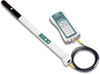
The LAI-2200 calculates the interception of blue light (320-490 nm) at 5 zenith angles from readings taken above and below the canopy. These data are fit to a well-established and scientifically accepted model of radiative transfer in vegetative canopies to compute Leaf Area Index, Mean Tip Angle, and canopy gap fraction.
Data can be read live in the field and later processed using the powerful FV2200 software. The FV2200 software provides significant data processing options, including 3 additional inversion methods and ring masking.
- Non-destructive measurements of Leaf Area Index
- Calculates mean foliage inclination angle and canopy gap fraction
- Fast, cost effective measurements
- On-site evaluation of LAI data
- For use in a variety of canopy types
Leaf Area Index (LAI) is the ratio of foliage area to ground area. The measurement of LAI is of fundamental importance to agricultural and ecological research, as LAI is an indicator of plant growth. LAI directly affects the interception and absorption of light by the canopy and influences the heat balance and evaporation from the landscape.
The LAI-2200 calculates the interception of blue light (320-490 nm) at 5 zenith angles from readings taken above and below the canopy. These data are fit to a well-established and scientifically accepted model of radiative transfer in vegetative canopies to compute Leaf Area Index, Mean Tip Angle, and canopy gap fraction.
Data can be read live in the field and later processed using the powerful FV2200 software. The FV2200 software provides significant data processing options, including 3 additional inversion methods and ring masking.